


The Effects of Low-Level Laser Therapy on Wound Healing and Pain Management in Skin Wounds: A Systematic Review and Meta-Analysis
- PMID: 39610644
- PMCID: PMC11602420
- DOI: 10.7759/cureus.72542
The Effects of Low-Level Laser Therapy on Wound Healing and Pain Management in Skin Wounds: A Systematic Review and Meta-Analysis
Abstract
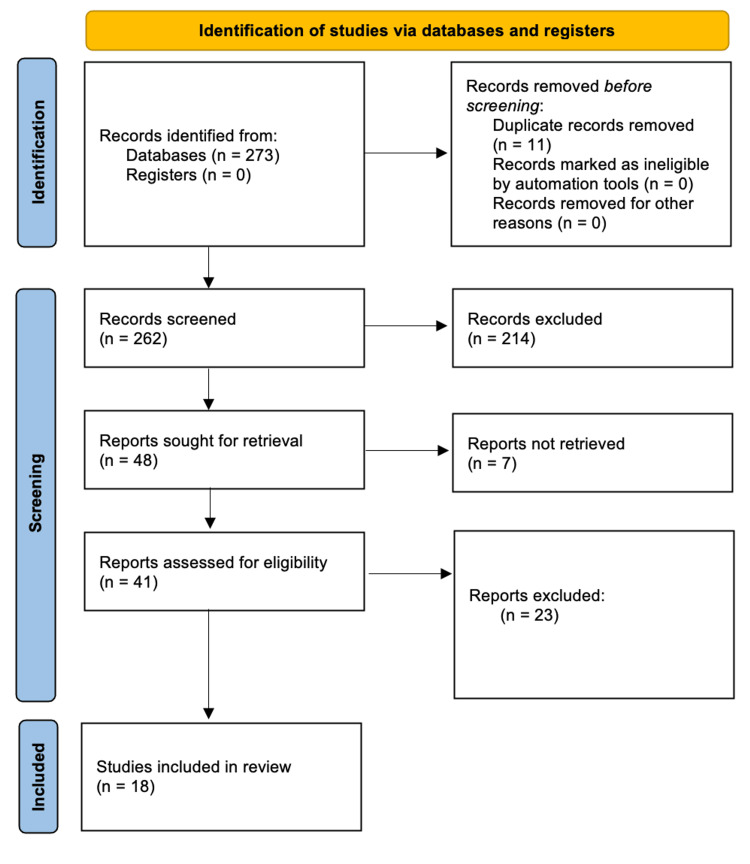
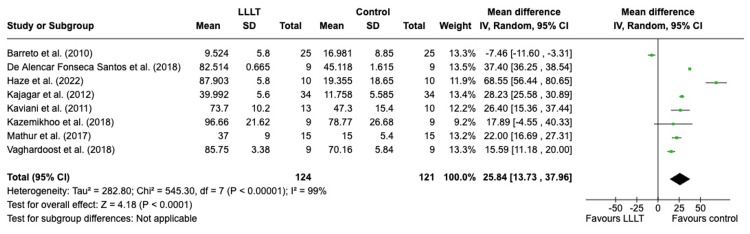
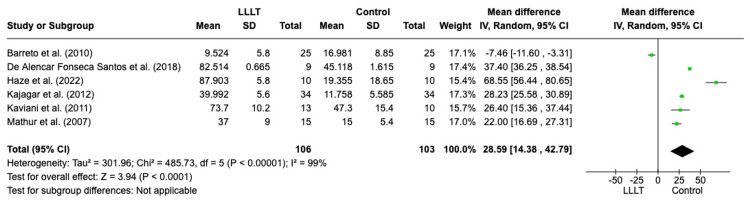
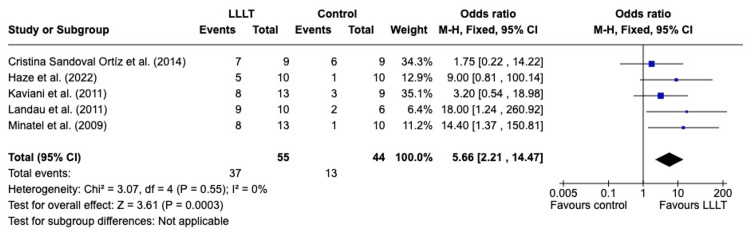
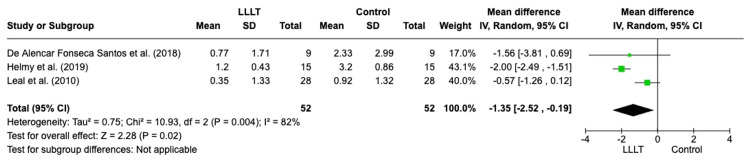
Low-level laser therapy (LLLT) is a non-invasive application of non-thermogenic light that is proven to promote tissue healing and alleviate pain. The authors aim to conduct the first meta-analysis, evaluating the effects of LLLT on wound healing and pain in skin wounds by comparing it to skin wounds not treated with LLLT. The Preferred Reporting Items for Systematic Reviews and Meta-Analyses guidelines were followed by searching the electronic databases. Eighteen randomised controlled trials that met the inclusion criteria were included in the study. Six hundred seventy skin wounds were analysed in the study. The primary outcome measures were the percentage reduction in wound size and the rate of complete wound healing. The secondary outcome measures included the visual analogue scale (VAS) for pain and the perineal pain score in episiotomy wounds. The percentage reduction of wound size in the LLLT group was significantly greater than that in the control group (95% confidence interval, CI, 13.93-37.70; p < 0.0001). In addition, the rate of wound healing was significantly greater in the LLLT group (95% CI, 2.32-16.70; p = 0.0003). LLLT has been shown to reduce pain, with the VAS scores for pain being significantly lower in the LLLT group after treatment (95% CI, -2.52 to -0.19; p = 0.02). The authors present the first meta-analysis within the literature showing the effects of LLLT on wound healing and pain in skin wounds. Higher quality trials are recommended to enhance the current evidence base.
Keywords: dfu; diabetic foot ulcers; lllt; low-level laser therapy; wound healing.
Copyright © 2024, Taha et al.
Conflict of interest statement
Conflicts of interest: In compliance with the ICMJE uniform disclosure form, all authors declare the following: Payment/services info: All authors have declared that no financial support was received from any organization for the submitted work. Financial relationships: All authors have declared that they have no financial relationships at present or within the previous three years with any organizations that might have an interest in the submitted work. Other relationships: All authors have declared that there are no other relationships or activities that could appear to have influenced the submitted work.
Figures
References
-
- Laser biostimulation. Mester A. Photomed Laser Surg. 2013;31:237–239. - PubMed
-
- Biological effects of low level laser therapy. Farivar S, Malekshahabi T, Shiari R. https://www.ncbi.nlm.nih.gov/pmc/articles/PMC4291815/ J Lasers Med Sci. 2014;5:58–62. - PMC - PubMed
-
- Effects of low-power light therapy on the tissue repair process of chronic wounds in diabetic feet. de Alencar Fonseca Santos J, Campelo MB, de Oliveira RA, Nicolau RA, Rezende VE, Arisawa EÂL. Photomed Laser Surg. 2018;36:298–304. - PubMed
Publication types
LinkOut - more resources
Full Text Sources
Miscellaneous