


Recording of non-musculoskeletal manifestations, comorbidities and safety outcomes in European spondyloarthritis registries: a survey
- PMID: 39611201
- PMCID: PMC11604170
- DOI: 10.1093/rap/rkae135
Recording of non-musculoskeletal manifestations, comorbidities and safety outcomes in European spondyloarthritis registries: a survey
Abstract
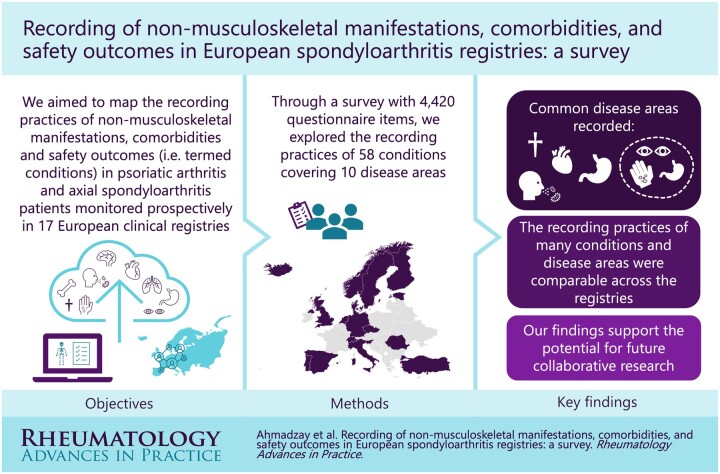
Objectives: Real-world evidence is needed to inform treatment strategies for patients with PsA and axial SpA (axSpA) who have non-musculoskeletal manifestations (NMMs), various risk factors and comorbidities. International collaboration is required to ensure statistical power and to enhance generalizability. The first step forward is identifying which data are currently being collected. Across 17 registries participating in the European Spondyloarthritis Research Collaboration (EuroSpA), we aimed to map recording practices for NMMs, comorbidities and safety outcomes in patients with PsA and axSpA.
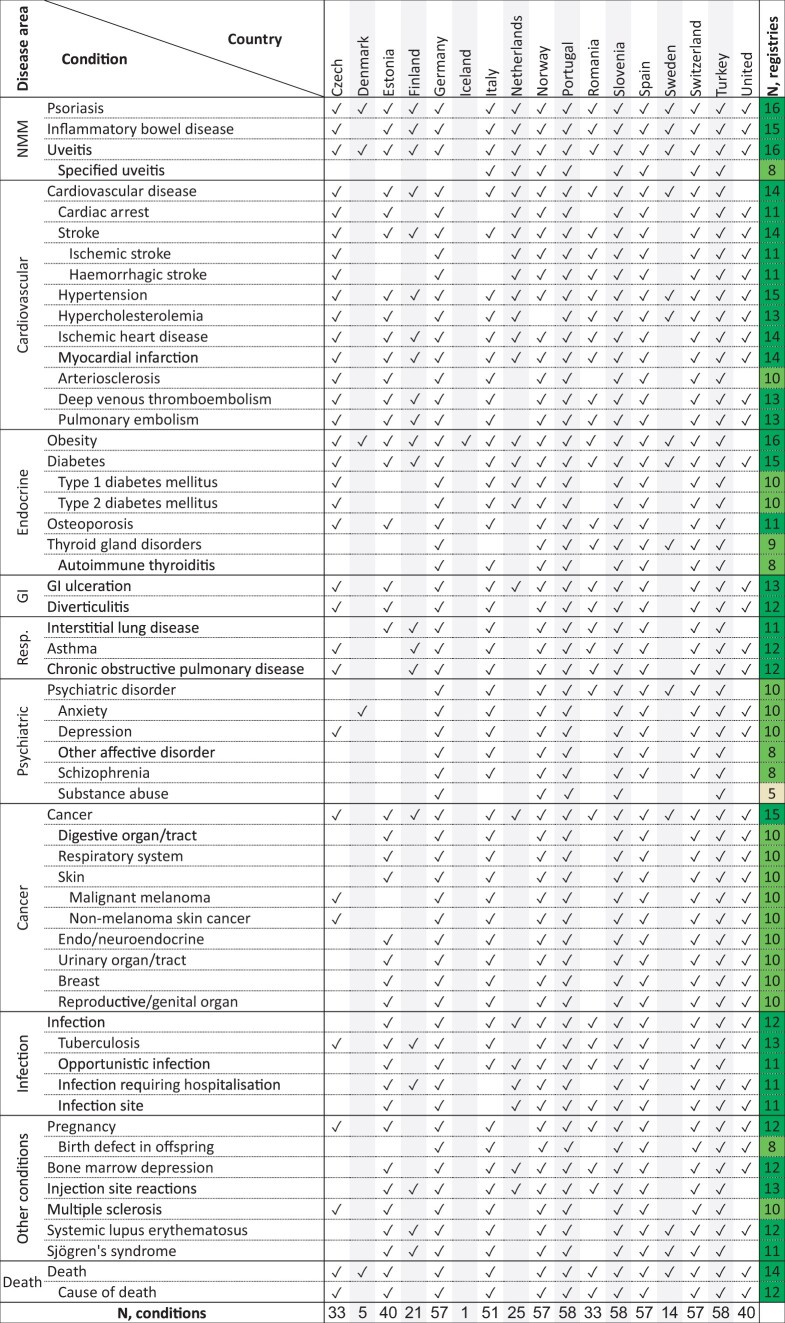
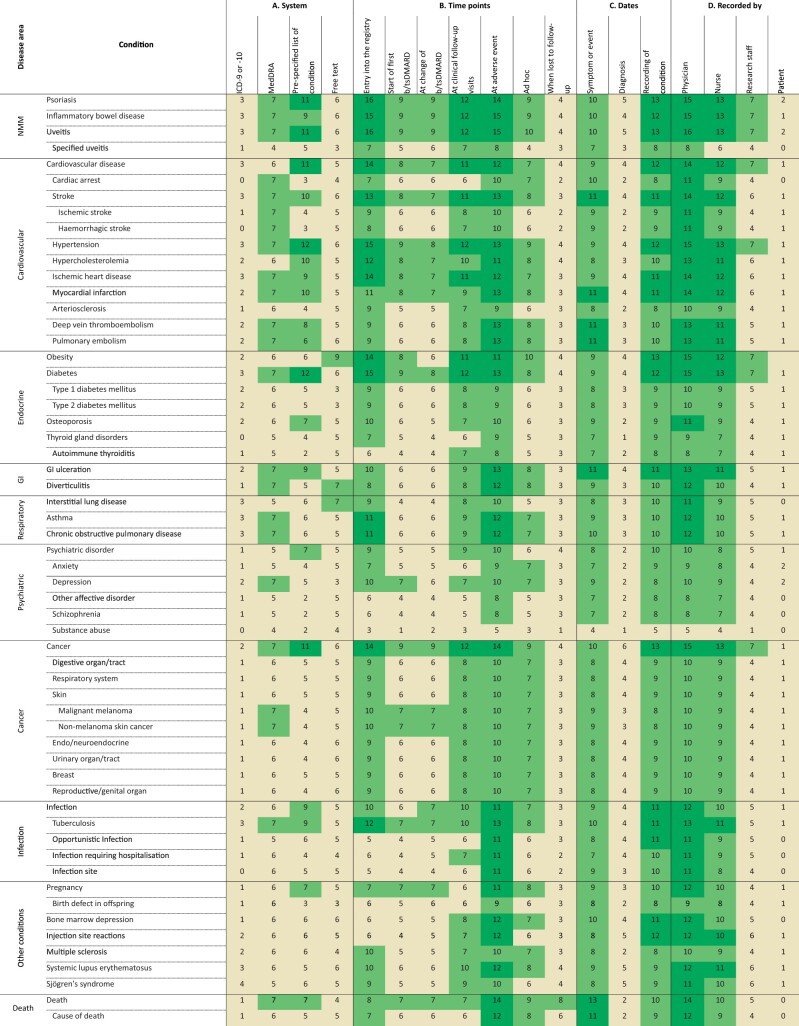
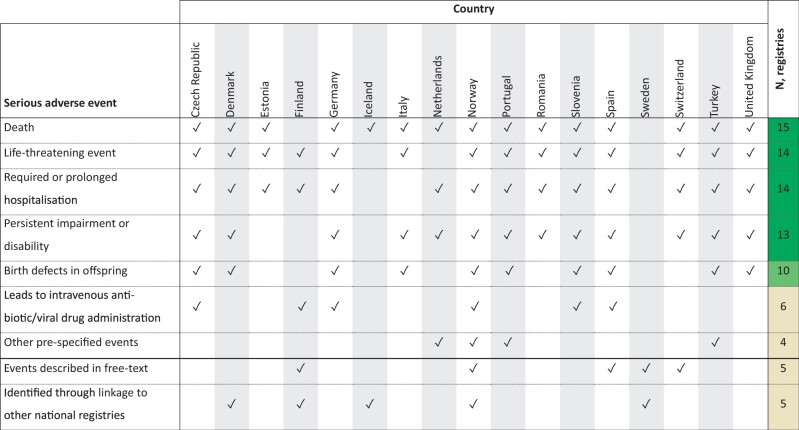
Methods: Through a survey with 4,420 questionnaire items, we explored the recording practices of 58 pre-defined conditions (i.e. NMMs, comorbidities and safety outcomes) covering 10 disease areas. In all registries we mapped for each condition whether it was recorded, the recording procedure and the potential to identify it through linkage to other national registries.
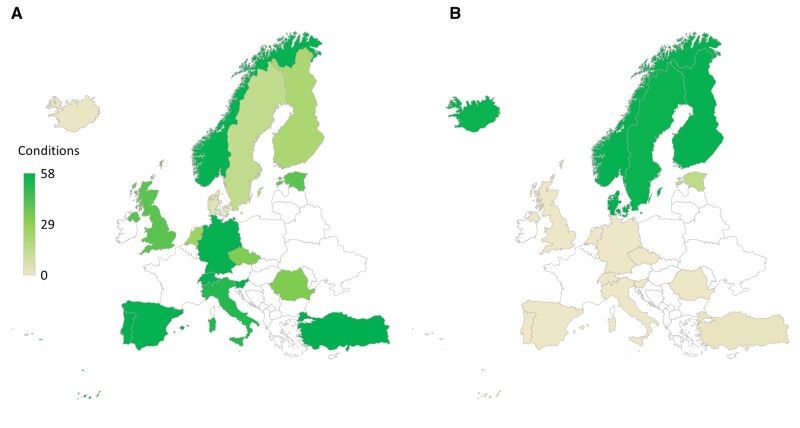
Results: Conditions were generally recorded at entry into the registry and clinical follow-up visits using a pre-specified list or a coding system. Most registries recorded conditions within the following disease areas: NMMs (number of registries, n = 15-16), cardiovascular diseases (n = 10-14), gastrointestinal diseases (n = 12-13), infections (n = 10-13) and death (n = 14). Nordic countries had the potential for data linkage and generally had limited recording of conditions in their registry, while other countries had comprehensive recording practices.
Conclusion: A wide range of conditions were consistently recorded across the registries. The recording practices of many conditions and disease areas were comparable across the registries. Our findings support the potential for future collaborative research.
Keywords: DMARDs; JAK inhibitors; biological therapies; comorbidity; multimorbidity; routinely collected data; spondyloarthritis.
© The Author(s) 2024. Published by Oxford University Press on behalf of the British Society for Rheumatology.
Figures
References
-
- Ashrafi M, Ermann J, Weisman MH.. Spondyloarthritis evolution: what is in your history? Curr Opin Rheumatol 2020;32:321–9. - PubMed
-
- Rudwaleit M, van der Heijde D, Landewé R. et al. The Assessment of SpondyloArthritis international Society classification criteria for peripheral spondyloarthritis and for spondyloarthritis in general. Ann Rheum Dis 2011;70:25–31. - PubMed
LinkOut - more resources
Full Text Sources
Research Materials
Miscellaneous