


Evaluation of the cost and care outcomes by group related to the diagnosis of bariatric surgery
- PMID: 39614214
- PMCID: PMC11606067
- DOI: 10.1186/s12893-024-02682-y
Evaluation of the cost and care outcomes by group related to the diagnosis of bariatric surgery
Abstract
Background: To conduct a comprehensive assessment of real patient data undergoing the procedure within a healthcare provider, integrating both costs and care stages related to bariatric surgery, emphasizing the relevance of analysis by Diagnosis-related group (DRG).
Methods: Prospective study of patients coded by DRG within a network of providers accredited to a Brazilian healthcare provider. All patients coded with metabolic and bariatric surgery (MBS) between 01/2019 and 06/2023 and undergoing gastrectomy procedure were included for analysis. The cost base used was derived from administrative payment information of the healthcare provider. Analyses were presented as mean, median, and standard deviation. Levene, Student's t-test, Kendall's tau, and Pearson's chi-square tests were used.
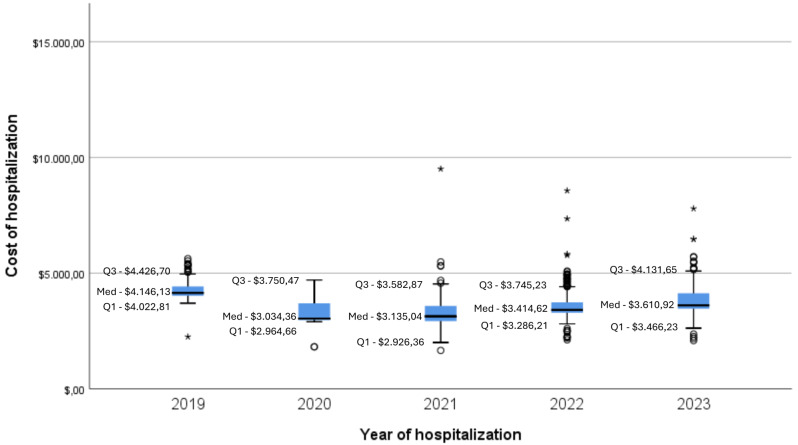
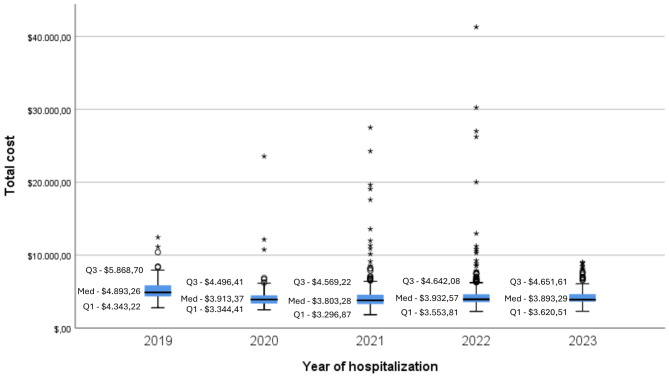
Results: The study included a total of 1408 patients who underwent MBS in four prominent hospitals in the area during the specified period. Among these patients, an average of 74.8% were female, with a mean age of 37.31 years and a mean body mass index (BMI) of 40.3 kg/m2. Furthermore, 88.9% of the patients underwent gastric bypass. Although there were few acquired complications during hospital admission there were vascular complications following infusion, transfusion, and therapeutic injection, 22.45% (n = 11), hemorrhage and hematoma complicating procedure not classified elsewhere, 8.16% (n = 4), leakage, 8.16% (n = 4), and one death during this study. There were 67 readmissions within 30 days (4,75%). The total costs incurred throughout the patient's journey, covering hospitalization and one-year post-procedure, exhibited a median value of $4,078.53. Additionally, a notable positive association was observed between post-discharge expenses and age, indicating a tendency for costs to rise as patients grow older.
Conclusion: The identified results highlight the complexity and challenges associated with bariatric surgery, including patient management and substantial costs involved. Therefore, a more comprehensive and personalized approach in postoperative management and resource allocation may be necessary to optimize clinical and economic outcomes.
Keywords: BMI; Bariatric surgery; Diagnosis related groups; Obesity; Real World data; Supplementary health; Value-based healthcare.
© 2024. The Author(s).
Conflict of interest statement
Declarations. Ethics approval and consent to participate: Ethical approval and informed consent from participants were not required for this study as it involved the analysis of secondary data, which were anonymized and did not contain any personally identifiable information. This is in accordance with the Declaration of Helsinki, which allows for the use of anonymized secondary data without the need for ethical approval, provided that the data are handled in a manner that protects the privacy and confidentiality of the individuals involved. This is in accordance with the Brazilian National Health Council Resolution CNS 466/12. Consent for publication: Not applicable. Competing interests: The authors declare no competing interests.
Figures

References
-
- Salgado Júnior W, Pitanga KC, Santos JS dos, Sankarankutty AK, Silva O Jr, de Ceneviva C. R. Custos da cirurgia bariátrica em hospital universitário e financiamento do Sistema Único de Saúde. Acta Cir Brás [Internet]. Março de 2010;25(2):201–5. 10.1590/S0102-86502010000200014 - PubMed
-
- ABESO. Associação Brasileira para o Estudo da Obesidade e Síndrome Metabólica. Mapa da Obesidade. Disponível em: https://abeso.org.br/obesidade-e-sindrome-metabolica/mapa-da-obesidade/#
MeSH terms
LinkOut - more resources
Full Text Sources
Medical
