. 2024 Nov 30;43(1):314.
doi: 10.1186/s13046-024-03237-y.

Targeting PRMT5 through PROTAC for the treatment of triple-negative breast cancer

Affiliations

Targeting PRMT5 through PROTAC for the treatment of triple-negative breast cancer

Yaxun Guo et al. J Exp Clin Cancer Res. .

Abstract

Background: Triple-negative breast cancer (TNBC) is currently the most aggressive subtype of breast cancer, characterized by high heterogeneity and strong invasiveness, and currently lacks effective therapies. PRMT5, a type II protein arginine methyltransferase, is upregulated in numerous cancers, including TNBC, and plays a critical role, marked it as an attractive therapeutic target. PROTAC (Proteolysis Targeting Chimeras) is an innovative drug development technology that utilizes the ubiquitin-proteasome system (UPS) to degrade target proteins, which is characterized by higher activity, enhanced safety, lower resistance, and reduced toxicity, offering significant value for clinical translation.

Methods: This study utilizes the PROTAC technology to develop potential degraders targeting PRMT5 in vitro and in vivo.

Results: Through the design, synthesis and screening of a series of targeted compounds, we identified YZ-836P as an effective compound that exerted cytotoxic effects and reduced the protein levels of PRMT5 and its key downstream target protein KLF5 in TNBC after 48 h. Its efficacy was significantly superior to the PRMT5 PROTAC degraders that had been reported. YZ-836P induced G1 phase cell cycle arrest and significantly induced apoptosis in TNBC cells. Additionally, we demonstrated that YZ-836P promoted the ubiquitination and degradation of PRMT5 in a cereblon (CRBN)-dependent manner. Notably, YZ-836P exhibited pronounced efficacy in inhibiting the growth of TNBC patient-derived organoids and xenografts in nude mice.

Conclusions: These findings position YZ-836P as a promising candidate for advancing treatment modalities for TNBC.

Trial registration: Ethics Committee of Yunnan Cancer Hospital, KYCS2023-078. Registered 7 June 2023.

Keywords: KLF5; PRMT5; PROTAC; TNBC.


Conflict of interest statement

Declarations. Ethics approval and consent to participate: The animal experiment followed the ARRIVE guidelines and had been approved by the Animal Ethics Committee of the Kunming Medical University (kmmu20240729). Additionally, the patient-derived organoids assays conformed the Declaration of Helsinki and had been approved by the Ethics Committee of Yunnan Cancer Hospital (KYCS2023-078). Consent for publication: All the authors consent for publication. Competing interests: The authors declare no potential conflicts of interest.

Figures
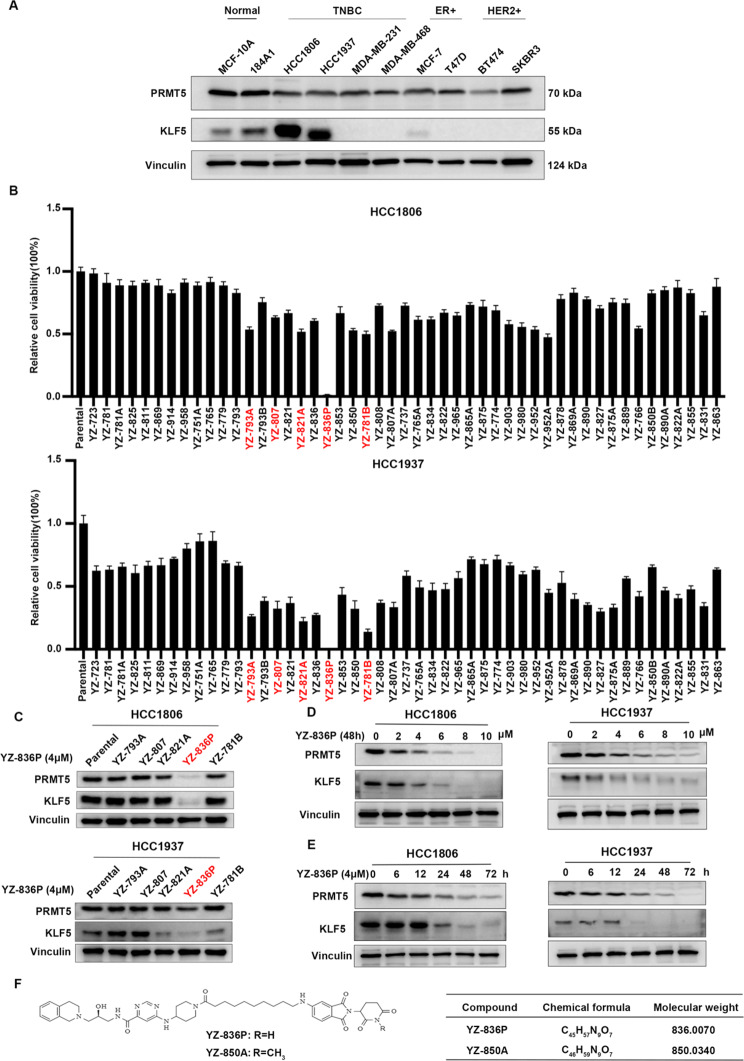
Fig. 1
Fig. 1
YZ-836P was identified as a PRMT5 PROTAC in TNBC. (A) PRMT5 and KLF5 protein expression levels in breast cancer cell lines and immortalized breast epithelial cell lines were detected by WB. (B) The cytotoxic effects of 49 compounds on HCC1806 and HCC1937 cells were assessed by the SRB assay (48 h, 4 µM). (C) Evaluation the effects of candidate compounds (48 h, 4 µM) on the protein level of PRMT5 and KLF5 by WB. (D) YZ-836P reduced PRMT5 and KLF5 protein levels in a concentration-dependent manner (48 h) in both HCC1806 and HCC1937 cell lines, as determined by WB. (E) YZ-836P could reduce PRMT5 and KLF5 proteins in a time-dependent manner (48 h, 4 µM). (F) The molecular formula and molecular weight of YZ-836P and YZ-850A
Fig. 2
Fig. 2
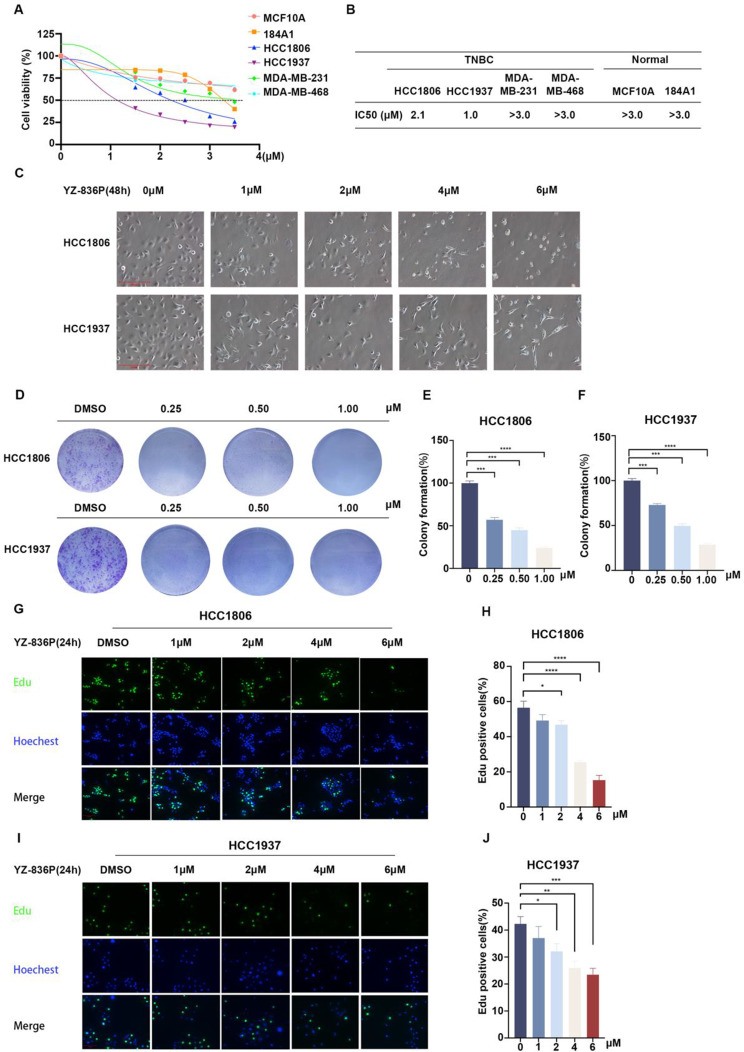
YZ-836P inhibits the growth of TNBC. (A) YZ-836P reduced the viability of various TNBC cell lines and immortalized breast epithelial cell lines. (B) Statistical analysis of the IC50 values of YZ-836P in six cell lines. (C) Microscopic observation of morphological changes of HCC1806 and HCC1937 cells after treatment with YZ-836P. (D) YZ-836P inhibits the colony formation of HCC1806 and HCC1937 cells. (E) Inhibitory effects of YZ-836P on colony formation in HCC1806 cells. The graphs showed statistical results of colony formation (n = 3 per group). (F) Inhibitory effects of YZ-836P on colony formation in HCC1937 cells. (G) YZ-836P inhibited DNA synthesis of HCC1806 cells. EdU incorporation assays were used to measure the effects of different concentrations of YZ-836P on DNA synthesis (24 h). Blue represented Hoechst staining, and green represented EdU staining. (H) Statistical results of the proportion of EdU-positive HCC1806 cells after treatment with YZ-836P (n = 6 per group). (I) YZ-836P inhibited DNA synthesis in HCC1937 cells. (J) Statistical results of the proportion of EdU-positive HCC1937 cells after treatment with YZ-836P (n = 6 per group). Data represent results from three independent experiments. *p < 0.05, **p < 0.01, and ***p < 0.001; ns, not significant
Fig. 3
Fig. 3
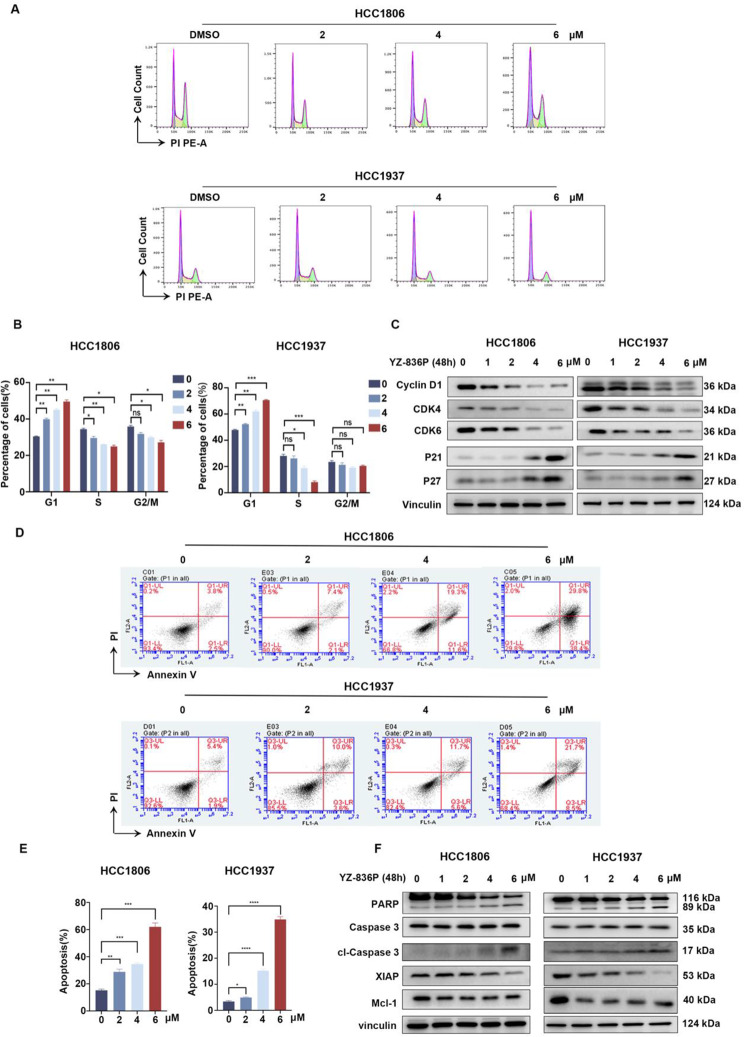
YZ-836P induces cell cycle arrest and promotes apoptosis in TNBC. (A) YZ-836P increased the proportion of cells in the G1 phase. HCC1806 and HCC1937 cells were incubated with YZ-836P, stained with PI, and analyzed using flow cytometry (48 h). (B) YZ-836P induced the G1 phase cell cycle arrest in both cell lines. (C) YZ-836P regulated the expression levels of cell cycle-related proteins, including Cyclin D1, CDK6, CDK4, p21, and p27, as detected by WB. (D) YZ-836P induces apoptosis in both cell lines, as measured by Annexin V-PI double staining and flow cytometry. (E) Statistical results of panel D. (F) YZ-836P regulated the expression of apoptosis-related proteins, including cleaved Caspase 3 and PARP, XIAP, and Mcl-1, as detected by WB. Data represent results from three independent experiments. *p < 0.05, **p < 0.01, and ***p < 0.001; ns, not significant
Fig. 4
Fig. 4
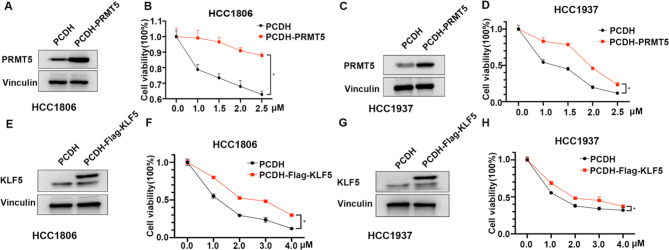
YZ-836P inhibits TNBC via the PRMT5-KLF5 pathway. (A) PRMT5 overexpression in HCC1806 cells, as demonstrated by WB. (B) PRMT5 overexpression in HCC1806 cells partially and significantly blocked the cytotoxic effects of YZ-836P (48 h). (C) PRMT5 overexpression in HCC1937 cells, as demonstrated by WB. (D) PRMT5 overexpression in HCC1806 cells partially and significantly blocked the cytotoxic effects of YZ-836P (48 h). (E) KLF5 overexpression in HCC1806 cells, as demonstrated by WB. (F) KLF5 overexpression in HCC1806 cells partially and significantly blocked the cytotoxic effects of YZ-836P (48 h). (G) KLF5 overexpression in HCC1937 cells, as demonstrated by WB. (H) KLF5 overexpression in HCC1806 cells partially and significantly blocked the cytotoxic effects of YZ-836P (48 h). Data represent results from three independent experiments. *p < 0.05, **p < 0.01, and ***p < 0.001; ns, not significant
Fig. 5
Fig. 5
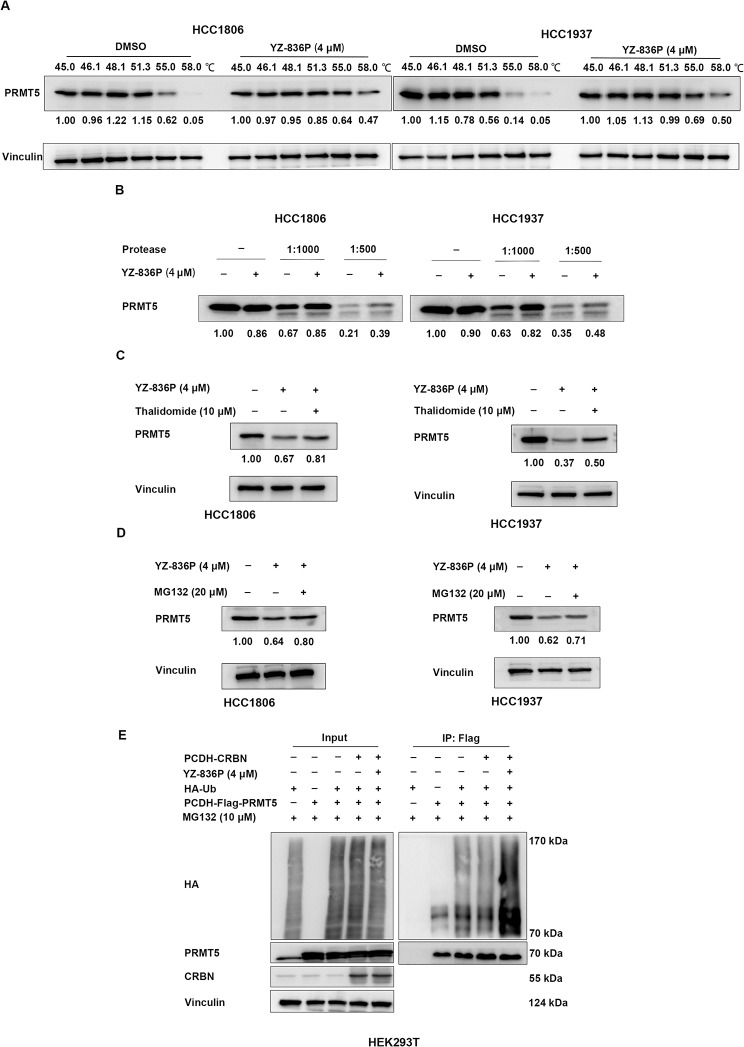
YZ-836P interacts with and degrades PRMT5 via the CRBN-mediated ubiquitination and proteasomal degradation. (A) CETSA assays revealed that YZ-836P increased the thermostability of PRMT5 protein. (B) DARTS assays revealed that YZ-836P decreased the degradation of PRMT5 protein by proteases. (C) Thalidomide (10 µM) treatment reversed YZ-836P-induced degradation of PRMT5 protein in HCC1806 cells (48 h) and HCC1937 cells (48 h). (D) MG132 (20 µM) treatment reversed YZ-836P-induced degradation of PRMT5 protein in HCC1806 cells (48 h) and HCC1937 cells (48 h). (E) YZ-836P increased ubiquitination of PRMT5 in HEK293T cells. Data represent results from three independent experiments. *p < 0.05, **p < 0.01, and ***p < 0.001; ns, not significant
Fig. 6
Fig. 6
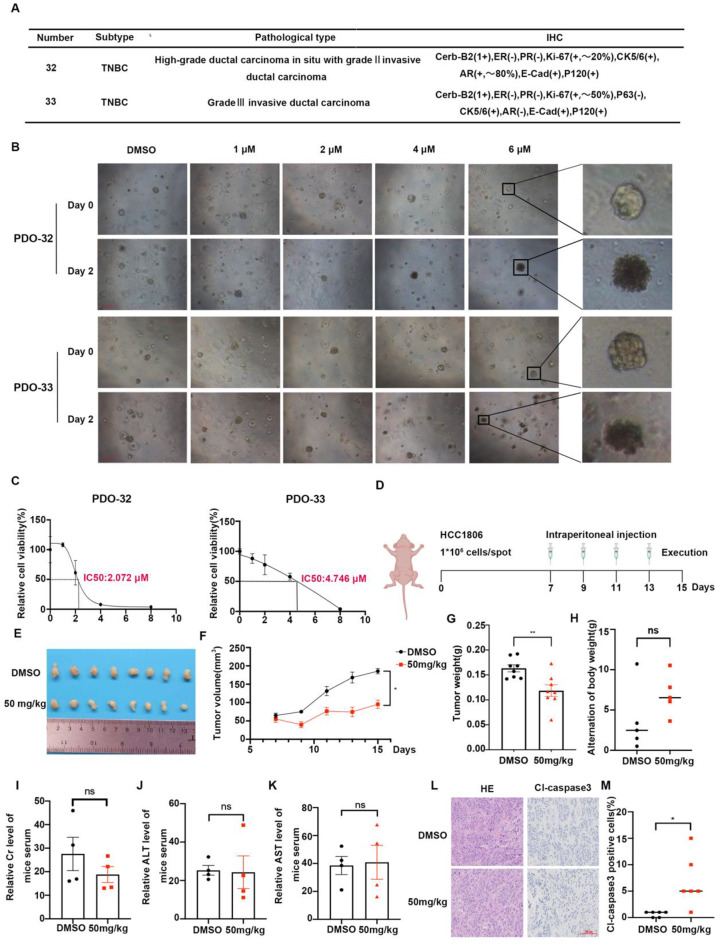
YZ-836P inhibits growth of TNBC patient-derived organoids and xenograft tumors in vivo. (A) Pathological data of two TNBC patients. (B) YZ-836P disrupted the structural integrity of PDOs. Microscopic observation of PDOs morphology before and after 48 h of YZ-836P treatment. Arrows indicated decomposing PDOs. (C) YZ-836P inhibited ATP activity in PDOs. Cell viability changes in PDOs treated with YZ-836P for 48 h, measured by using an ATPase activity assay kit. (D) Schematic of the xenograft tumor model in nude mice and treatment protocol. (E) YZ-836P inhibited xenograft tumor growth. Mice were sacrificed 15 days after tumor inoculation, and tumors were collected and photographed (n = 8 per group). (F) YZ-836P reduced xenograft tumor volume. Tumor volume was measured every other day starting from the 7th day after inoculation (n = 8 per group). (G) YZ-836P decreased xenograft tumor weight. Tumor weight was measured after collection (n = 8 per group). (H) Body weight changes in nude mice before and after YZ-836P treatment (n = 4 per group). (I) YZ-836P treatment did not significantly affect serum creatinine (Cr) levels (n = 4 per group). (J) YZ-836P treatment did not significantly affect serum alanine aminotransferase (ALT) levels (n = 4 per group). (K) YZ-836P treatment did not significantly affect serum aspartate aminotransferase (AST) levels (n = 4 per group). (L) Immunohistochemical analysis of cl-Caspase 3 expression in xenograft tumors, with representative images. (M) YZ-836P treatment significantly increased cl-Caspase 3 expression in xenograft tumors (n = 6 per group). Data represent results from three independent experiments. *p < 0.05, **p < 0.01, and ***p < 0.001; ns, not significant

References

    1. Al-Mahmood S, Sapiezynski J, Garbuzenko OB, Minko T. Metastatic and triple-negative breast cancer: challenges and treatment options. Drug Deliv Transl Res. 2018;8(5):1483–507. - PMC - PubMed
    1. Lin NU, Vanderplas A, Hughes ME, Theriault RL, Edge SB, Wong YN, Blayney DW, Niland JC, Winer EP, Weeks JC. Clinicopathologic features, patterns of recurrence, and survival among women with triple-negative breast cancer in the National Comprehensive Cancer Network. Cancer. 2012;118(22):5463–72. - PMC - PubMed
    1. Cortes J, Rugo HS, Cescon DW, Im SA, Yusof MM, Gallardo C, Lipatov O, Barrios CH, Perez-Garcia J, Iwata H, et al. Pembrolizumab plus Chemotherapy in Advanced Triple-negative breast Cancer. N Engl J Med. 2022;387(3):217–26. - PubMed
    1. Bardia A, Hurvitz SA, Tolaney SM, Loirat D, Punie K, Oliveira M, Brufsky A, Sardesai SD, Kalinsky K, Zelnak AB, et al. Sacituzumab Govitecan in Metastatic Triple-negative breast Cancer. N Engl J Med. 2021;384(16):1529–41. - PubMed
    1. Chen Z, Wang X, Li X, Zhou Y, Chen K. Deep exploration of PARP inhibitors in breast cancer: monotherapy and combination therapy. J Int Med Res. 2021;49(2):300060521991019. - PMC - PubMed

MeSH terms

Substances

LinkOut - more resources