


A systematic review of botulinum toxin as a treatment for Raynaud's disease secondary to scleroderma
- PMID: 39615000
- PMCID: PMC11729122
- DOI: 10.1007/s10067-024-07237-3
A systematic review of botulinum toxin as a treatment for Raynaud's disease secondary to scleroderma
Abstract
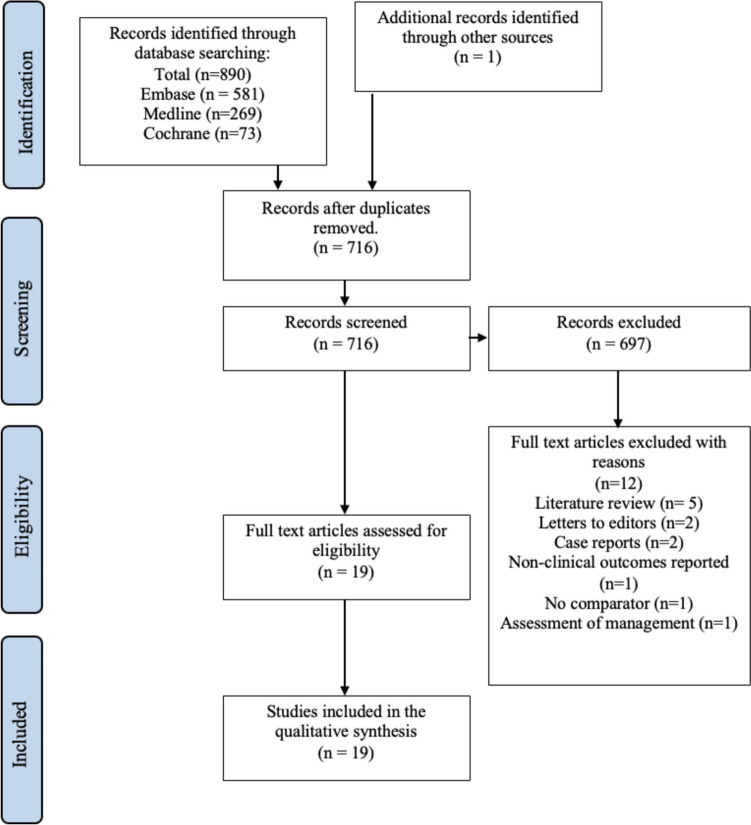
Raynaud's phenomenon (RP) is a vasospastic disorder that affects the small blood vessels in the extremities such as the hands, feet, fingers or toes. It is a debilitating condition that can severely impact the patient's quality of life. Botulinum toxin (BTX) has been examined as a treatment option for RP, but its effect has been inconclusive. A systematic review has been conducted to determine the current evidence of BTX as a treatment for RP secondary to scleroderma. Major clinical databases Medline, Embase (via Ovid), the Cochrane Central Library, ClinicalTrials.gov, EU Clinical Trials Register and the ISRCTN registry were systematically searched from its inception to 27 November 2023 for studies describing BTX and RP. Standard mean differences of Quick-DASH scores, visual analogue scale pain (VAS-P) score and Raynaud's condition score (RCS) are reported with BTX treatment with a random-effect model. A total of 890 entries were retrieved. Of these, 19 met the inclusion criteria, and all studies were included for analysis. There was a significant effect (p = 0.03) with Quick-DASH score and VAS-P score (p < 0.00001) but a non-significant effect (p = 0.37) with RCS. BTX is a therapeutic option in the treatment of RP secondary to scleroderma; however, the evidence published so far is not sufficient to credit it as a revolutionary first line treatment. More research is needed to establish dosing, techniques and core outcome measures for BTX in RP.
Keywords: Botulinum toxin; Raynaud’s disease; Scleroderma; Systematic review.
© 2024. The Author(s).
Conflict of interest statement
Declarations. Disclosures: None.
Figures


References
-
- Cappelli L, Wigley FM (2015) Management of Raynaud phenomenon and digital ulcers in scleroderma. Rheum Dis Clin 41(3):419–38 - PubMed
-
- Cooke JP, Marshall JM (2005) Mechanisms of Raynaud’s disease. Vasc Med 10(4):293–307 - PubMed
-
- Herrick AL, Wigley FM (2020) Raynaud’s phenomenon. Best Pract Res: Clin Rheumatol 34(1):101474 - PubMed
Publication types
MeSH terms
Substances
LinkOut - more resources
Full Text Sources
Medical
Miscellaneous
