


Preeclampsia: Etiology, Pathophysiology, Risk Factors, Impact and Prevention: A Narrative Review
- PMID: 39619908
- PMCID: PMC11607152
- DOI: 10.18502/ijph.v53i11.16941
Preeclampsia: Etiology, Pathophysiology, Risk Factors, Impact and Prevention: A Narrative Review
Abstract
Background: Preeclampsia (PE) caused 30%-40% of maternal and newborn deaths worldwide. Despite unclear exact cause, strategies exist to mitigate less severe PE effects. This review explores PE etiology, pathophysiology, risk factors, impact, and prevention.
Methods: Searching Scopus, PubMed, ProQuest, Google Scholar, and Science Direct for "preeclampsia and pregnancy" and "prevention" yielded 2012-2022 articles.
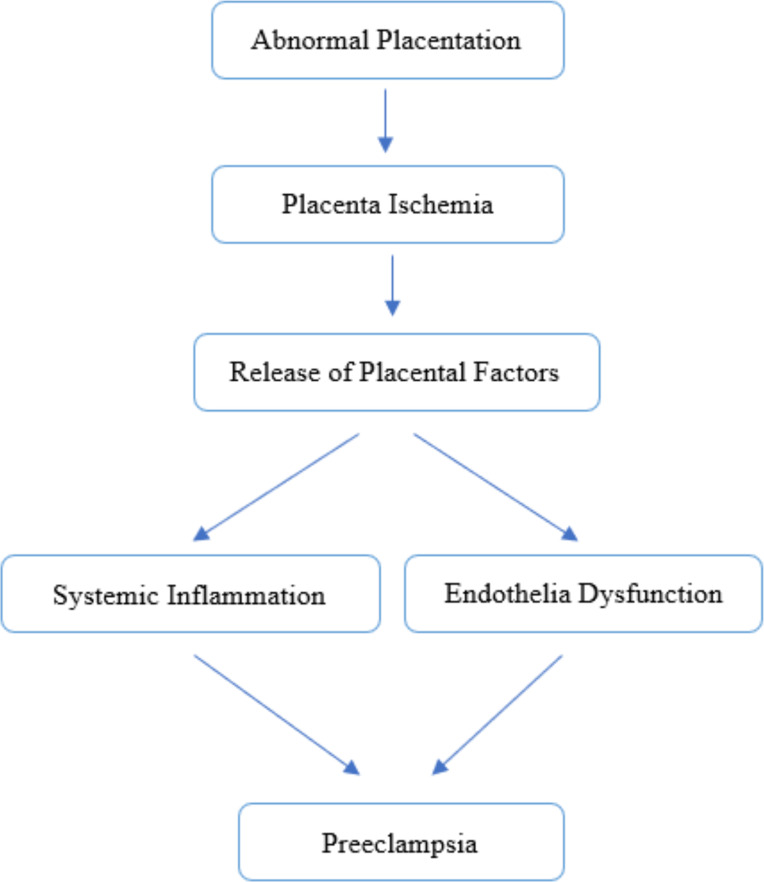
Results: Preeclampsia features abnormal placental changes, altered immunity response, trophoblast apoptosis, and reduced uterine perfusion. Risk factors include hypertension history, nulliparity, age over 40, BMI over 35 kg/m2, family history, amniotic pregnancy, and long pregnancy interval. This condition risks cardiovascular and neonatal morbidity, straining health resources. Prevention involves aspirin, vitamin D, exercise, folic acid, diet, early screening, and antenatal care.
Conclusion: Findings emphasize enhancing health literacy and preeclampsia education in prenatal care to mitigate PE risk among women. Further research, novel therapies, and assessing prevention strategies with accessible educational materials and multidisciplinary approaches are warranted to enhance pregnant women's health literacy and decrease PE risk.
Keywords: Etiology; Impact; Preeclampsia; Prevention; Risk factor.
Copyright© 2024 Mustary et al. Published by Tehran University of Medical Sciences.
References
-
- Mazloomi S, Khodadadi I, Alimohammadi S, et al. (2021). Correlation of thioredoxin reductase (TrxR) and nitric oxide synthase (NOS) activities with serum trace elements in preeclampsia. Clin Exp Hypertens, 43(2): 120–4. - PubMed
-
- Ortved D, Hawkins TLA, Johnson JA, et al. (2019). Cost-effectiveness of first-trimester screening with early preventative use of aspirin in women at high risk of early-onset preeclampsia. Ultrasound Obstet Gynecol, 53(2) : 239–44. - PubMed
Publication types
LinkOut - more resources
Full Text Sources