Review
. 2024 Nov 19:7:45.
doi: 10.20517/cdr.2024.131. eCollection 2024.

Reprogrammed lipid metabolism in advanced resistant cancers: an upcoming therapeutic opportunity

Affiliations
Review

Reprogrammed lipid metabolism in advanced resistant cancers: an upcoming therapeutic opportunity

Mario Cioce et al. Cancer Drug Resist. .

Abstract

Resistance of cancer to therapy is the main challenge to its therapeutic management and is still an unsolved problem. Rearranged lipid metabolism is a strategy adopted by cancer cells to counteract adversity during their evolution toward aggressiveness and immune evasion. This relies on several mechanisms, ranging from altered metabolic pathways within cancer cells to evolved dynamic crosstalk between cancer cells and the tumor microenvironment (TME), with some cell populations at the forefront of metabolic reprogramming, thereby contributing to the resistance of the whole ecosystem during therapy. Unraveling these mechanisms may contribute to the development of more effective combinatorial therapy in resistant patients. This review highlights the alterations in lipid metabolism that contribute to cancer progression, with a focus on the potential clinical relevance of such findings for the management of therapy resistance.

Keywords: Metabolic signaling; immune evasion; metastasis; therapy resistance; tumor microenvironment.


Conflict of interest statement

Cioce M is an Editorial Board member of the Journal Cancer Drug Resistance, and all authors declared that there are no conflicts of interest.

Figures
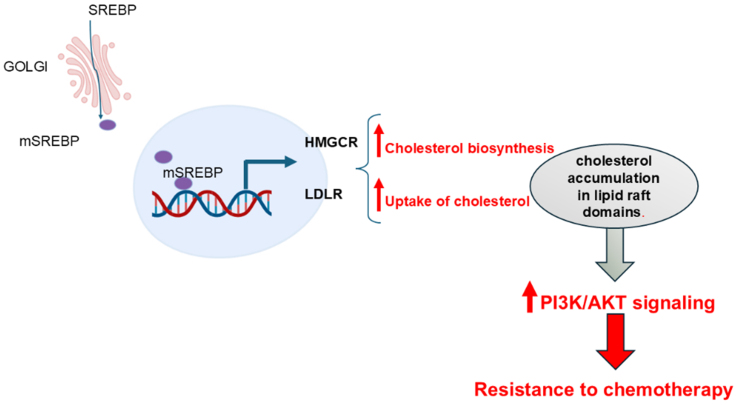
Figure 1
Figure 1
Cholesterol metabolism promotes chemoresistance. The SREBPs are a family of transcription factors. The mature active form of SREBP is generated within the Golgi apparatus by the cleavage of the precursor protein. Active forms of SREBP then translocate to the nucleus, where they promote transcription of genes involved in FA synthesis and cholesterol metabolism, including HMGCR and LDLR. HMGCR stimulates the synthesis of cholesterol. LDLR facilitates the internalization of cholesterol-carrying lipoproteins into cells. This results in the accumulation of cholesterol, predominantly within lipid raft domains, which, in turn, promotes AKT signaling and resistance to chemotherapy. Created with BioRender.com. HMGCR: 3-Hydroxy-3-methylglutaryl coenzyme A reductase; LDLR: low-density lipoprotein receptor; PI3K: phosphoinositide 3-kinase; AKT: protein kinase B.
Figure 2
Figure 2
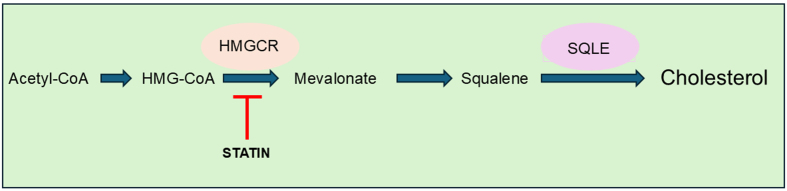
A simplified representation of the cholesterol biosynthesis pathway. A simplified representation of the cholesterol biosynthesis pathway. The process begins with acetyl-CoA. Subsequent reactions involve the union of acetyl-CoA and acetoacetyl-CoA, resulting in the formation of HMG-CoA. HMGCR then facilitates the reduction of HMG-CoA, resulting in the production of mevalonate and then squalene, which ultimately leads to the production of cholesterol. HMGCR is the rate-limiting enzyme in the cholesterol biosynthesis pathway. SQLE plays a critical role in the mevalonate-cholesterol pathway. Statins inhibit HMGCR, preventing the synthesis of mevalonate and cholesterol. HMGCR: 3-Hydroxy-3-methylglutaryl coenzyme A reductase; SQLE: squalene epoxidase.
Figure 3
Figure 3
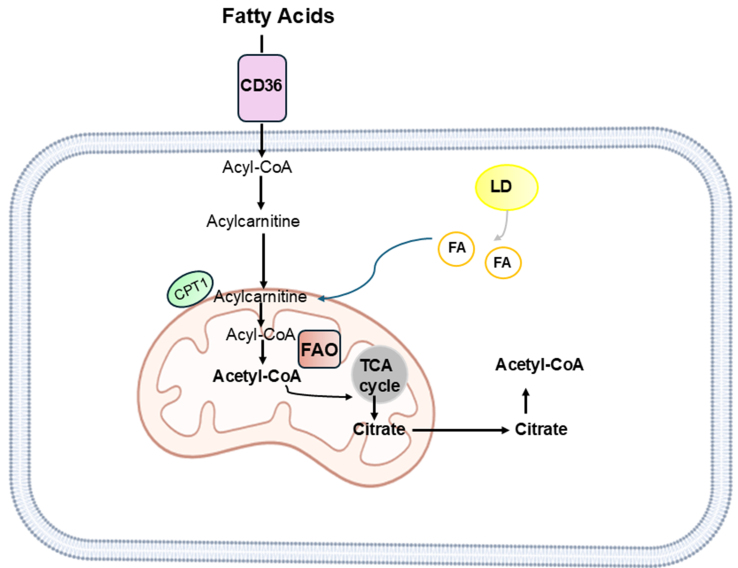
A simplified representation of FAO. Mitochondrial FAO is a catabolic process that breaks down long-chain FAs to produce acetyl-CoA. The long-chain FA requires the carnitine shuttle system to deliver long-chain FA from the cytoplasm to the mitochondria. CPT1 in the outer mitochondrial membrane controls the entry of FAs into the mitochondria. FA-CoA is metabolized to an acylcarnitine derivative; acylcarnitine is then reconverted to FA-CoA in the mitochondria, where it undergoes a series of dehydrogenation reactions to form acetyl-CoA. CoA then enters the TCA cycle to make ATP. LDs release FAs to form acyl-CoA. Created with BioRender.com. FAO: β-Fatty acid oxidation; FAs: fatty acids; CPT1: carnitine palmitoyltransferase 1; TCA: tricarboxylic acid cycle; ATP: adenosine triphosphate; LDs: lipid droplets.
Figure 4
Figure 4
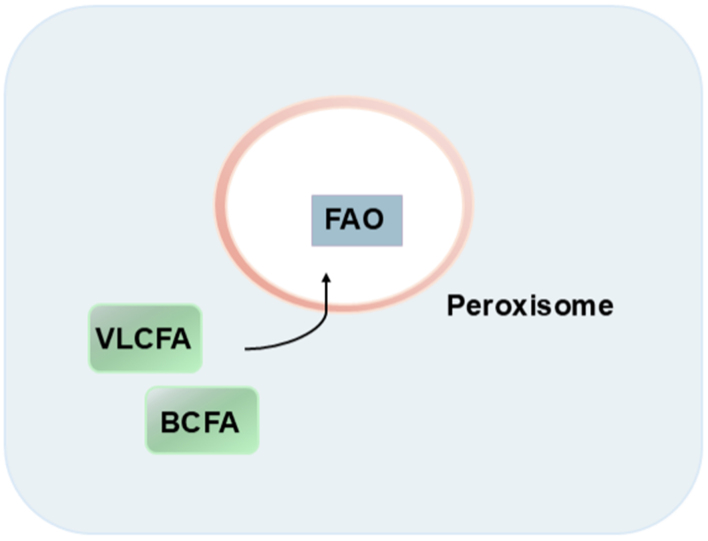
A simplified representation of Peroxisome. Peroxisomes are membrane-bound organelles. They contain enzymes such as catalase and peroxidase, which are needed to break down FAs and hydrogen peroxide. Complex lipids are broken down in peroxisomes. FAs: Fatty acids; VLCFA: very long chain fatty acid; FAO: β-fatty acid oxidation; BCFA: branched-chain fatty acid.
Figure 5
Figure 5
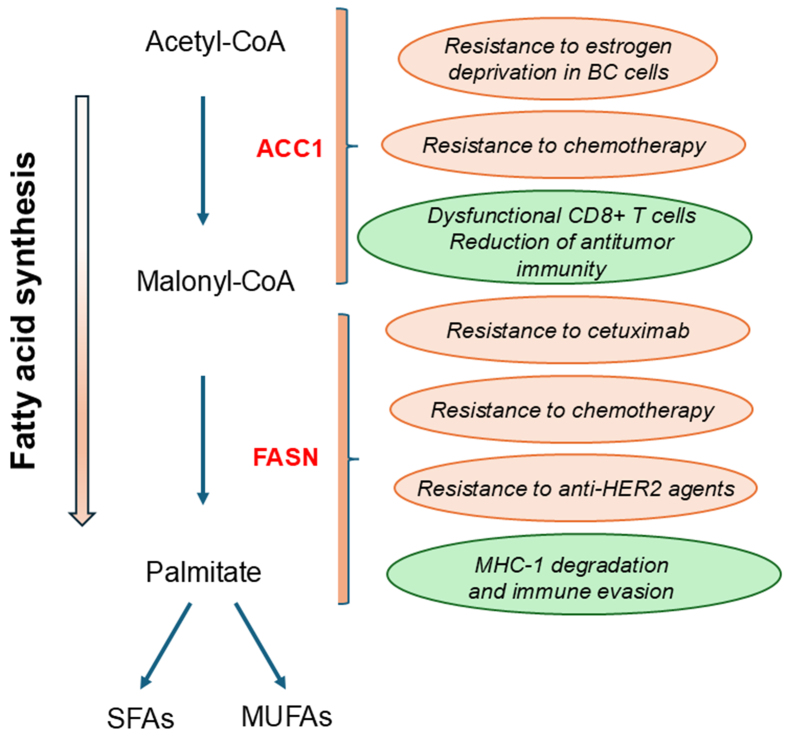
ACC1 and FASN as potential therapeutic targets for overcoming treatment resistance. A simplified representation of Fa synthesis provides phospholipids for the cell membrane. ACC1 is a critical enzyme in the carboxylation of acetyl-CoA to malonyl-CoA. Malonyl-CoA is then converted by FASN to palmitate, a saturated FA. Palmitate undergoes additional modifications, resulting in the production of SFA and MUFA. ACC1: Acetyl-CoA carboxylase 1; FASN: fatty acid synthase; FA: fatty acid; HER2: epidermal growth factor receptor 2; MHC-I: major histocompatibility complex class I.
Figure 6
Figure 6
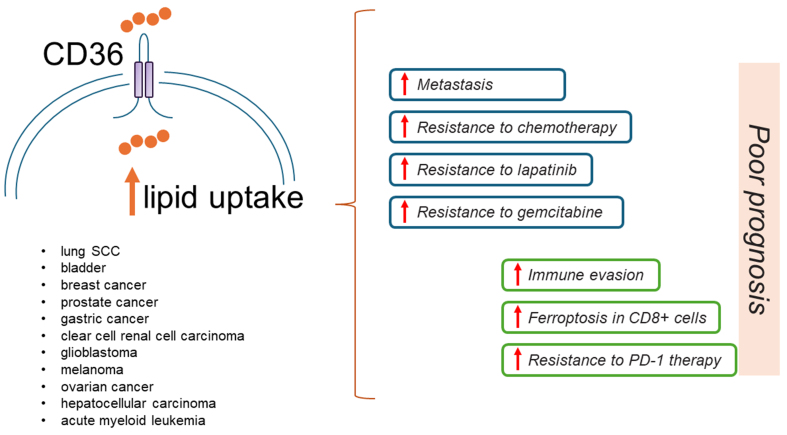
CD36 is a crucial target in aggressive and resistant tumors. A simplified representation showing that high levels of CD36 are correlated with malignancy, poor prognosis, and resistance to therapy in several cancers. CD36 is a FA transporter. FA: Fatty acid; SCC: squamous cell carcinoma; PD-1: programmed cell death protein 1.
Figure 7
Figure 7
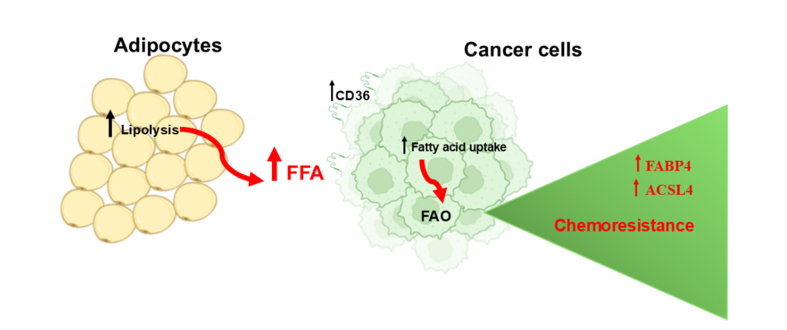
Uptake of FFAs promotes chemoresistance. Uptake of FFAs promotes FAO. Acetyl-CoA, a major product of FAO, increases phospholipid levels in mitochondria and improves their integrity. Upregulated FABP4 increases FAO and makes cancer cells more resistant to chemotherapy. Created with BioRender.com. FFA: Free fatty acids; FAO: β-fatty acid oxidation; FABP4: fatty acid-binding protein 4; ACSL4: long-chain acyl-CoA synthetase 4.
Figure 8
Figure 8
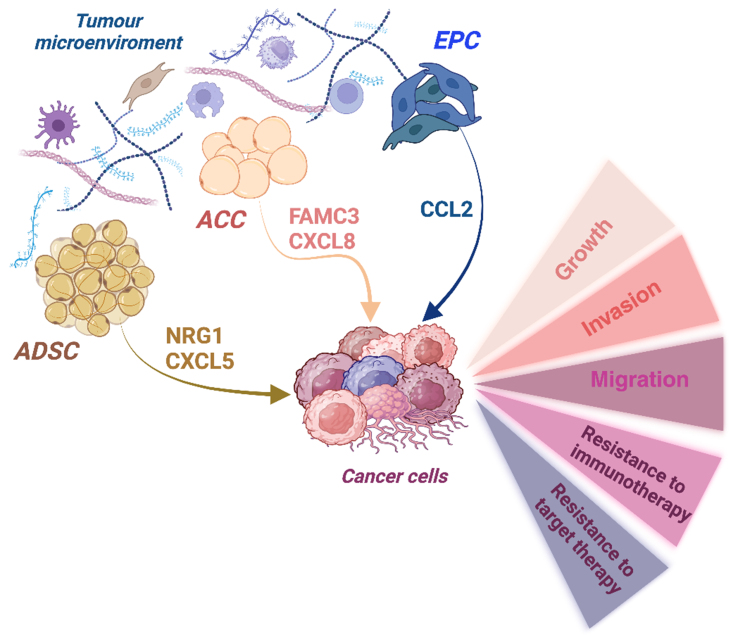
Paracrine signaling by TME on cancer cells. Cell subpopulations within the TME (ADSC, CAA, EPC) produce factors that support malignancy and drug resistance in cancer cells. Created with BioRender.com. TME: Tumor microenvironment; ADSC: adipose-derived stem cell; CAA: cancer-associated adipocytes; EPC: endothelial progenitor cell; NRG1: neuregulin 1; CXCL5: C-X-C motif chemokine ligand 5; FAM3C: metabolism-regulating signaling molecule C; CXCL8: CXC motif chemokine ligand 8; CCL2: CC motif chemokine ligand 2.
Figure 9
Figure 9
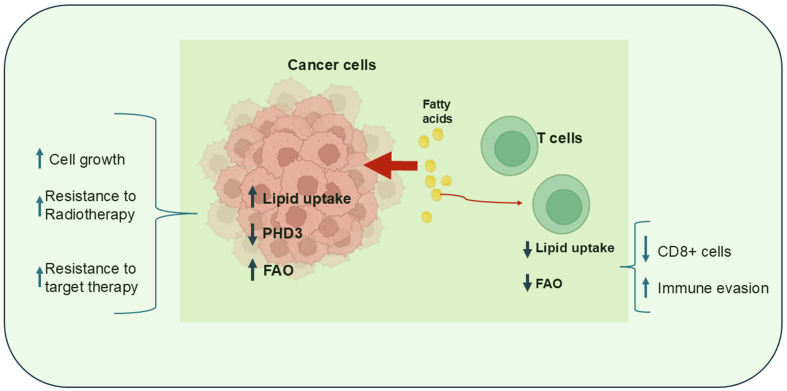
Competition for FA utilization between immune and tumor cells. Cancer cells compete with immune cells for FA uptake. FA uptake promotes FAO, which supports cell growth and resistance to treatment. PHD3 inhibits mitochondrial FA uptake. Created with BioRender.com. FA: fatty acid; FAO: β-fatty acid oxidation; PHD3: prolyl hydroxylase 3.

References

    1. Marusyk A, Janiszewska M, Polyak K. Intratumor heterogeneity: the rosetta stone of therapy resistance. Cancer Cell. 2020;37:471–84. doi: 10.1016/j.ccell.2020.03.007. - DOI - PMC - PubMed
    1. de Visser KE, Joyce JA. The evolving tumor microenvironment: from cancer initiation to metastatic outgrowth. Cancer Cell. 2023;41:374–403. doi: 10.1016/j.ccell.2023.02.016. - DOI - PubMed
    1. Zaytseva YY, Rychahou PG, Le AT, et al. Preclinical evaluation of novel fatty acid synthase inhibitors in primary colorectal cancer cells and a patient-derived xenograft model of colorectal cancer. Oncotarget. 2018;9:24787–800. doi: 10.18632/oncotarget.25361. - DOI - PMC - PubMed
    1. Jiang L, Xiao L, Sugiura H, et al. Metabolic reprogramming during TGFβ1-induced epithelial-to-mesenchymal transition. Oncogene. 2015;34:3908–16. doi: 10.1038/onc.2014.321. - DOI - PMC - PubMed
    1. Kumar N, Mandal CC. Cholesterol-lowering drugs on Akt signaling for prevention of tumorigenesis. Front Genet. 2021;12:724149. doi: 10.3389/fgene.2021.724149. - DOI - PMC - PubMed

LinkOut - more resources