


Clinical applications of exosomes in cosmetic dermatology
- PMID: 39624733
- PMCID: PMC11608875
- DOI: 10.1002/ski2.348
Clinical applications of exosomes in cosmetic dermatology
Abstract
Introduction: Exosomes are extracellular vesicles that transport bioactive substances during normal and abnormal cellular physiological processes. The unique properties of exosomes can be exploited for use as biomarkers and targeted drug delivery vehicles, and are, for this reason, gaining increasing attention in the field of dermatology. This review aims to synthesise the existing evidence supporting exosomes in regenerative and cosmetic dermatology.
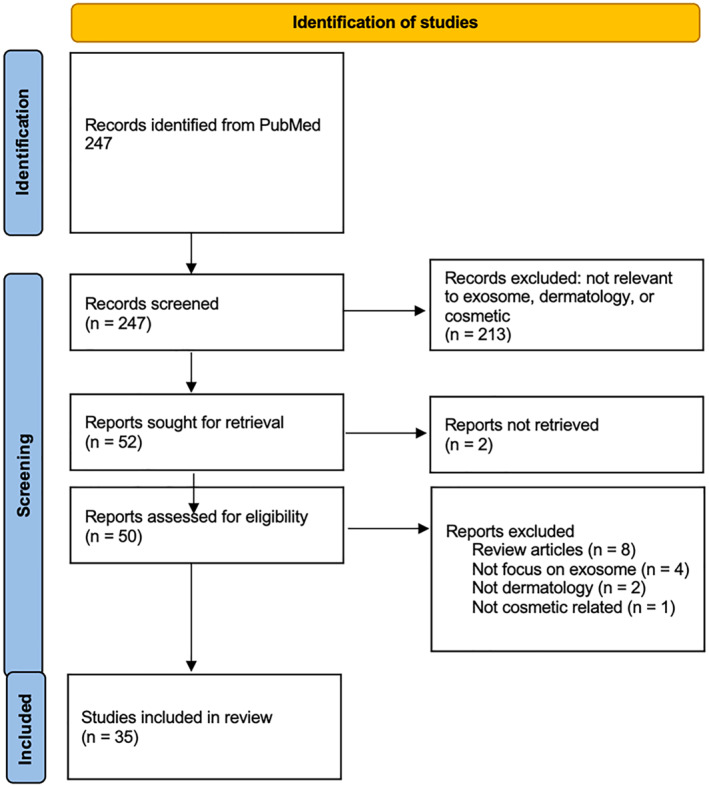
Method: A comprehensive PubMed search for the period of 2010-2023 was performed using the MeSH terms "exosome" and "skin." The initial search yielded 246 studies, which were then refined to 178 studies following title and abstract screening. Studies were confined to human or animal studies published in English that evaluated the use of exosomes in medical/cosmetic dermatology. A subsequent full-text review based on these criteria yielded 34 studies, which were then reviewed.
Results: Exosomes can be derived from a variety of biological sources and show potential application in wound healing, scar prophylaxis, photodamage prevention, skin regeneration, improved grafting success, hair loss mitigation, and as biomarkers and drug carriers.
Conclusion: Exosomes are gaining traction in regenerative and cosmetic dermatology. However, their widespread clinical application is hindered by cost, a complex isolation process, lack of uniform protocols, limited assessment of infective potential, and a paucity of clinical evidence. Further research in this area is needed, especially by way of clinical studies evaluating the efficacy of exosome-based treatments on human skin.
© 2024 The Authors. Skin Health and Disease published by John Wiley & Sons Ltd on behalf of British Association of Dermatologists.
Conflict of interest statement
Dr. Rao is a speaker for Incyte. All other authors have no disclosures.
References
Publication types
LinkOut - more resources
Full Text Sources