


Association between DNA methylation predicted growth differentiation factor 15 and mortality: results from NHANES 1999-2002
- PMID: 39625596
- PMCID: PMC11614981
- DOI: 10.1007/s40520-024-02896-3
Association between DNA methylation predicted growth differentiation factor 15 and mortality: results from NHANES 1999-2002
Abstract
Background: Growth differentiation factor 15 (GDF15) is a crucial biomarker in various physiological and pathological processes. While elevated GDF15 levels are linked to increased mortality risk, the role of DNA methylation (DNAm)-predicted GDF15 in predicting mortality has not been extensively studied. The purpose of the study is to investigate the association between DNAm-predicted GDF15 levels and all-cause and cardiovascular disease (CVD) mortality in a nationally representative cohort.
Methods: Data from NHANES 1999-2002 were analyzed. DNAm-predicted GDF15 levels were estimated using a regression model. Weighted multivariate Cox regressions were employed to assess the relationship between DNAm-predicted GDF15 and mortality outcomes. Restricted cubic splines were used to explore dose-response relationships, and subgroup analyses were conducted to enhance result reliability.
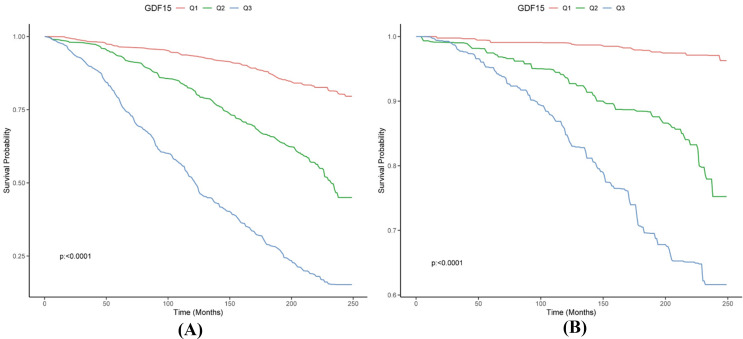
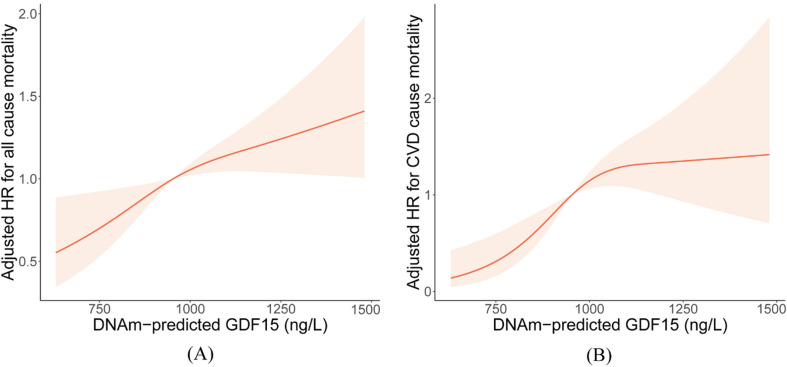
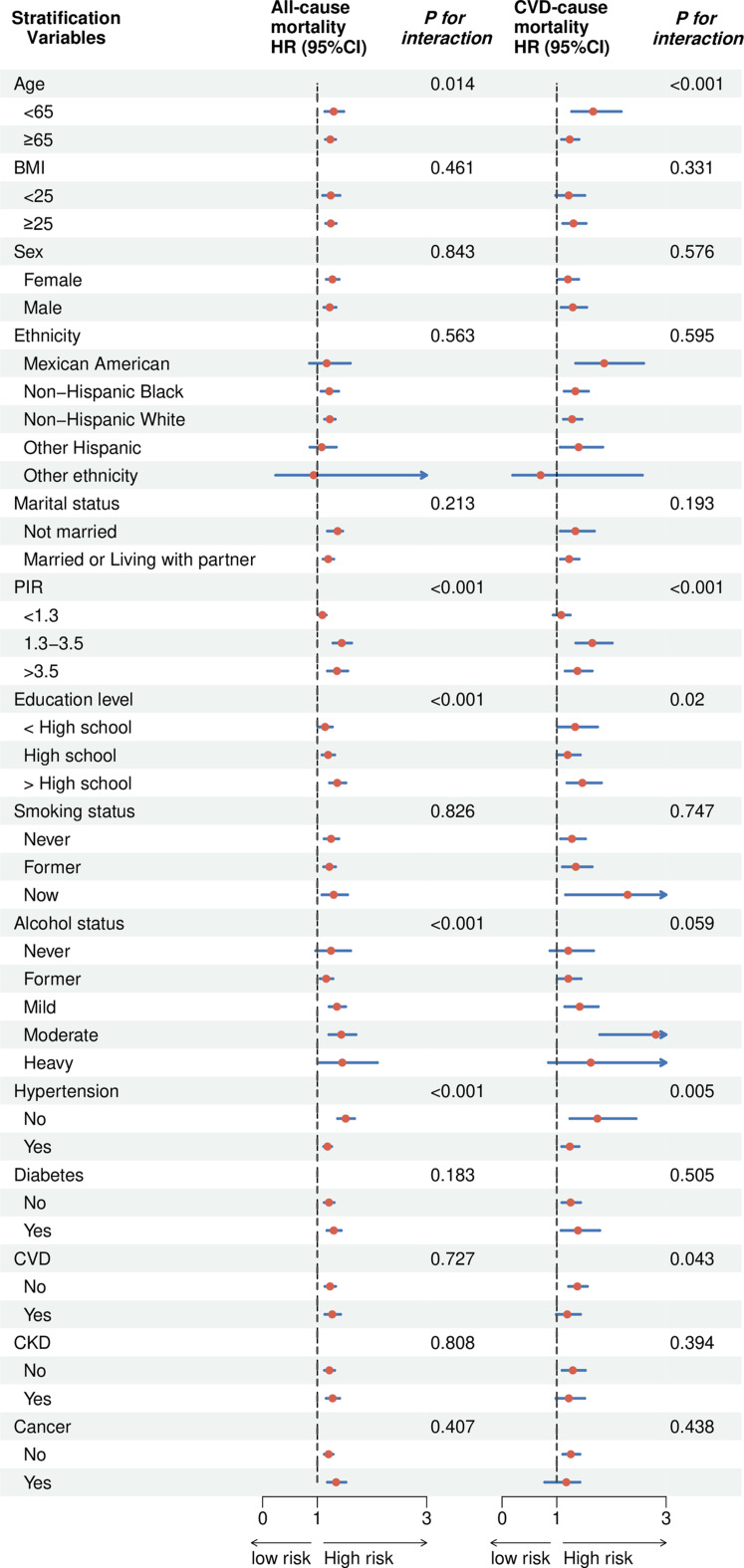
Results: Higher DNAm-predicted GDF15 levels were significantly associated with increased all-cause mortality risk (HR = 1.08, 95% CI: 1.02-1.15). Participants in the highest DNAm-predicted GDF15 tertile showed significantly higher all-cause mortality risk (HR = 1.56, 95% CI: 1.16-2.10) and a 2.52-fold increased risk of cardiovascular mortality (HR = 2.52, 95% CI: 1.22-5.19). Kaplan-Meier curves revealed decreasing survival probability with higher DNAm-predicted GDF15 tertiles. Restricted cubic spline analysis demonstrated a non-linear dose-response relationship between DNAm-predicted GDF15 levels and cardiovascular mortality. The positive correlation between DNAm-predicted GDF15 and mortality remained robust in most of subgroups.
Conclusions: DNAm-predicted GDF15 independently predicts all-cause and cardiovascular mortality. This association persists across multiple models and stratified subgroups, supporting GDF15's value as a biomarker for mortality risk stratification. Future research should elucidate underlying biological mechanisms and evaluate GDF15's clinical utility in guiding mortality risk reduction interventions.
Keywords: All-cause mortality; Cardiovascular mortality; DNA methylation; GDF-15; NHANES database.
© 2024. The Author(s).
Conflict of interest statement
Declarations. Ethics approval and standards of reporting: The NHANES project was reviewed and approved by the Research Ethics Review Board of the NCHS. The research followed the Declaration of Helsinki and the manuscript followed the STROBE Statement for reporting observational studies. Consent to participate: All NHANES participants gave written informed consent. Consent for publication: All NHANES participants provided written informed consent. Competing interests: The authors declare no competing interests.
Figures
References
-
- Li J, Hu X, Xie Z et al (2024) Overview of growth differentiation factor 15 (GDF15) in metabolic diseases. Biomed Pharmacother 176:116809. 10.1016/j.biopha.2024.116809 - PubMed
-
- Nyárády BB, Kiss LZ, Bagyura Z et al (2024) Growth and differentiation factor-15: a link between inflammaging and cardiovascular disease. Biomed Pharmacother 174:116475. 10.1016/j.biopha.2024.116475 - PubMed
-
- Zhang X, Zhou C-G, Ma L-J (2024) Role of GDF-15 in diabetic nephropathy: mechanisms, diagnosis, and therapeutic potential. Int Urol Nephrol. 10.1007/s11255-024-04179-2 - PubMed
MeSH terms
Substances
LinkOut - more resources
Full Text Sources
