


Waterborne Disease Outbreaks Associated with Splash Pads - United States, 1997-2022
- PMID: 39625864
- PMCID: PMC11616988
- DOI: 10.15585/mmwr.ss7308a1
Waterborne Disease Outbreaks Associated with Splash Pads - United States, 1997-2022
Abstract
Problem/condition: Splash pads are recreational interactive water venues that spray or jet water on users. Splash pads are intended for children aged <5 years and designed so that water typically does not collect in areas accessible to users, thereby minimizing the risk for drowning. Splash pads were first found to be associated with waterborne disease outbreaks in 1997.
Period covered: 1997-2022.
Description of system: Since 1971, waterborne disease outbreaks have been voluntarily reported to CDC by state, local, and territorial health departments using a standard paper form via the Waterborne Disease and Outbreak Surveillance System (WBDOSS). Beginning in 2009, WBDOSS reporting was made available exclusively through the National Outbreak Reporting System, a web-based platform. This report characterizes waterborne disease outbreaks associated with splash pads reported to CDC that occurred during 1997-2022.
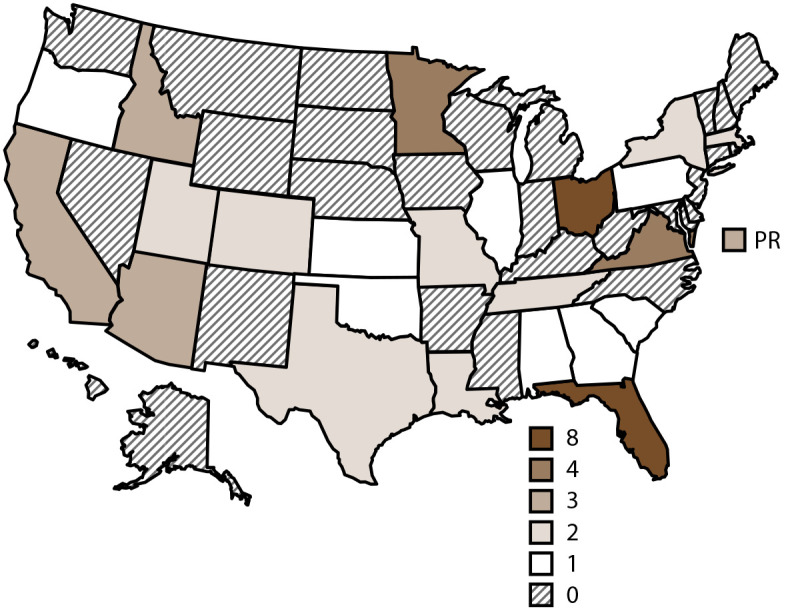
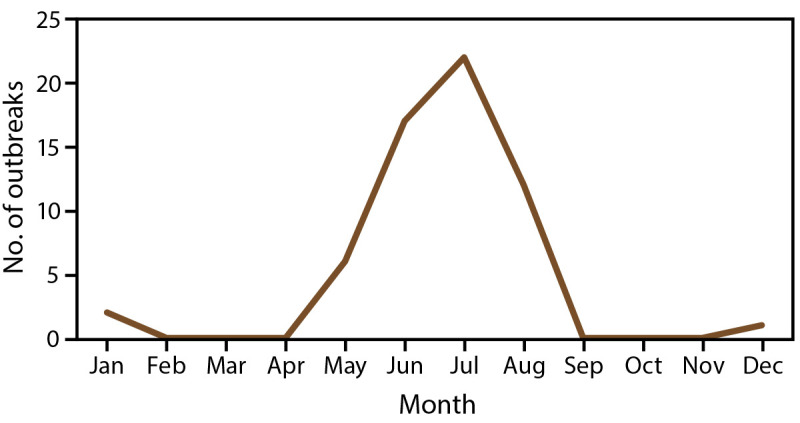
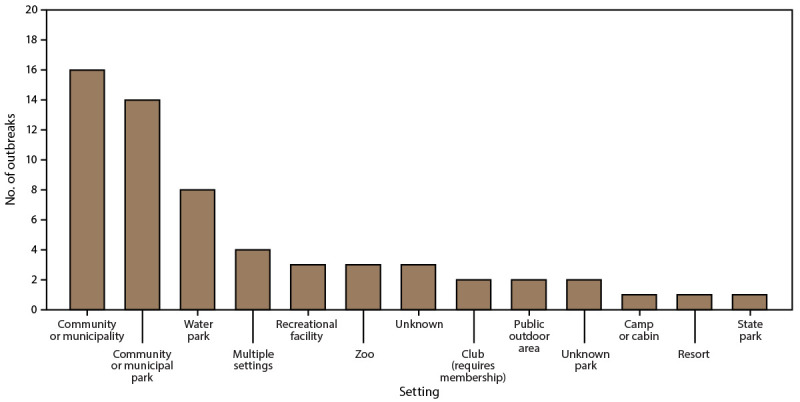
Results: During 1997-2022, public health officials from 23 states and Puerto Rico reported 60 waterborne disease outbreaks associated with splash pads. These reported outbreaks resulted in 10,611 cases, 152 hospitalizations, 99 emergency department visits, and no reported deaths. The 40 (67%) outbreaks confirmed to be caused, in part, by Cryptosporidium resulted in 9,622 (91%) cases and 123 (81%) hospitalizations. Two outbreaks suspected to be caused by norovirus resulted in 72 (73%) emergency department visits.
Interpretation: Waterborne pathogens that cause acute gastrointestinal illness can be transmitted by ingesting water contaminated with feces from infected persons. Chlorine is the primary barrier to pathogen transmission in splash pad water. However, Cryptosporidium is tolerant to chlorine and is the most common cause of reported waterborne disease outbreaks associated with splash pads.
Public health action: Public health officials and the aquatics sector can use the findings in this report to promote the prevention of splash pad-associated outbreaks (e.g., recommended user behaviors) and guide the construction, operation, and management of splash pads. Public health practitioners and the aquatics sector also can collaborate to voluntarily adopt CDC's Model Aquatic Health Code recommendations to prevent waterborne illness associated with splash pads.
Conflict of interest statement
All authors have completed and submitted the International Committee of Medical Journal Editors form for disclosure of potential conflicts of interest. No potential conflicts of interest were disclosed.
Figures
References
-
- CDC. Healthy swimming: what you can do to stay healthy at splash pads. Atlanta, GA: US Department of Health and Human Services, CDC; 2024. https://www.cdc.gov/healthy-swimming/safety/stay-healthy-at-splash-pads....
-
- Bancroft JE, Keifer SB, Keene WE. Shigellosis from an interactive fountain: implications for regulation. J Environ Health 2010;73:16–20. - PubMed
-
- CDC. Outbreak of cryptosporidiosis associated with a water sprinkler fountain—Minnesota, 1997. MMWR Morb Mortal Wkly Rep 1998;47:856–60. - PubMed
MeSH terms
LinkOut - more resources
Full Text Sources
Research Materials