. 2024 Dec 3;22(12):e3002852.
doi: 10.1371/journal.pbio.3002852. eCollection 2024 Dec.

Environmental fungi target thiol homeostasis to compete with Mycobacterium tuberculosis

Affiliations

Environmental fungi target thiol homeostasis to compete with Mycobacterium tuberculosis

Neha Malhotra et al. PLoS Biol. .

Abstract

Mycobacterial species in nature are found in abundance in sphagnum peat bogs where they compete for nutrients with a variety of microorganisms including fungi. We screened a collection of fungi isolated from sphagnum bogs by co-culture with Mycobacterium tuberculosis (Mtb) to look for inducible expression of antitubercular agents and identified 5 fungi that produced cidal antitubercular agents upon exposure to live Mtb. Whole genome sequencing of these fungi followed by fungal RNAseq after Mtb exposure allowed us to identify biosynthetic gene clusters induced by co-culture. Three of these fungi induced expression of patulin, one induced citrinin expression and one induced the production of nidulalin A. The biosynthetic gene clusters for patulin and citrinin have been previously described but the genes involved in nidulalin A production have not been described before. All 3 of these potent electrophiles react with thiols and treatment of Mtb cells with these agents followed by Mtb RNAseq showed that these natural products all induce profound thiol stress suggesting a rapid depletion of mycothiol. The induction of thiol-reactive mycotoxins through 3 different systems in response to exposure to Mtb suggests that fungi have identified this as a highly vulnerable target in a similar microenvironment to that of the caseous human lesion.


Conflict of interest statement

The authors have declared that no competing interests exist.

Figures
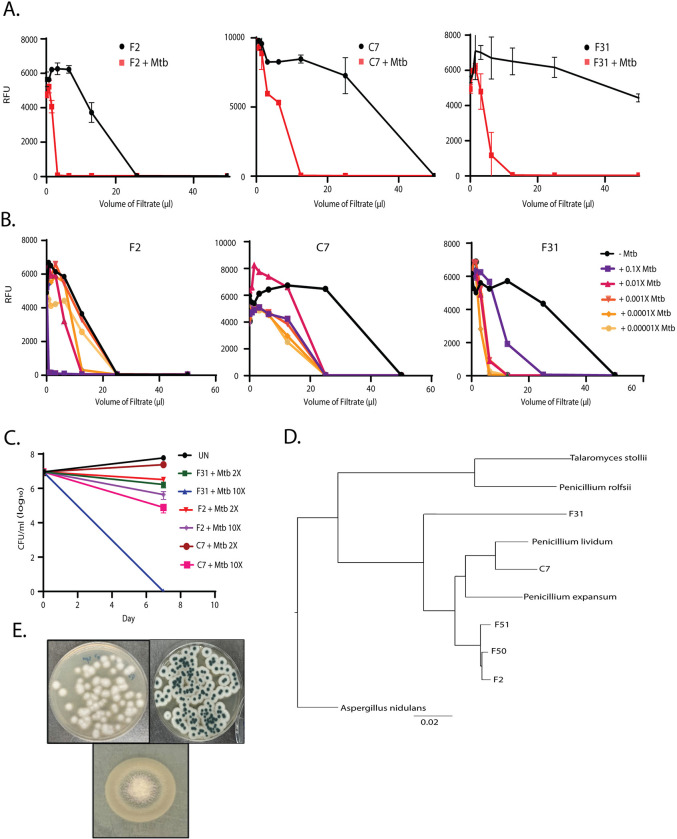
Fig 1
Fig 1. Activity-based screening of induced fungal hits.
(A) Growth Inhibition assays using culture filtrates of 3 hits of mono- and co-culture conditions (n = 2–5). (B) Dose-dependence of induction with various Mtb inocula (X in this figure refers to the density of a stationary phase culture of H73Rv), growth inhibition assays from the co-cultures were done in at least 3 biological replicates. (C) Bactericidal activity in terms of decline in log10 CFU/ml of co-culture filtrates at 2× and 10× MIV at Day 7. (D) Phylogenetic relationship using CVtree [46] alignment between F2, F50, F51; C7 and F31 with their nearest neighbors by their ITS/β-tubulin/calmodulin regions and whole genome sequencing (P. rolfsii, P. expansum, P. lividum, P. oxalicum, P. herquei, P. chrysogenum, and T. stollii). Aspergillus nidulans was used as an outgroup. (E) Morphology of F2 (Left), C7 (Right), and F31 (Bottom) on PDA media plates. Underlying data can be found in S1 Data.
Fig 2
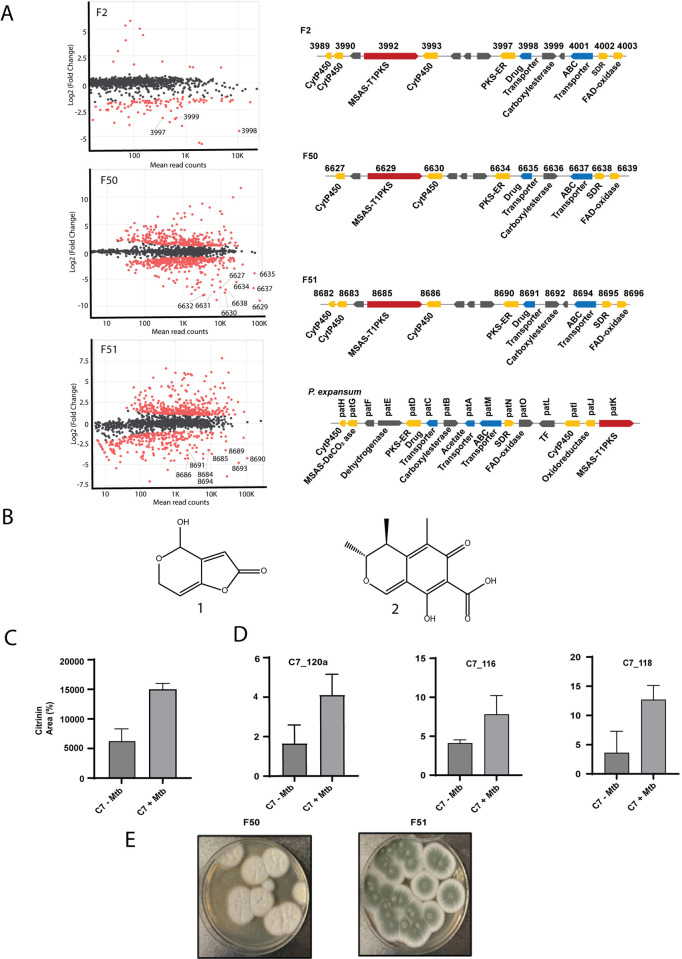
Fig 2. Four different Penicillium sp. produces patulin and citrinin upon co-cultivation with Mtb.
(A) Differential gene expression of 3 related Penicillium sp. upon co-cultivation with live Mtb. Differentially expressed genes along with read counts are shown in MA plots [49]. Up-regulated genes have a negative value in this analysis and red dots represent differentially expressed while gray/black dots are non-differentially expressed genes. The topmost up-regulated BGC for each fungi is shown to the right of each plot and points that are part of this cluster are labeled for each RNAseq experiment. For comparison, the patulin cluster for P. expansum was adapted from elsewhere (bottom right) [48]. (B) The chemical structures for patulin and citrinin. (C) RT-qPCR of about a 500 bp region of Type I PKS gene in the citrinin BCG (C7_120a) as well as 2 other genes involved in biosynthetic pathway (C7_116 and C7_118) amplified from the total RNA isolated from C7-Mtb and C7+Mtb conditions. Y-axis is expression fold relative to expression of the ITS region. (D) Area percentage of citrinin peaks in mono- and co-culture conditions obtained from the total ion chromatogram (TIC) of C7 -/+ Mtb filtrates detected at 334 nm on C-18 liquid chromatography column (Tr = 9.2 min). (E) Morphology of F50 and F51 fungal strains on PDA media. Underlying data can be found in S1 Data and S2 Data.
Fig 3
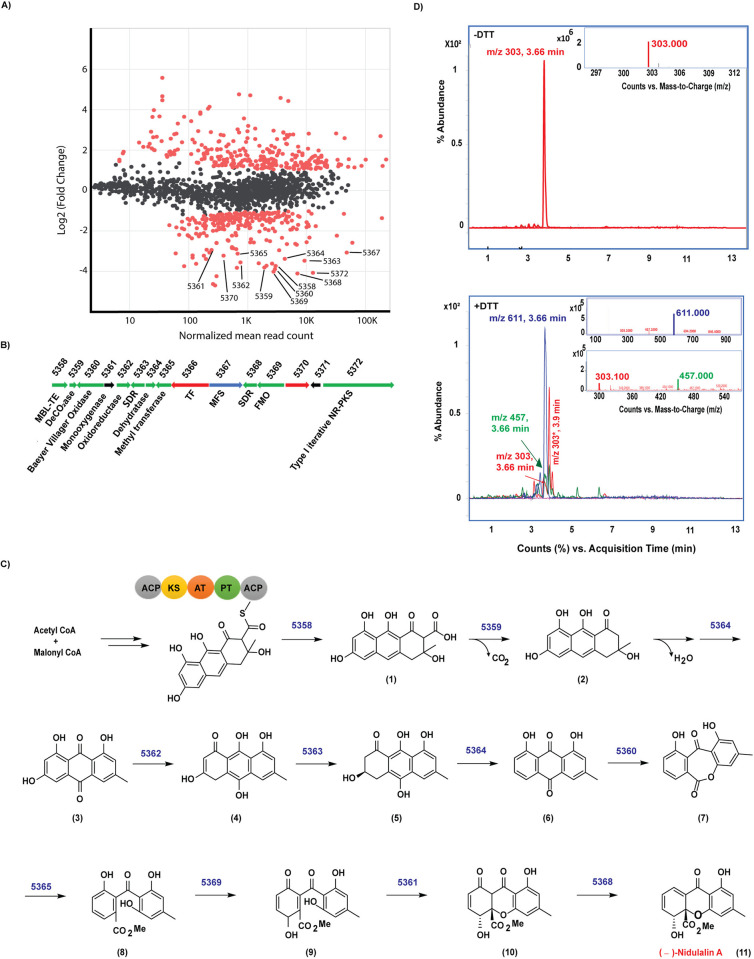
Fig 3. Proposed biosynthetic pathway for Nidulalin A production.
(A) MA plot to represent the log2FC of genes induced with respect to normalized read counts in co-culture vs. monoculture conditions with genes in the nidulalin A cluster. (B) Gene organization of nidulalin A biosynthetic gene cluster in F31. (C) Putative biosynthetic pathway for nidulalin A production. Numbers above the arrows in the biosynthetic scheme represents the corresponding F31 genes for the indicated enzymatic reaction. (D) Top, chromatogram showing the 303 (m/z) ion detected in -DTT conditions as seen at 3.66 min. Inset, MS plot showing 303 m/z. Bottom, Chromatogram representing 457 and 611 m/z for the addition of 1 or 2 DTT. Inset: MS plot for 611 m/z ion (top) and 457 m/z ion (bottom). 303* (m/z) is an unrelated ion at Tr 3.9 min. Underlying data can be found in S1 Data and S2 Data.
Fig 4
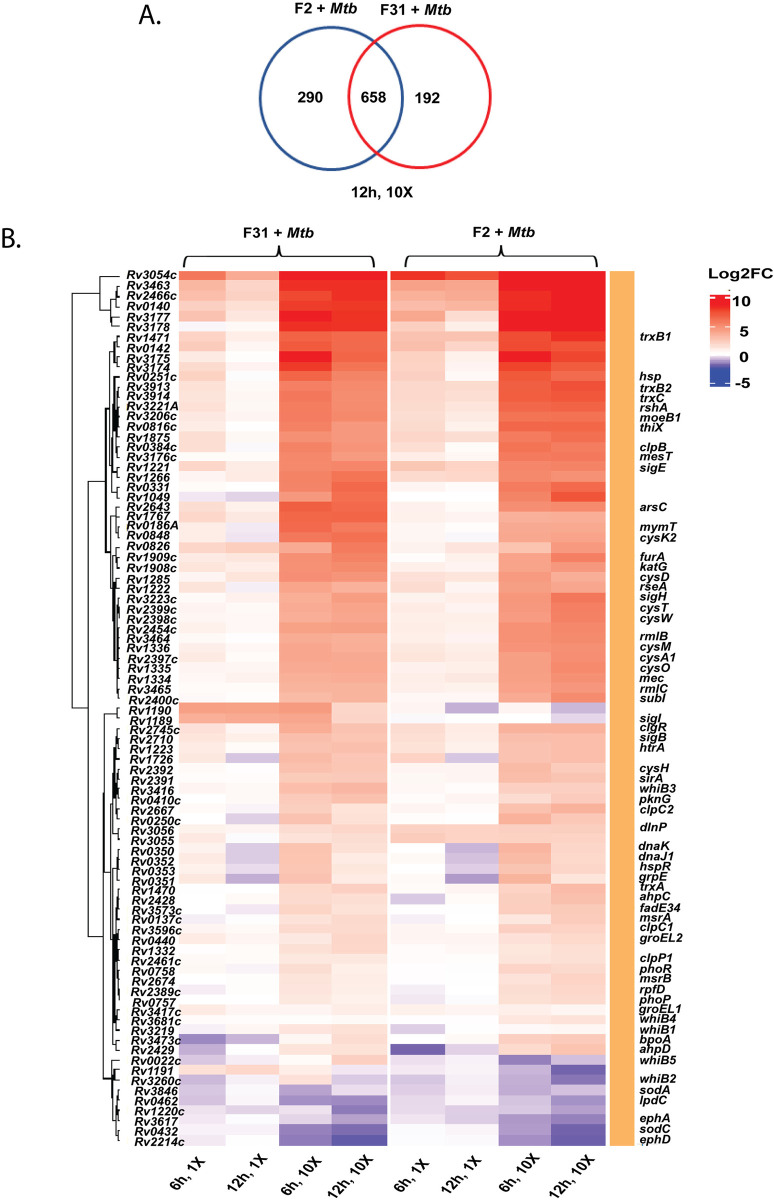
Fig 4. Thiol stress homeostasis pathways triggered in Mtb upon exposure to nidulalin A (F31) and patulin (F2).
(A) Venn diagram representing the overlap of up-regulated genes between F2+Mtb and F31+Mtb exposed cells at 10× MIV concentration after 12 h treatment (also see S7B Fig for other treatment conditions). (B) Heat map showing the differential expression of genes involved in redox/thiol stress homeostasis pathways in Mtb upon treatment with 1× and 10× MIV of F31+Mtb and F2+Mtb culture filtrates for 6 h and 12 h. Differentially expressed genes selected for the heat plot are statistically significant (FDR <0.1 and log2FC >1.0) in at least 1 treatment condition. Underlying data can be found in S3 Data.
Fig 5
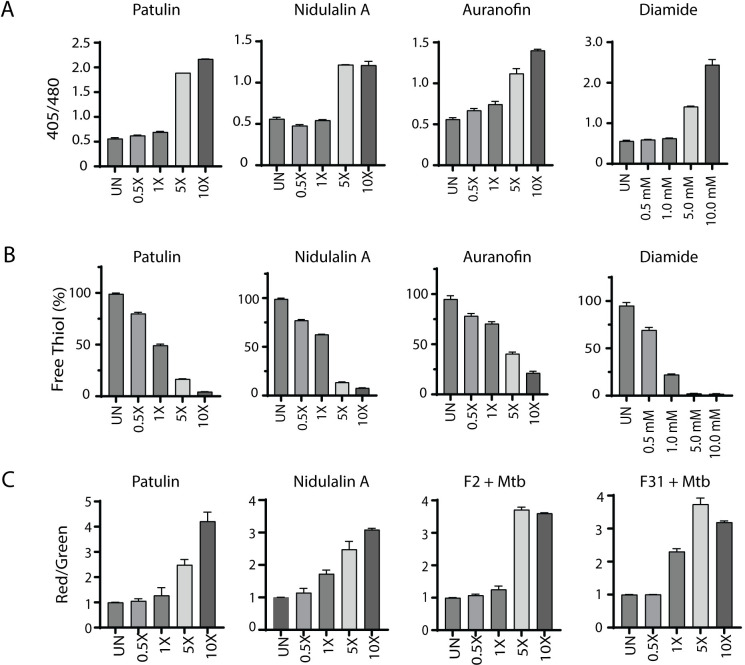
Fig 5. Patulin and nidulalin A induce a thiol reactive oxidative shift within Mtb.
(A) Mtb H37Rv cells expressing Mrx1-roGFP2 grown to OD600 0.1 were treated with patulin and nidulalin A at different concentrations for 48 h. Diamide, auranofin were used as positive controls for inducing thiol stress. Ratiometric sensor response (Ex:405 nm/488 nm; Em:510 nm). (B) Quantitation of free thiol pool was evaluated in Mtb H37Rv cells treated with patulin and nidulalin A at different concentrations for 24 h. Free thiol levels were detected by measuring the relative fluorescence at Em: 510 nm (Ex: 380 nm) using a fluorescent thiol detection assay. Relative fluorescence was normalized for the OD600 for all the samples tested with respect to the control group. A glutathione (GSH) standard curve was used to estimate free thiol levels. Auranofin and diamide were used as thiol stress controls. The assays results presented here were performed in at least 2 biological replicates. (C) Rv3054c promoter driven expression of mScarlet normalized to constitutive eGFP in the same cell. UN represents the untreated control cultures. Underlying data can be found in S1 Data.

Update of

References

    1. Singh V. Tuberculosis treatment-shortening. Drug Discov Today. 2024;29(5):103955. Epub 20240326. doi: 10.1016/j.drudis.2024.103955 . - DOI - PubMed
    1. Sarathy JP, Dartois V. Caseum: a Niche for Mycobacterium tuberculosis Drug-Tolerant Persisters. Clin Microbiol Rev. 2020;33(3). Epub 20200401. doi: 10.1128/CMR.00159-19 ; PubMed Central PMCID: PMC7117546. - DOI - PMC - PubMed
    1. Zhang Y, Permar S, Sun Z. Conditions that may affect the results of susceptibility testing of Mycobacterium tuberculosis to pyrazinamide. J Med Microbiol. 2002;51(1):42–49. doi: 10.1099/0022-1317-51-1-42 . - DOI - PubMed
    1. Yuan T, Sampson NS. Hit Generation in TB Drug Discovery: From Genome to Granuloma. Chem Rev. 2018;118(4):1887–916. Epub 20180131. doi: 10.1021/acs.chemrev.7b00602 ; PubMed Central PMCID: PMC5832989. - DOI - PMC - PubMed
    1. Sarathy JP, Xie M, Jones RM, Chang A, Osiecki P, Weiner D, et al.. A Novel Tool to Identify Bactericidal Compounds against Vulnerable Targets in Drug-Tolerant M. tuberculosis found in Caseum. mBio. 2023;14(2):e0059823. Epub 20230405. doi: 10.1128/mbio.00598-23 ; PubMed Central PMCID: PMC10127596. - DOI - PMC - PubMed