


Beneficial effects of non-invasive physical plasma on human periodontal ligament cells in vitro
- PMID: 39629237
- PMCID: PMC11611554
- DOI: 10.3389/fmed.2024.1443368
Beneficial effects of non-invasive physical plasma on human periodontal ligament cells in vitro
Abstract
Introduction: Periodontitis is a chronic inflammatory disease of the periodontium that can lead to the loss of affected teeth if left untreated. It is induced by a multifactorial process centered on microbial pathogens such as Fusobacterium nucleatum (F.n.). Non-invasive physical plasma (NIPP), a highly reactive gas, has become a focus of research, not only for its hemostatic, proliferation-enhancing and apoptotic properties, but also for its antimicrobial potential. The objective of this study was to examine the impact of NIPP on human periodontal ligament (PDL) cells that had been induced into a state of periodontal infection in vitro.
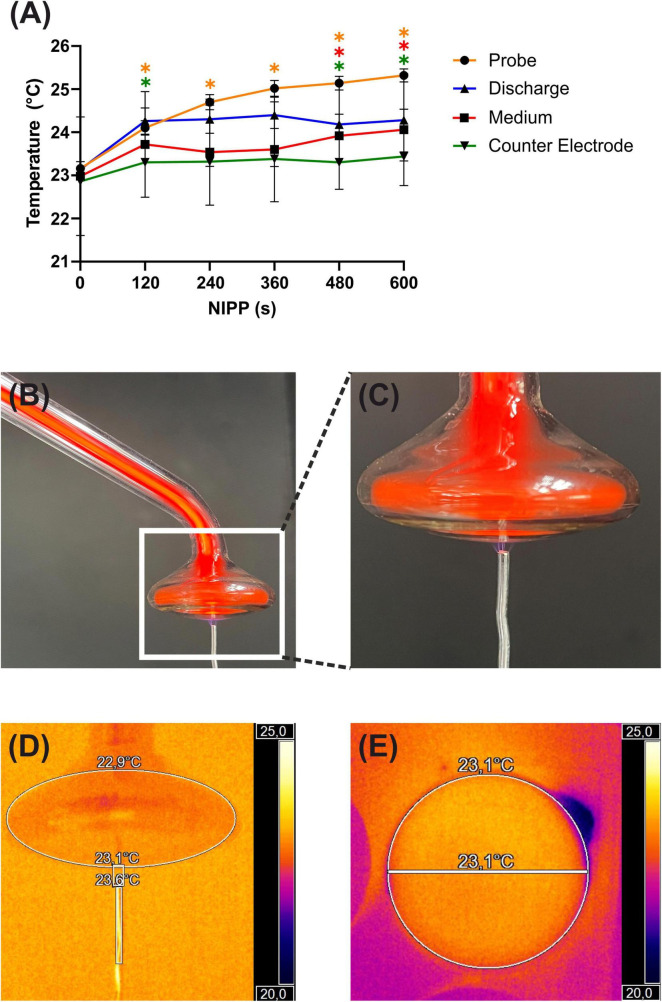
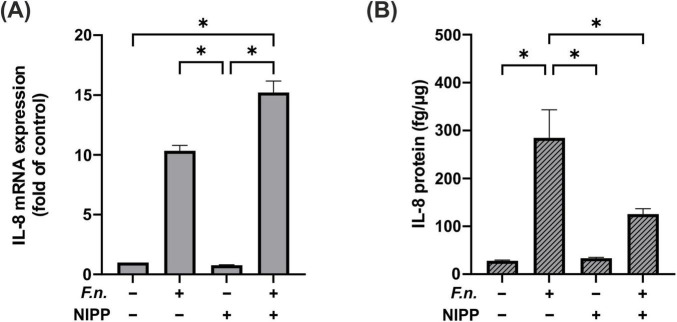
Methods: Initially, the solitary effect of NIPP was evaluated by measuring temperature and pH and analyzing reactive oxygen species (ROS). Additionally, DAPI and phalloidin staining were employed to investigate possible cytotoxic effects. The cells were pre-incubated with F.n. and treated with NIPP after 24 hours. Interleukin (IL)-6 and IL-8 were analyzed at mRNA and protein levels, respectively, by real-time PCR and ELISA.
Results: NIPP alone had no significant effect on PDL cells. However, the F.n.-induced upregulation of IL-6 and IL-8 was counteracted by NIPP.
Discussion: Thus, the utilization of NIPP may be regarded as a promising therapeutic strategy for the treatment of periodontal diseases.
Keywords: antimicrobial; cold plasma; human periodontal ligament cells; non-invasive physical plasma; non-thermal plasma; periodontology.
Copyright © 2024 Eggers, Seher, Marciniak, Pauck, Deschner, Eick, Stope, Kramer, Küchler, Kirschneck, Nokhbehsaim and Beisel-Memmert.
Conflict of interest statement
The authors declare that the research was conducted in the absence of any commercial or financial relationships that could be construed as a potential conflict of interest.
Figures


References
LinkOut - more resources
Full Text Sources
Molecular Biology Databases
