


Bacterial diversity along the geothermal gradients: insights from the high-altitude Himalayan hot spring habitats of Sikkim
- PMID: 39629478
- PMCID: PMC11613191
- DOI: 10.1016/j.crmicr.2024.100310
Bacterial diversity along the geothermal gradients: insights from the high-altitude Himalayan hot spring habitats of Sikkim
Abstract
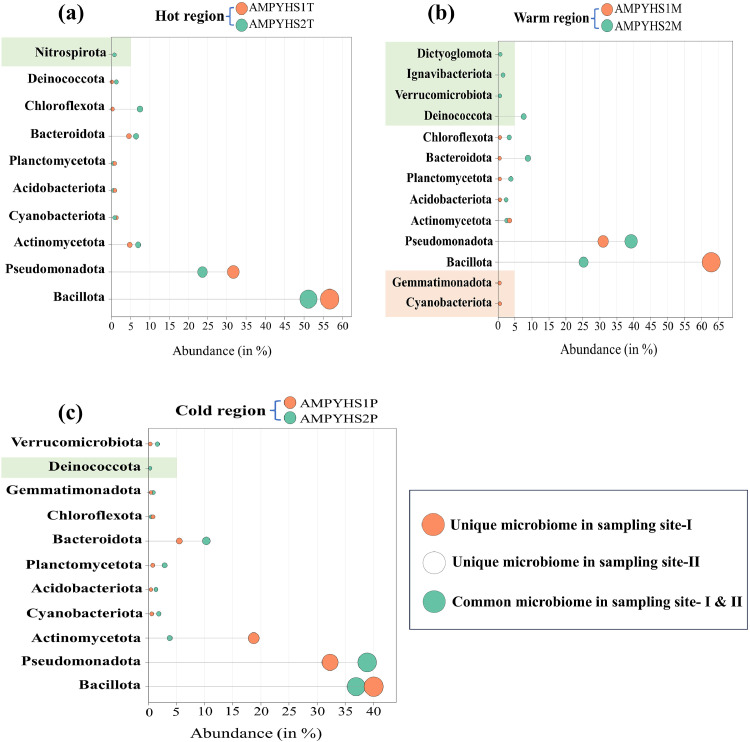
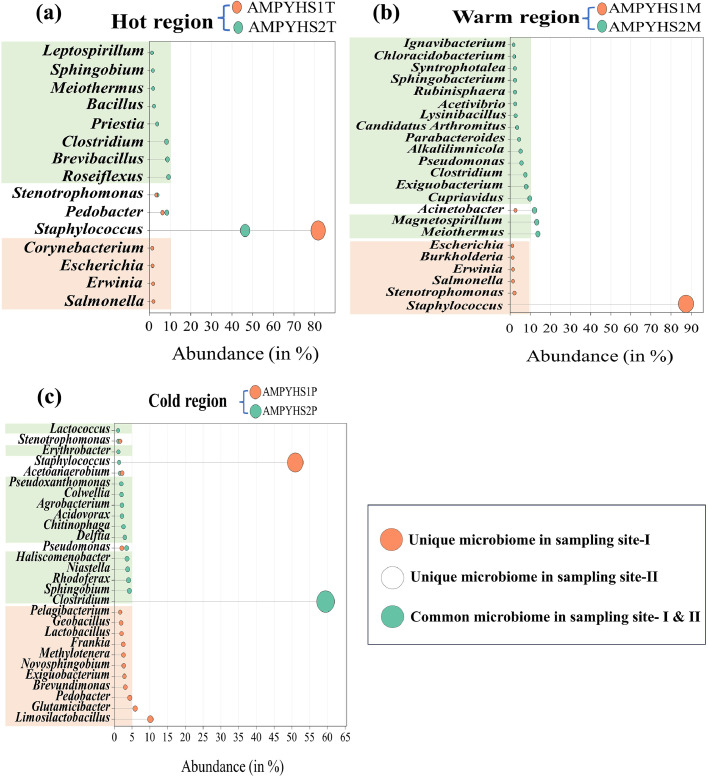
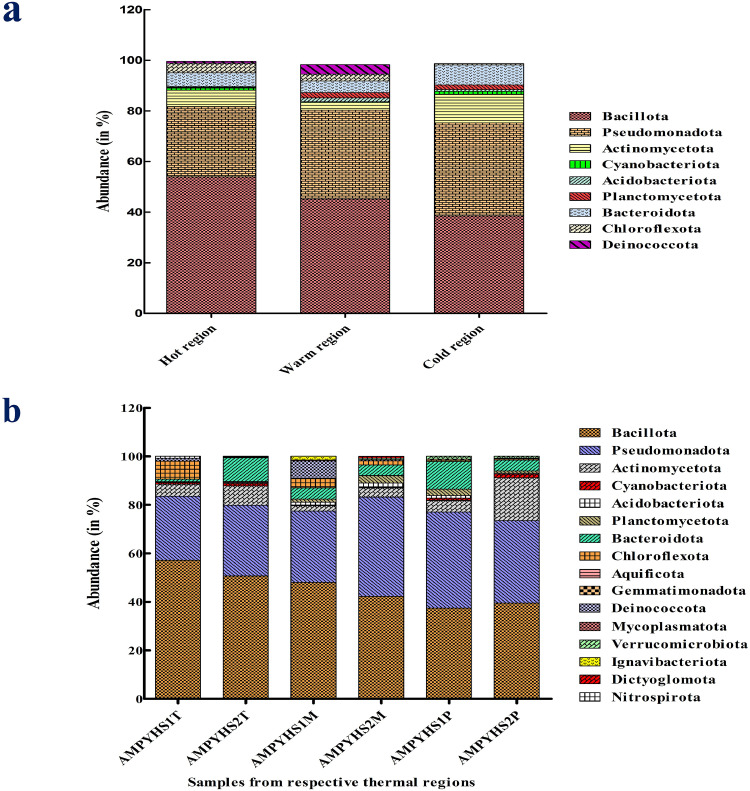
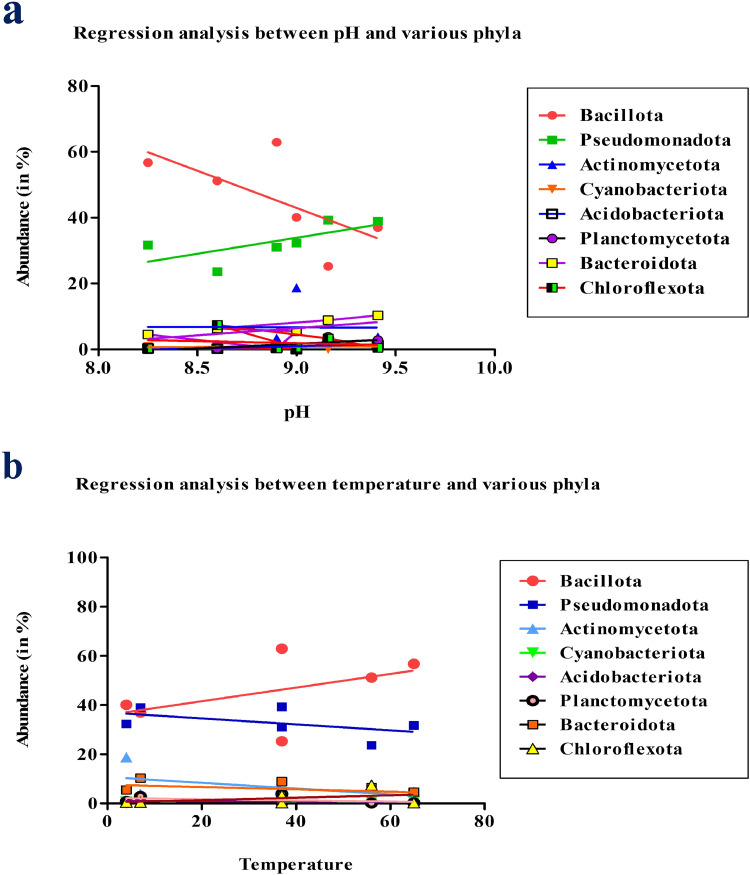
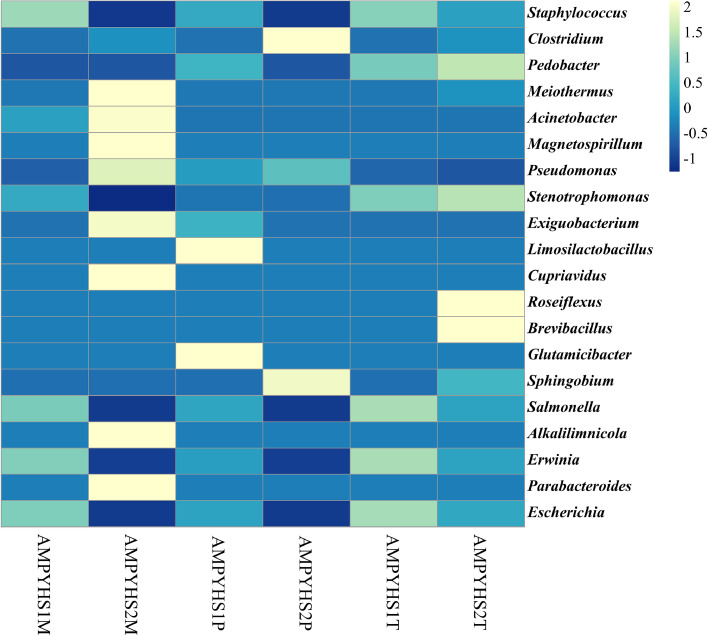
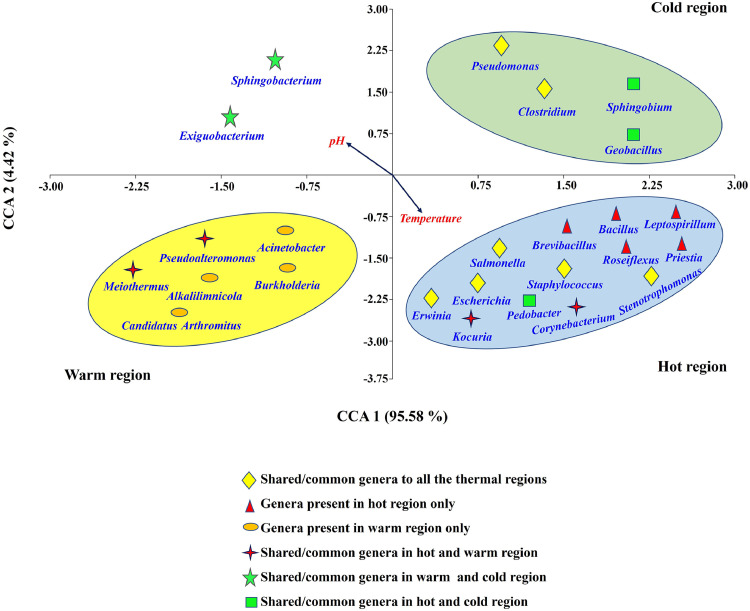
Geothermal habitats present a unique opportunity to study microbial adaptation to varying temperature conditions. In such environments, distinct temperature gradients foster diverse microbial communities, each adapted to its optimal niche. However, the complex dynamics of bacterial populations in across these gradients high-altitude hot springs remain largely unexplored. We hypothesize that temperature is a primary driver of microbial diversity, and bacterial richness peaks at intermediate temperatures. To investigate this, we analysed bacterial diversity using 16S rRNA amplicon sequencing across three temperature regions: hot region of 56-65 °C (hot spring), warm region of 35-37 °C (path carrying hot spring water to the river), and cold region of 4-7 °C (river basin). Our findings showed that Bacillota was the most abundant phylum (45.51 %), followed by Pseudomonadota (32.81 %) and Actinomycetota (7.2 %). Bacillota and Chloroflexota flourished in the hot and warm regions, while Pseudomonadota thrived in cooler areas. Core microbiome analysis indicated that species richness was highest in the warm region, declining in both cold and hot regions. Interestingly, an anomaly was observed with Staphylococcus, which was more abundant in cases where ponds were used for bathing and recreation. In contrast, Clostridium was mostly found in cold regions, likely due to its viability in soil and ability to remain dormant as a spore-forming bacterium. The warm region showed the highest bacterial diversity, while richness decreased in both cold and hot regions. This highlights the temperature-dependent nature of microbial communities, with optimal diversity in moderate thermal conditions. The study offers new insights into microbial dynamics in high-altitude geothermal systems.
Keywords: Amplicon sequencing; Mesophiles; Psychrophiles; Thermal gradient; Thermophiles.
© 2024 The Author(s).
Conflict of interest statement
The authors declare that they have no known competing financial interests or personal relationships that could have appeared to influence the work reported in this paper.
Figures
References
-
- Alrumman S.A., Mostafa Y.S., STS Al-Qahtani, et al. Antimicrobial activity and GC–MS analysis of bioactive constituents of Thermophilic bacteria isolated from Saudi hot springs. Arab J Sci Eng. 2019;44:75–85. doi: 10.1007/s13369-018-3597-0. - DOI
-
- Amin A., Ahmed I., Khalid N., et al. Insights into the thermophile diversity in hot springs of Pakistan. Extrem Eurasian Ecosyst Ecol Divers Appl. 2018:1–28. doi: 10.1007/978-981-13-0329-6_1. - DOI
-
- Bässler C., Müller J., Cadotte M.W., et al. Functional response of lignicolous fungal guilds to bark beetle deforestation. Ecol Indic. 2016;65:149–160. doi: 10.1016/j.ecolind.2015.07.008. - DOI
LinkOut - more resources
Full Text Sources
