Coupling of alternative splicing and alternative polyadenylation
- PMID: 39632657
- PMCID: PMC11802343
- DOI: 10.3724/abbs.2024211
Coupling of alternative splicing and alternative polyadenylation
Abstract
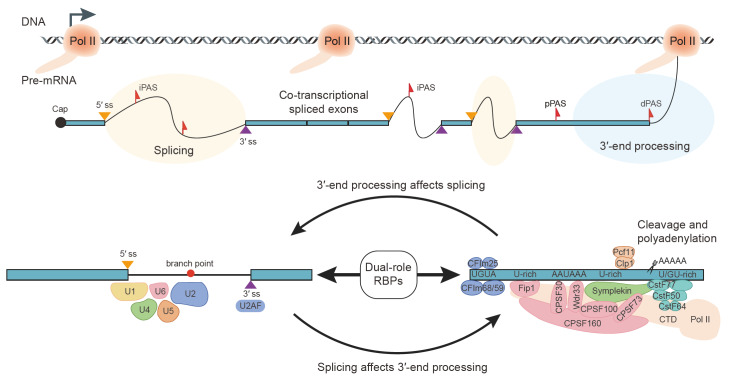
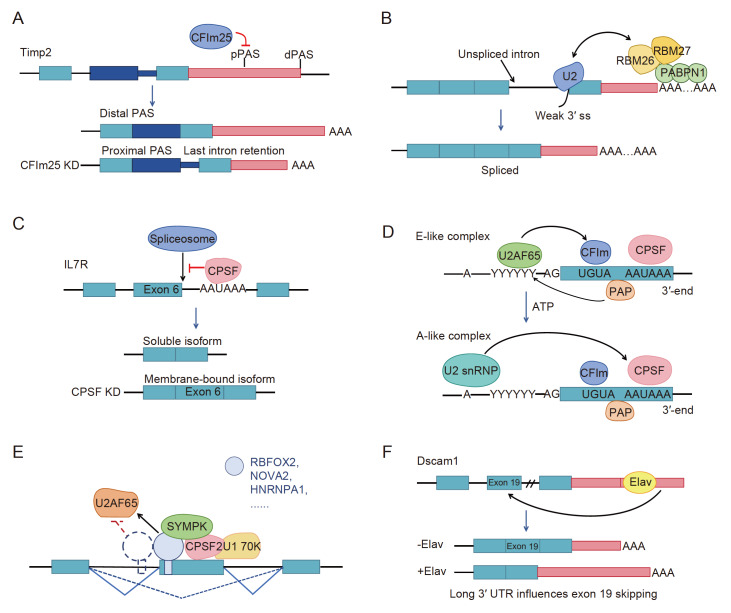
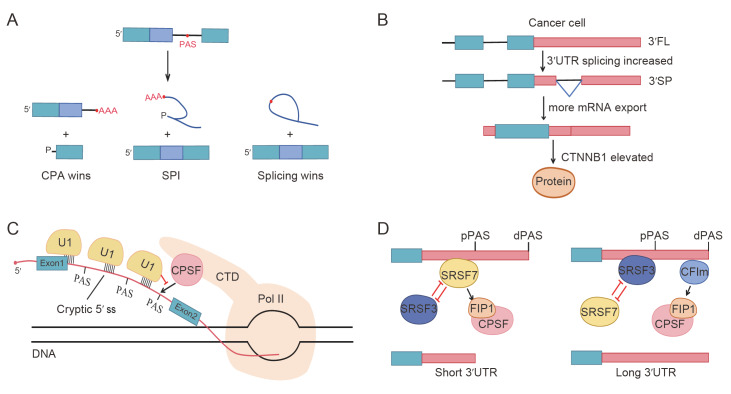
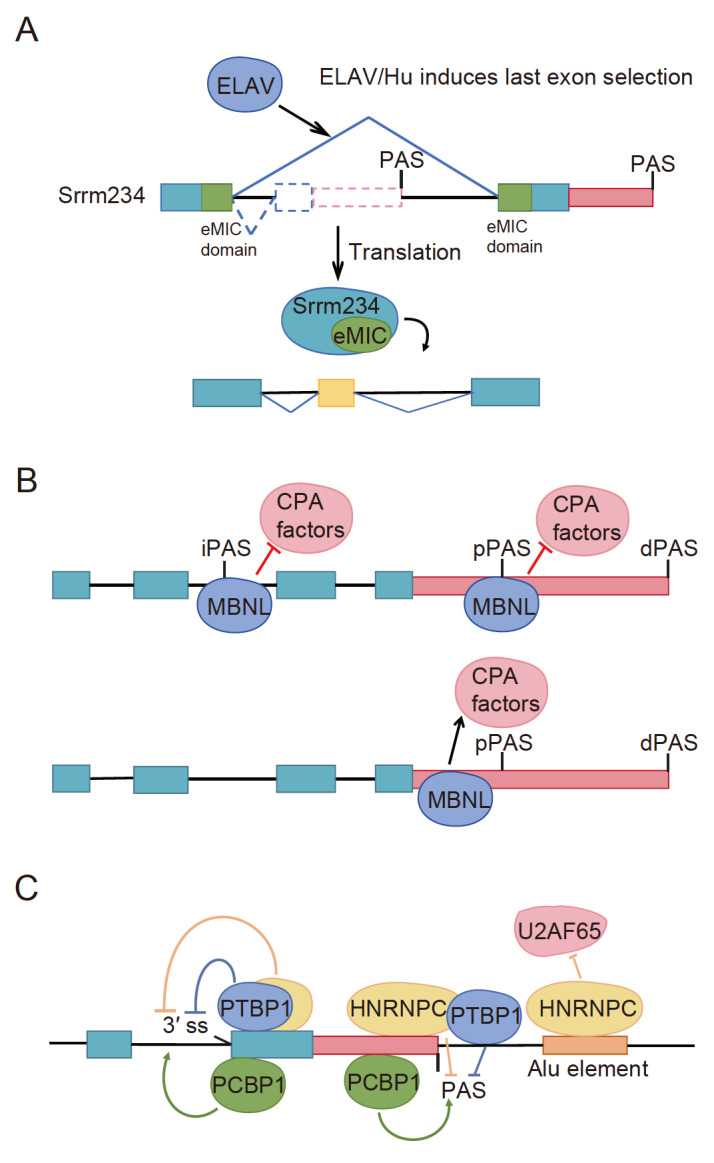
RNA splicing and 3'-cleavage and polyadenylation (CPA) are essential processes for the maturation of RNA. There have been extensive independent studies of these regulated processing events, including alternative splicing (AS) and alternative polyadenylation (APA). However, growing evidence suggests potential crosstalk between splicing and 3'-end processing in regulating AS or APA. Here, we first provide a brief overview of the molecular machines involved in splicing and 3'-end processing events, and then review recent studies on the functions and mechanisms of the crosstalk between the two processes. On the one hand, 3'-end processing can affect splicing, as 3'-end processing factors and CPA-generated polyA tail promote the splicing of the last intron. Beyond that, 3'-end processing factors can also influence the splicing of internal and terminal exons. Those 3'-end processing factors can also interact with different RNA-binding proteins (RBPs) to exert their effects on AS. The length of 3' untranslated region (3' UTR) can affect the splicing of upstream exons. On the other hand, splicing and CPA may compete within introns in generating different products. Furthermore, splicing within the 3' UTR is a significant factor contributing to 3' UTR diversity. Splicing also influences 3'-end processing through the actions of certain splicing factors. Interestingly, some classical RBPs play dual roles in both splicing and 3'-end processing. Finally, we discuss how long-read sequencing technologies aid in understanding the coordination of AS-APA events and envision that these findings may potentially promote the development of new strategies for disease diagnosis and treatment.
Keywords: RNA processing; RNA regulation; alternative polyadenylation; alternative splicing; crosstalk.
Conflict of interest statement
The authors declare that they have no conflict of interest.
Figures
References
-
- Tian B, Manley JL. Alternative polyadenylation of mRNA precursors. Nat Rev Mol Cell Biol. . 2017;18:18–30. doi: 10.1038/nrm.2016.116. - DOI - PMC - PubMed
-
- Bonnal SC, López-Oreja I, Valcárcel J. Roles and mechanisms of alternative splicing in cancer — implications for care. Nat Rev Clin Oncol. . 2020;17:457–474. doi: 10.1038/s41571-020-0350-x. - DOI - PubMed
-
- Mitschka S, Mayr C. Context-specific regulation and function of mRNA alternative polyadenylation. Nat Rev Mol Cell Biol. . 2022;23:779–796. doi: 10.1038/s41580-022-00507-5. - DOI - PMC - PubMed
-
- Komili S, Silver PA. Coupling and coordination in gene expression processes: a systems biology view. Nat Rev Genet. . 2008;9:38–48. doi: 10.1038/nrg2223. - DOI - PubMed
Publication types
MeSH terms
Substances
LinkOut - more resources
Full Text Sources
Research Materials