


Antigen Presenting Cell-Mediated HIV-1 Trans Infection in the Establishment and Maintenance of the Viral Reservoir
- PMID: 39634038
- PMCID: PMC11616617
- DOI: 10.18103/mra.v11i7.1.4064
Antigen Presenting Cell-Mediated HIV-1 Trans Infection in the Establishment and Maintenance of the Viral Reservoir
Abstract
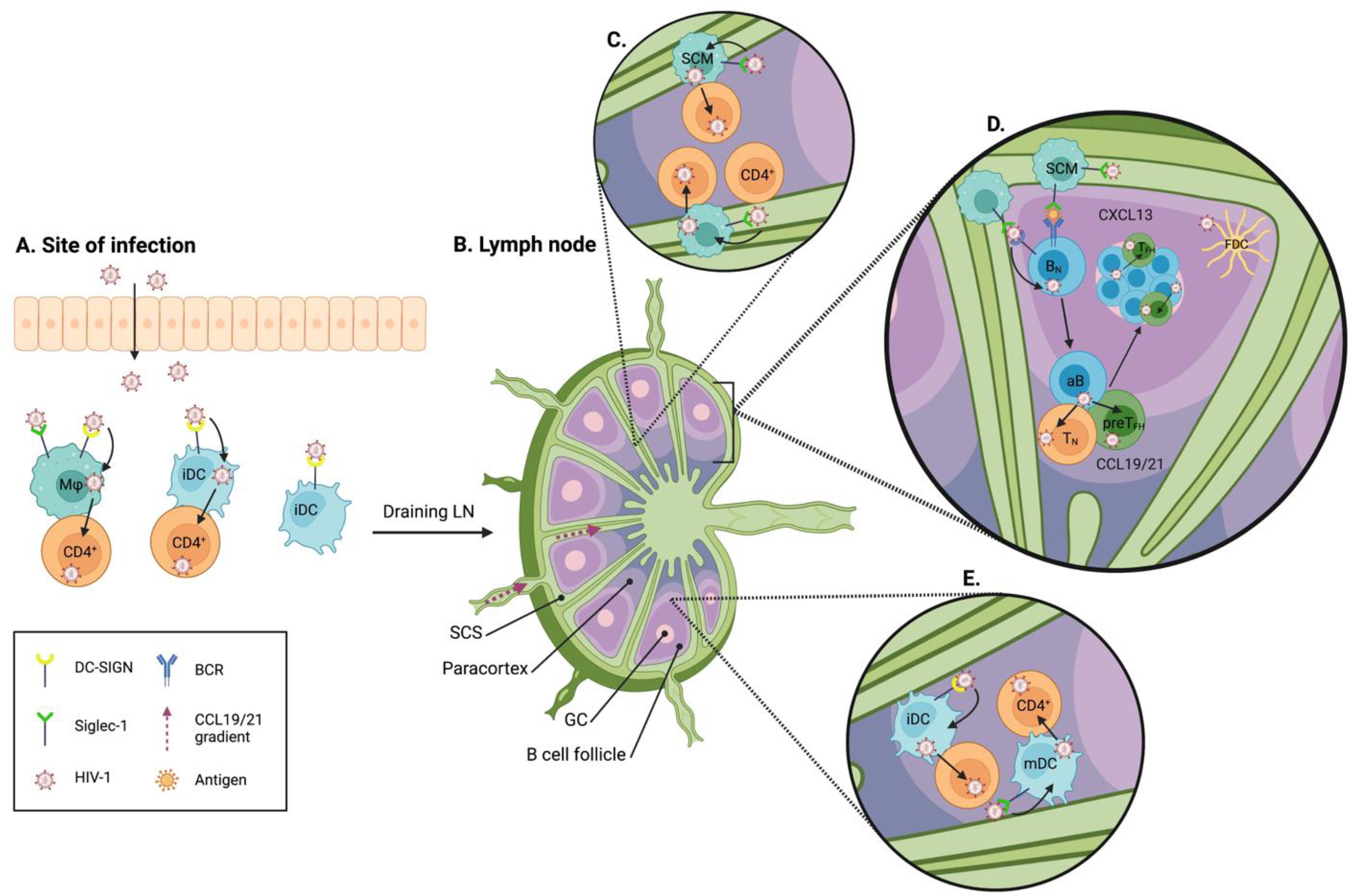
Despite potent antiretroviral therapy, an HIV-1 reservoir persists that represents a major barrier to a cure. Understanding the mechanisms by which the HIV-1 reservoir is established and maintained is critical for the discovery of effective treatments to significantly reduce or eliminate the viral reservoir. In addition to cis infection, in which HIV-1 directly infects target CD4+ T cells, cell-to-cell transmission, or trans infection, can also occur. HIV-1 trans infection is significantly more efficient than cis infection, mostly due to the occurrence of multiple infections per cell during transfer. Additionally, trans infection is efficient even in the presence of ART and/or neutralizing antibodies. Cell-to-cell transmission is mediated by CD4+ T cells and professional antigen presenting cells (APC). Here we focus on APC, i.e., myeloid dendritic cells, B lymphocytes, and monocytes/macrophages, that bind, internalize, and transfer HIV-1 to target CD4+ T cells via various proposed mechanisms. We assess the potential impact of trans infection on the establishment and maintenance of the HIV-1 reservoir including its role in disease progression. We consider the natural interactions between APC and CD4+ T cells in vivo that HIV-1 may hijack, allowing for the highly efficient trans infection of CD4+ T cells, maintaining the viral reservoirs in tissue despite undetectable plasma viral loads in peripheral blood. We propose that these modes of viral pathogenesis need to be addressed in potential cure strategies to ensure eradication of the viral reservoir.
Conflict of interest statement
Conflicts of interest The authors have no conflicts of interest to declare.
Figures
References
Grants and funding
LinkOut - more resources
Full Text Sources
Research Materials