


Speckle-tracking echocardiography of left and right ventricle and acute cellular rejection in orthotropic heart transplantation: a systematic review and meta-analysis
- PMID: 39636336
- PMCID: PMC11982111
- DOI: 10.1007/s10554-024-03297-3
Speckle-tracking echocardiography of left and right ventricle and acute cellular rejection in orthotropic heart transplantation: a systematic review and meta-analysis
Abstract
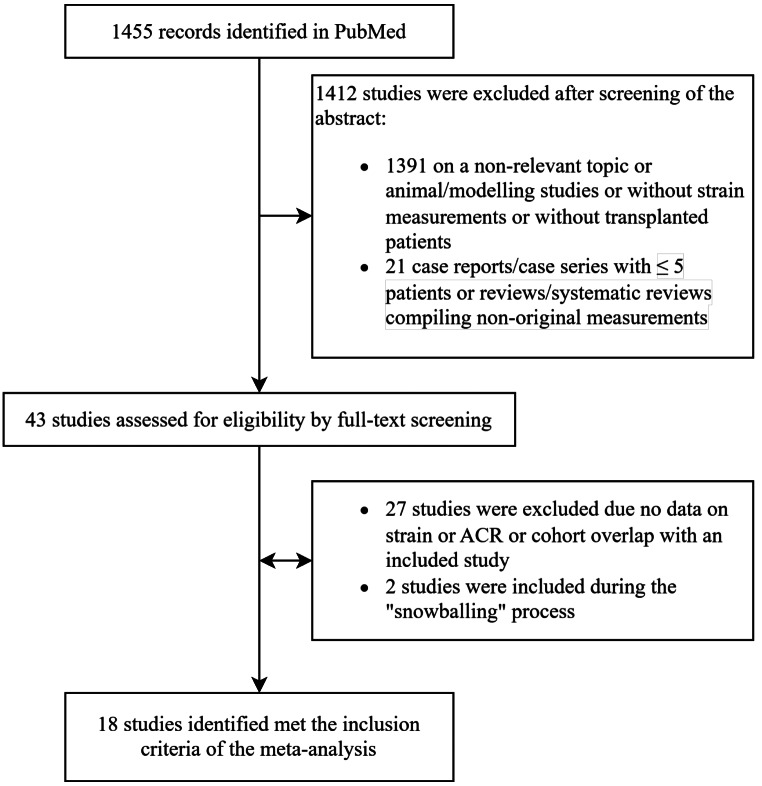
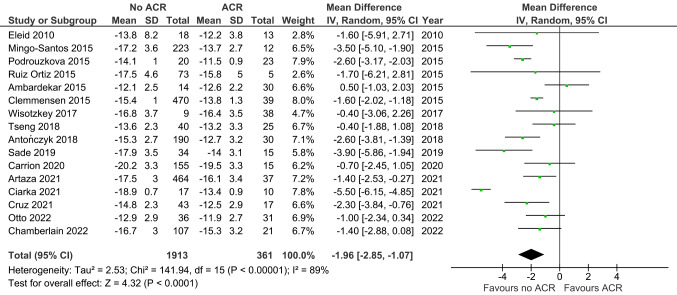
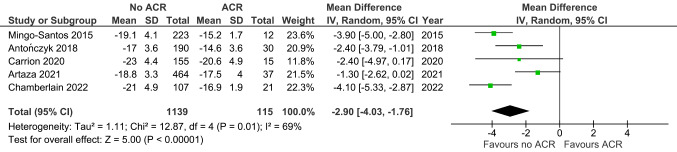
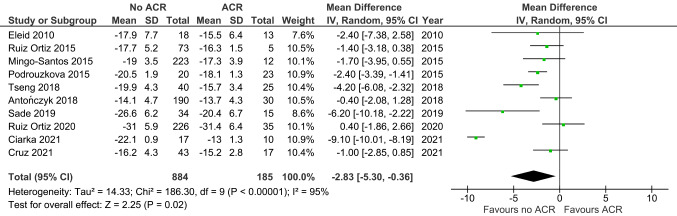
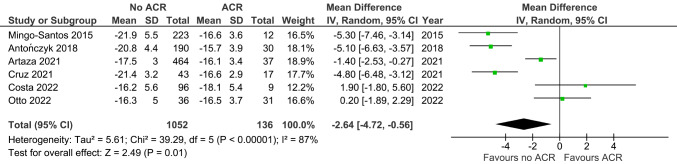
After a cardiac transplantation, the steering of immunosuppression requires an active search for acute cellular rejection (ACR). Surveillance with endomyocardial biopsy (EMB) is the gold standard. Given the costs and potential complications, there is growing interest in the use of non-invasive screening methods. Thus, we have conducted a systematic review and meta-analysis to evaluate the role of speckle-tracking echocardiography as a screening method for ACR. We searched PubMed (CENTRAL) and gray literature for studies presenting data on speckle tracking echocardiography in heart-transplant patients experiencing acute cellular rejection. The primary outcomes of the meta-analysis were left and right ventricular global longitudinal strain. We used random effects models for all our calculations. We pre-registered our meta-analysis with PROSPERO (CRD42024508654). By incorporating data from over 2000 biopsies included in 18 studies, we found that both left (LVGLS, MD -1.96, 95% CI -2.85 to -1.07, p < 0.0001), and right (RVGLS, MD -2.90, 95% CI -4.03 to -1.76, p < 0.00001) ventricular longitudinal strain were lower among patients without ACR. The change of LVGLS from baseline over time was also greater among patients experiencing ACR (MD -2.43, 95% CI -4.82 to -0.05, p = 0.045). Current data suggest that myocardial strain measured by speckle tracking echocardiography is affected in ACR and could potentially be used for early rejection detection as a rule-out strategy, leading to reduction of routine EMB in heart transplant follow-up.
Keywords: Acute cellular rejection; Cardiac transplantation; Echocardiography; Endomyocardial biopsy; Speckle-tracking; Strain.
© 2024. The Author(s).
Conflict of interest statement
Declarations. Competing interests: The authors declare no competing interests.
Figures



References
-
- Kobashigawa J, Patel J, Azarbal B et al (2015) Randomized pilot trial of gene expression profiling versus heart biopsy in the first year after heart transplant: early invasive monitoring attenuation through gene expression trial. Circ Heart Fail 8:557–564. 10.1161/CIRCHEARTFAILURE.114.001658 - PubMed
-
- Feingold B, Rose-Felker K, West SC et al (2022) Early findings after integration of donor-derived cell-free DNA into clinical care following pediatric heart transplantation. Pediatr Transpl 26:e14124. 10.1111/petr.14124 - PubMed
Publication types
MeSH terms
LinkOut - more resources
Full Text Sources
Medical
