


Erythema nodosum followed by eosinophilic pneumonia as an adverse effect of dupilumab treatment in a patient with severe asthma
- PMID: 39640507
- PMCID: PMC11617774
- DOI: 10.1016/j.rmcr.2024.102136
Erythema nodosum followed by eosinophilic pneumonia as an adverse effect of dupilumab treatment in a patient with severe asthma
Abstract
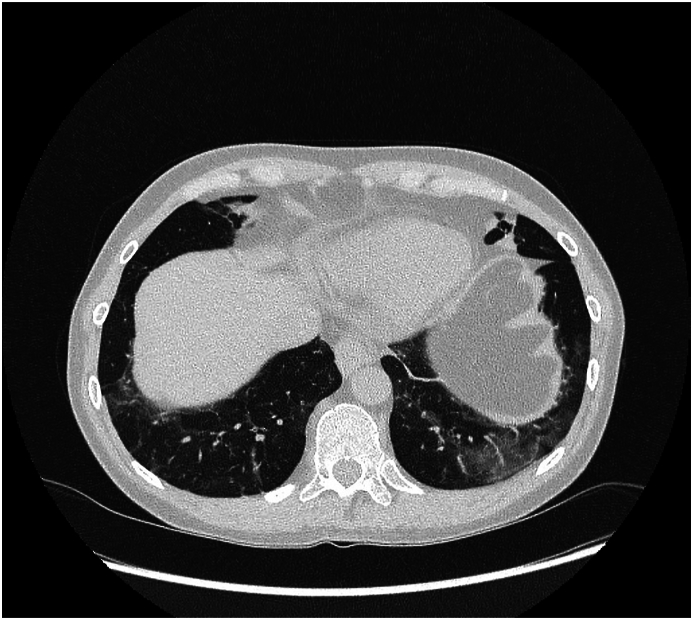
Dupilumab is a monoclonal antibody that has recently been introduced for the treatment of asthma. It has the potential to significantly alter the progression and severity of T2 -dependent diseases, including severe asthma. However, dupilumab can cause transient hypereosinophilia. In rare cases, hypereosinophilia can reach high levels and manifest with clinical symptoms. We present the case of a female patient who presented with hypereosinophilia of almost 5000 cells/μL accompanied by erythema nodosum during dupilumab treatment. After stopping and then restarting dupilumab, the patient developed eosinophilic pneumonia. This case highlights the need to monitor blood eosinophil count along with clinical and radiological symptoms in patients receiving dupilumab.
Keywords: Asthma; Biologics; Dupilumab; Eosinophilia; Erythema nodosum.
© 2024 The Authors.
Conflict of interest statement
The authors declare that they have no known competing financial interests or personal relationships that could have appeared to influence the work reported in this paper.
Figures
References
-
- Nishiyama Y., Koya T., Nagano K., Abe S., Kimura Y., Shima K., et al. Two cases of dupilumab-associated eosinophilic pneumonia in asthma with eosinophilic chronic rhinosinusitis: IL-5-driven pathology? Allergol. Int. 2022;71:548–551. - PubMed
-
- Nishida K., Takaaki N., Shiori T., Satsuki I., Yasuhiro T., Gakuya T., et al. A case of eosinophilic pneumonia in a patient receiving dupilumab therapy. J. Japan Soc. Respi. Endos. 2022;4:377–382.
Publication types
LinkOut - more resources
Full Text Sources
