


Spectrum of DNA variants for patients with hearing loss in 4 language families of 15 ethnicities from Southwestern China
- PMID: 39640791
- PMCID: PMC11620035
- DOI: 10.1016/j.heliyon.2024.e38802
Spectrum of DNA variants for patients with hearing loss in 4 language families of 15 ethnicities from Southwestern China
Abstract
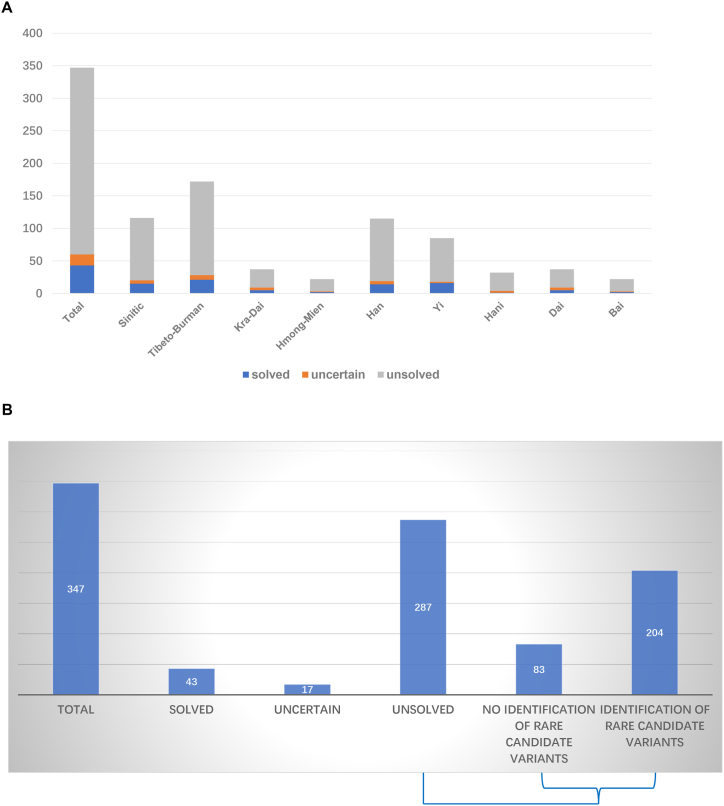
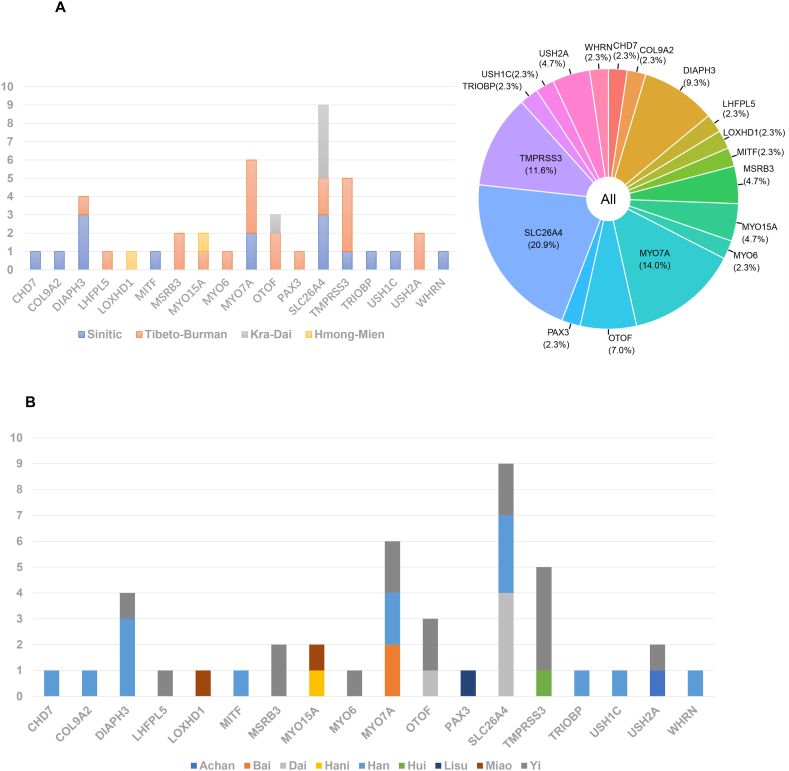
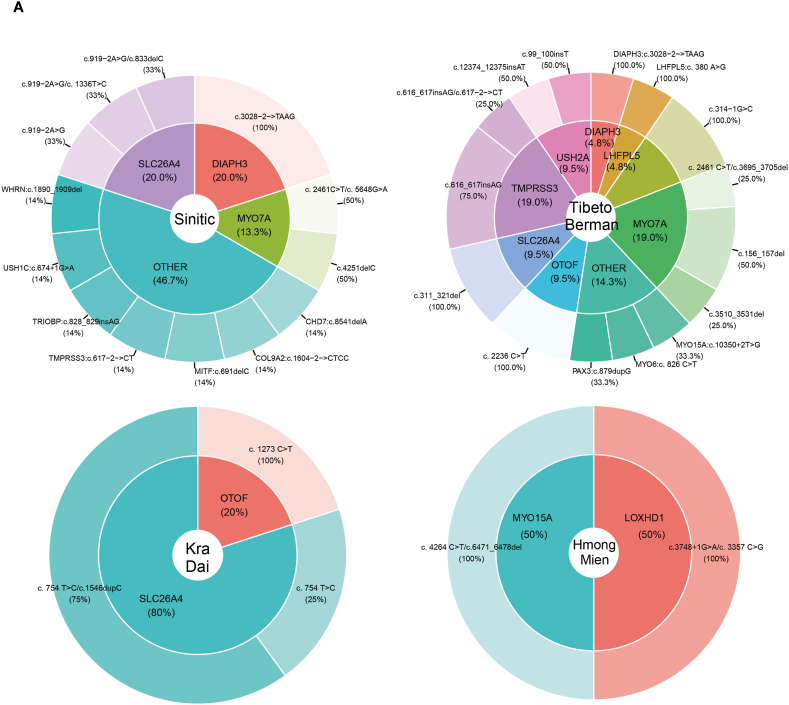
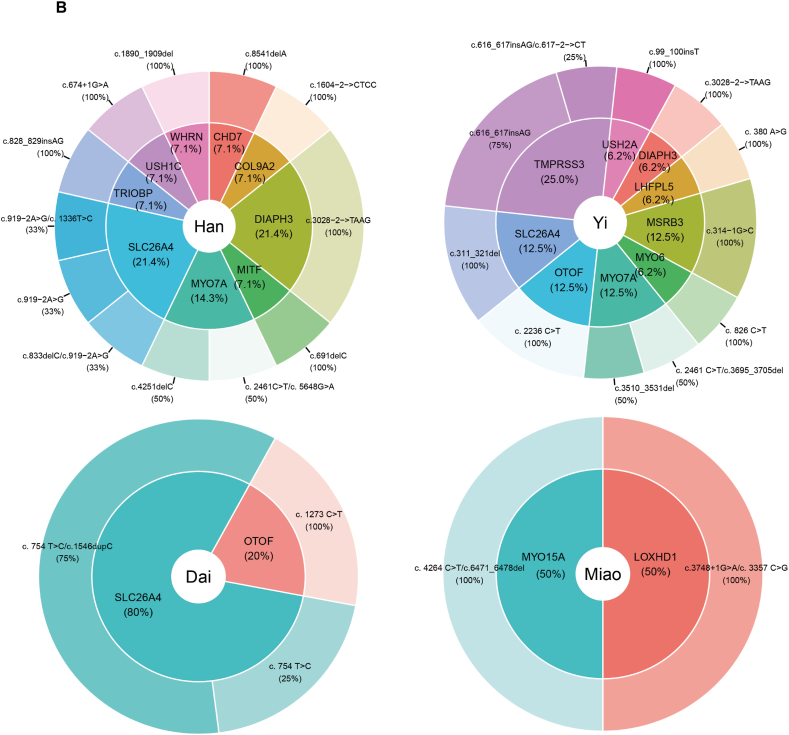
Hearing loss is a common disease. More than 100 genes have been reported to be associated with hereditary hearing loss. However, the distribution of these genes and their variants across diverse populations remains unclear. In this study, we gathered 347 hearing-impaired patients from four language families (Sinitic, Tibeto-Burman, Kra-Dai, and Hmong-Mien) in Southwestern China, excluding cases caused by common mutations in the GJB2 gene. By using next generation sequencing, 122 genes associated with hereditary hearing loss were analyzed on these patients. Rare candidate variants were identified in 71.93 % (264/347) of patients with hearing loss. The diagnostic rate varied around 10 % across different language families. The most frequently identified causative genes in successfully diagnosed cases were SLC26A4, MYO7A and TMPRSS3. Moreover, a substantial number of variants of unknown significance (VUS) were identified in our patient cohort. This underscores the critical need for establishing ethnicity-specific genomic databases for hearing loss. It will significantly improve the clinical diagnostic rate for hearing loss in this region.
Keywords: Diagnostic rate; Ethnicity; Hearing loss; Next generation sequencing; Variants of unknown significance (VUS).
© 2024 The Authors.
Conflict of interest statement
The authors declare that they have no known competing financial interests or personal relationships that could have appeared to influence the work reported in this paper.
Figures
References
-
- Sharma N., et al. A systematic review of the monogenic causes of Non-Syndromic Hearing Loss (NSHL) and discussion of Current Diagnosis and Treatment options. Clin. Genet. 2023;103(1):16–34. - PubMed
-
- Morton C.C., Nance W.E. Newborn hearing screening--a silent revolution. N. Engl. J. Med. 2006;354(20):2151–2164. - PubMed
-
- Fink D. Review of hearing loss in children. JAMA. 2021;325(12):1223–1224. - PubMed
LinkOut - more resources
Full Text Sources
