Molecular landscape and classification of vascular anomalies
- PMID: 39644020
- PMCID: PMC11665640
- DOI: 10.1182/hematology.2024000598
Molecular landscape and classification of vascular anomalies
Abstract
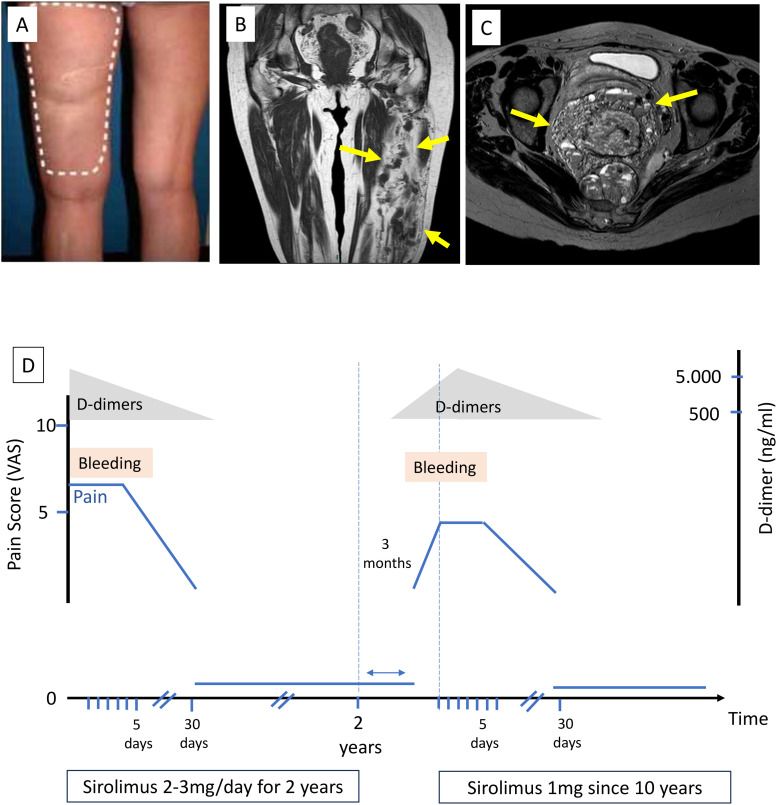
Vascular malformations, which result from anomalies in angiogenesis, include capillary, lymphatic, venous, arteriovenous, and mixed malformations and affect specific vessel types. Historically, treatments such as sclerotherapy and surgery have shown limited efficacy in complicated cases. Most vascular malformations occur sporadically, but some can be inherited. They result from mutations similar to oncogenic alterations, activating pathways such as PI3K-AKT-mTOR or Ras-MAPK-ERK. Recognizing these parallels, we highlight the potential of targeted molecular inhibitors, repurposing anticancer drugs for the treatment of vascular malformations. This case-based review explores recent developments in precision medicine for slow-flow and fast-flow vascular malformation.
Copyright © 2024 by The American Society of Hematology.
Conflict of interest statement
Emmanuel Seront: no competing financial interests to declare.
Angela Queisser: no competing financial interests to declare.
Laurence M. Boon: no competing financial interests to declare.
Miikka Vikkula: no competing financial interests to declare.
Figures


References
-
- Mulliken JB, Glowacki J.. Hemangiomas and vascular malformations in infants and children: a classification based on endothelial characteristics. Plast Reconstr Surg. 1982;69(3):412-422. - PubMed
-
- Queisser A, Seront E, Boon LM, Vikkula M.. Genetic basis and therapies for vascular anomalies. Circ Res. 2021;129(1):155-173. - PubMed
-
- Seront E, Boon LM, Vikkula M.. TEK-related venous malformations. In: Adam MP, Mirzaa GM, Pagon RA, et al, eds. GeneReviews. University of Washington; 1993. - PubMed
Publication types
MeSH terms
Grants and funding
LinkOut - more resources
Full Text Sources
Miscellaneous