


Differential proteomic profiles between cognitive frail and robust older adults from the MELoR cohort
- PMID: 39653973
- PMCID: PMC12181567
- DOI: 10.1007/s11357-024-01462-z
Differential proteomic profiles between cognitive frail and robust older adults from the MELoR cohort
Abstract
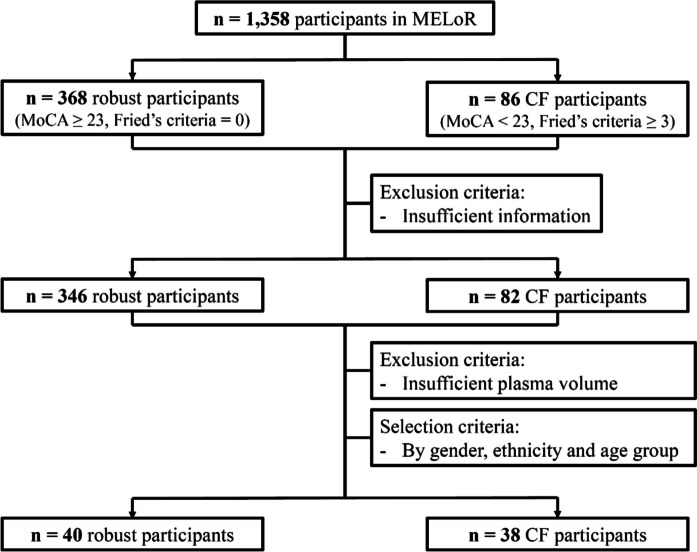
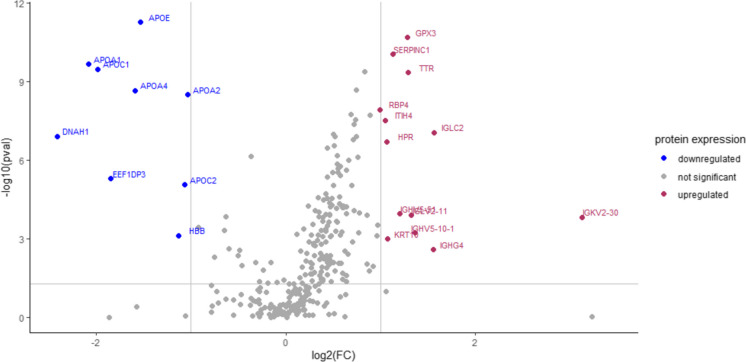
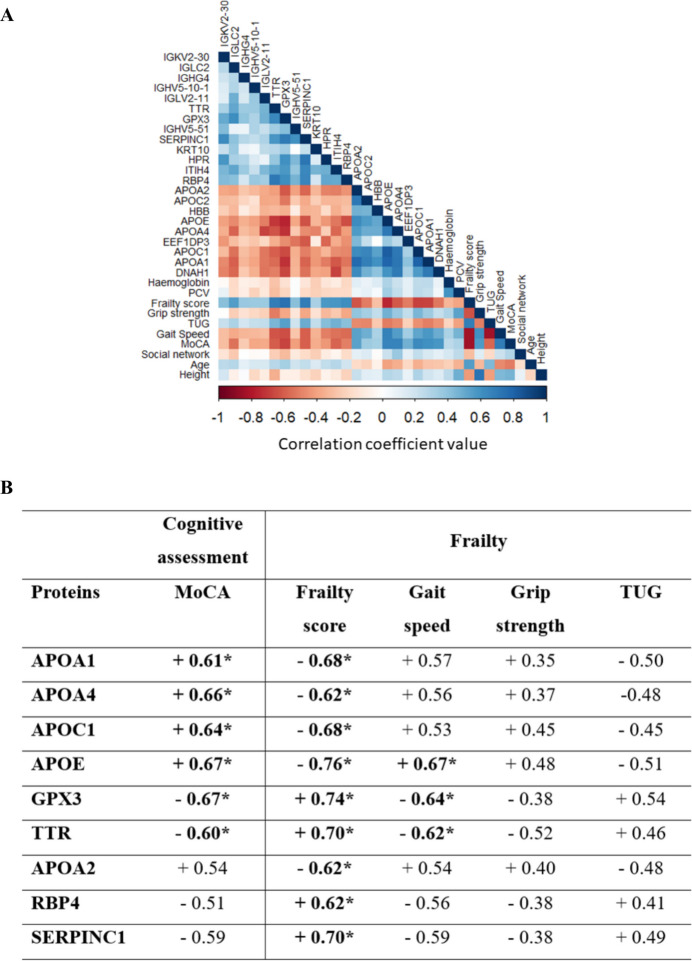
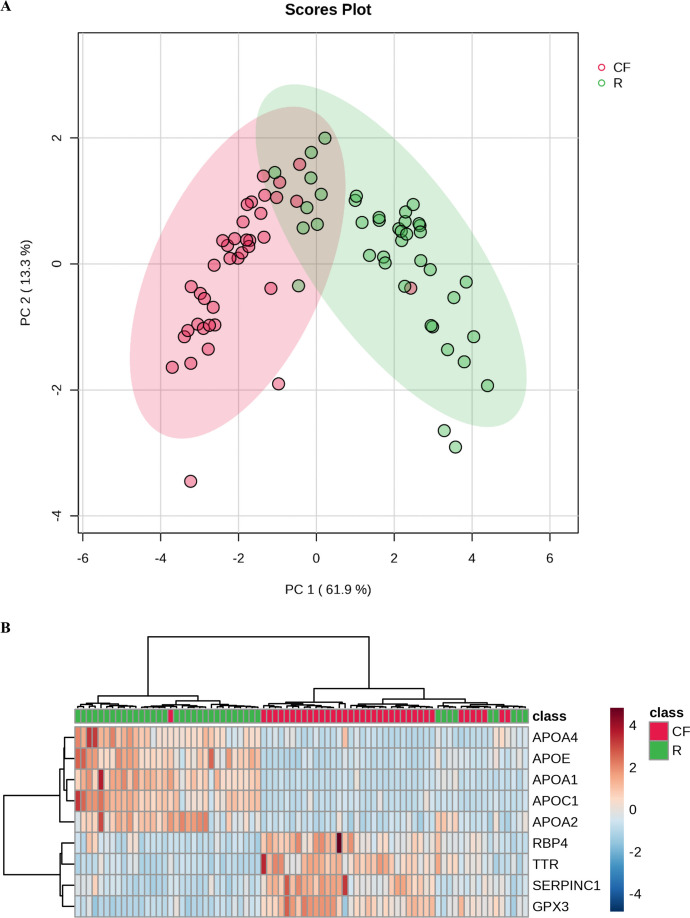
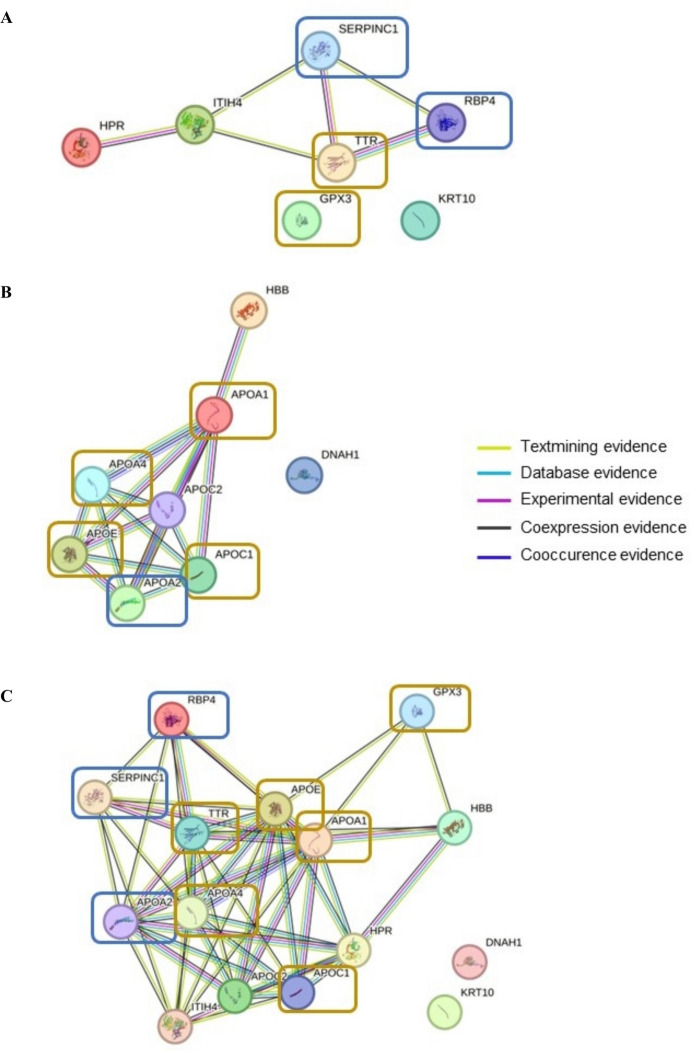
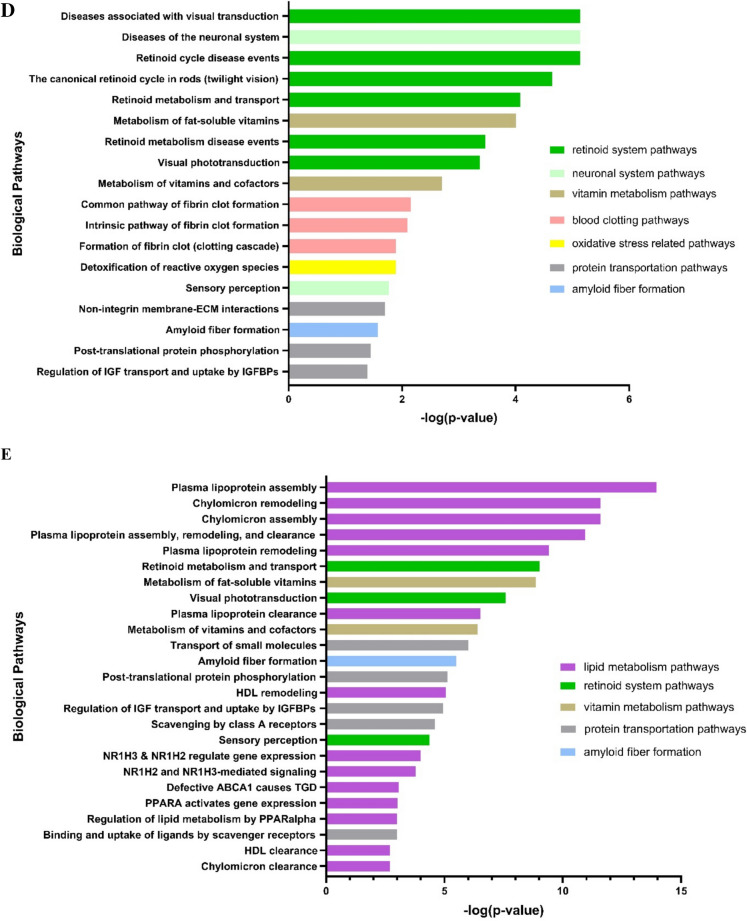
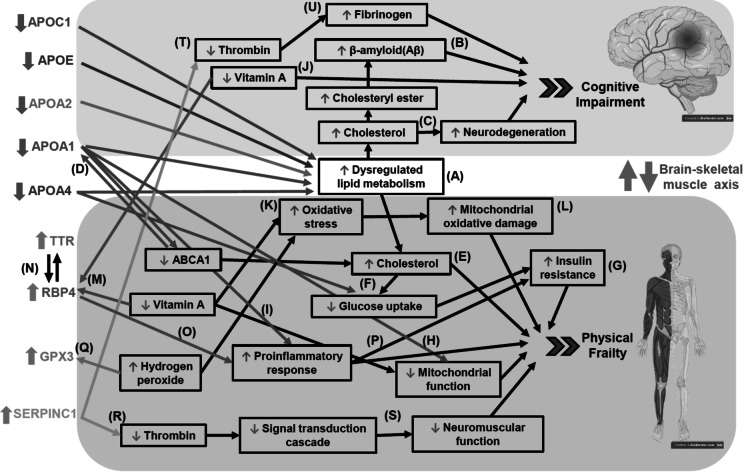
The present study explored for the first time the blood-based proteomic signature that could potentially distinguish older adults with and without cognitive frailty (CF). The participants were recruited under the Malaysian Elders Longitudinal Research (MELoR) study. Cognition and physical frailty were determined using the Montreal Cognitive Assessment (MoCA) and Fried's criteria, respectively. The differential protein expression in the blood samples (38 CF vs 40 robust) were then determined using the Sequential Window Acquisition of All Theoretical Mass Spectra (SWATH) analysis. A total of 294 proteins were found to be differentially expressed in the CF group as opposed to the robust group. Considering proteins with fold change (FC) ≥ ± 2 and p-values < 0.05, 13 proteins were significantly upregulated and nine proteins significantly downregulated in the CF group when compared to the robust group. Subsequent correlation analysis identified nine dysregulated proteins, namely APOA1, APOA2, APOA4, APOC1, APOE, GPX3, RBP4, SERPINC1 and TTR, to exhibit significantly and moderately strong correlations with parameters of cognitive and/or frailty assessments. These proteins could potentially serve as useful proteomic signature of CF given their sensitivity > 78%, specificity > 75%, accuracy > 80% and area under the curve (AUC) > 0.8. The major biological pathways that could be potentially dysregulated by the nine proteins were associated with lipid metabolism and the retinoid system. The present findings warrant further validation in future studies that involve a larger cohort.
Keywords: Blood; Cognitive frailty; Lipid metabolism; Proteomic signature; Retinoid system.
© 2024. The Author(s), under exclusive licence to American Aging Association.
Conflict of interest statement
Declarations. Competing interests: The authors declare no competing interests.
Figures
References
-
- Kelaiditi E, Cesari M, Canevelli M, van Kan GA, Ousset PJ, Gillette-Guyonnet S, et al. Cognitive frailty: rational and definition from an (I.A.N.A./I.A.G.G.) international consensus group. J Nutr Health Aging. 2013;17(9):726–34. - PubMed
MeSH terms
Substances
Grants and funding
LinkOut - more resources
Full Text Sources
Research Materials
Miscellaneous
