Role of the two-component system AmgRS in early resistance of Pseudomonas aeruginosa to cinnamaldehyde
- PMID: 39656006
- PMCID: PMC11705830
- DOI: 10.1128/spectrum.01699-24
Role of the two-component system AmgRS in early resistance of Pseudomonas aeruginosa to cinnamaldehyde
Abstract
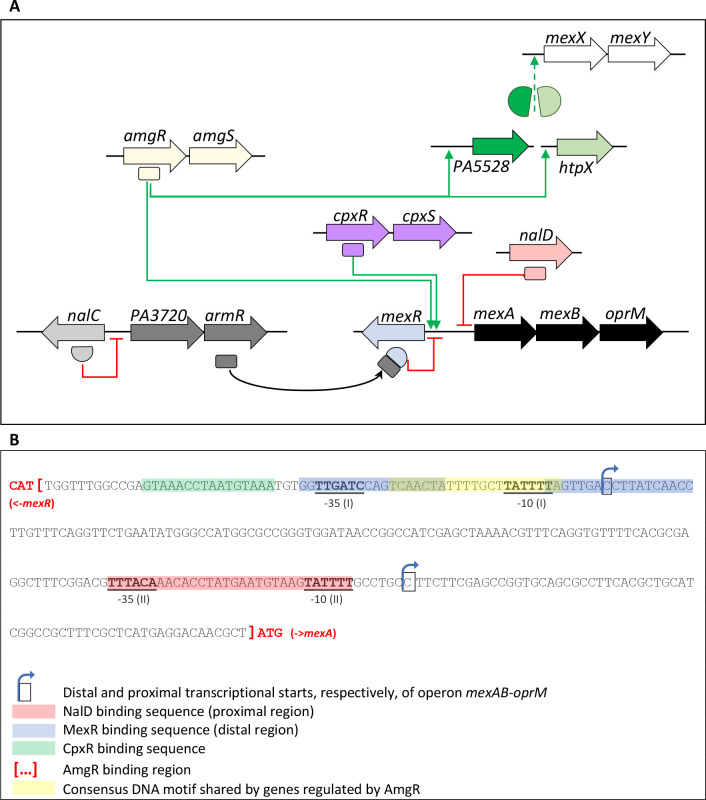
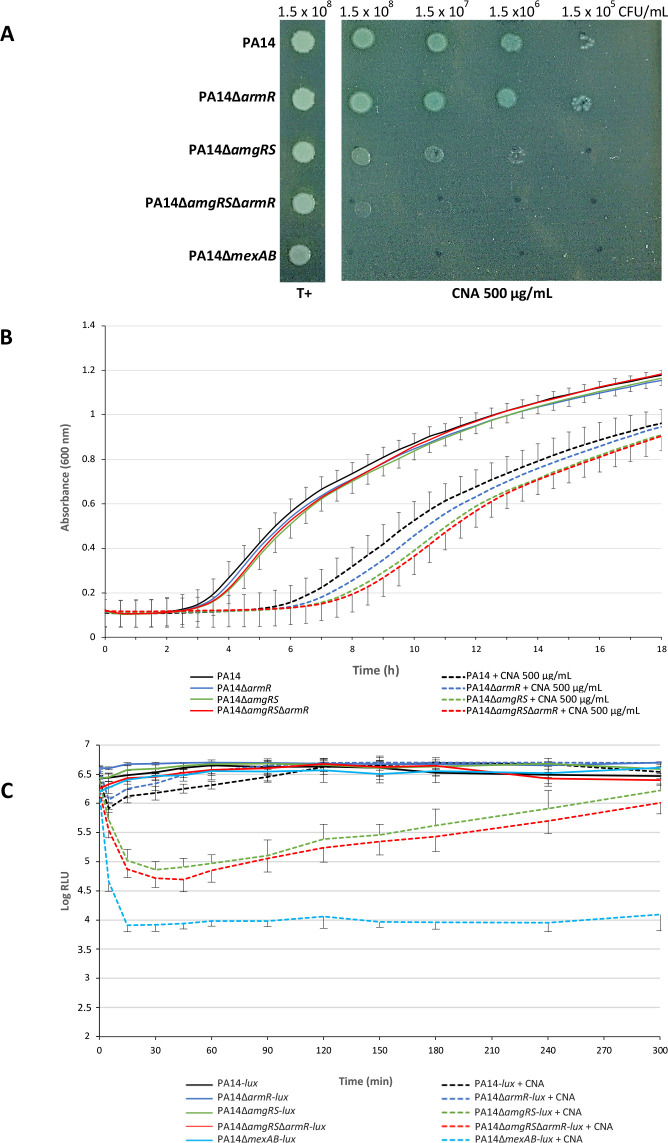
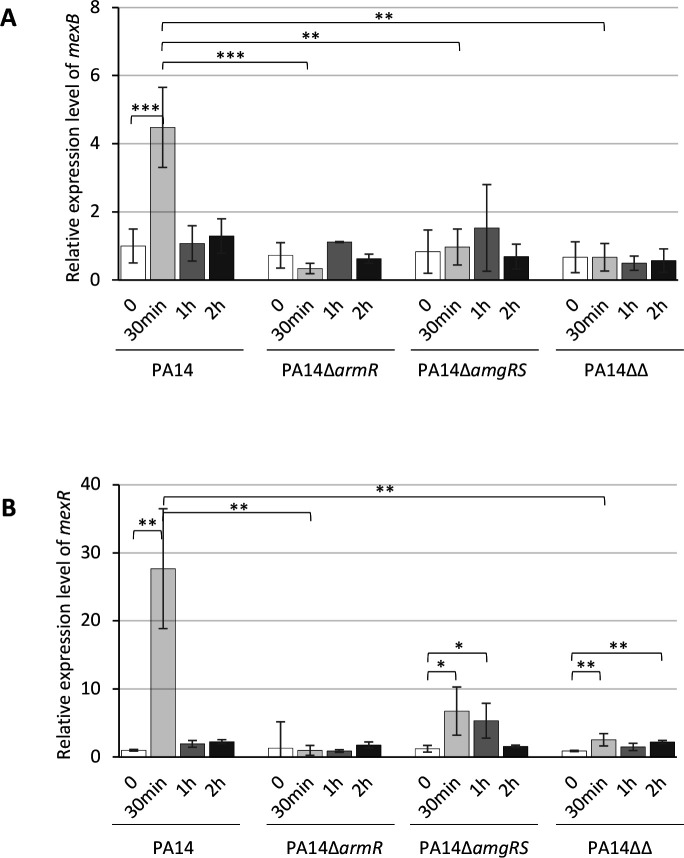
Exposure of Pseudomonas aeruginosa to cinnamaldehyde (CNA), a natural electrophilic antimicrobial often used as self-medication to treat mild infections, triggers overproduction of the MexAB-OprM efflux system, leading to multidrug resistance. In this study, we demonstrate that CNA exposure induces expression of genes regulated by the two-component system AmgRS. AmgRS activates MexAB-OprM production, independent of repressors MexR and NalD. In addition to the essential role played by the NalC-ArmR pathway in this adaptive process, AmgRS is critical for the survival of P. aeruginosa challenged with CNA. Altogether, these data suggest that efflux-dependent and -independent mechanisms are activated in the early phase of CNA exposure, allowing for progressive enzymatic reduction of the biocide to non-toxic cinnamic alcohol.IMPORTANCEExposure of Pseudomonas aeruginosa to cinnamaldehyde (CNA), an antimicrobial used in self-medication, induces overproduction of the MexAB-OprM efflux system, leading to multidrug resistance. Our study demonstrates that the AmgRS two-component system aids in the survival of P. aeruginosa strain PA14 under CNA exposure through both MexAB-OprM-dependent and -independent mechanisms until the enzymatic reduction of CNA into the less toxic cinnamic alcohol. This discovery highlights the pivotal role of AmgRS in mediating defense against aldehyde biocides, emphasizing its significance in the persistence of P. aeruginosa, a pathogen associated with hospital-acquired infections and cystic fibrosis, and underscores the potential impact on clinical treatment strategies.
Keywords: Pseudomonas aeruginosa; antibiotic resistance; cinnamaldehyde; cross resistance antibiotics essential oils; efflux pumps; two-component regulatory systems.
Conflict of interest statement
The authors declare no conflict of interest.
Figures

References
MeSH terms
Substances
LinkOut - more resources
Full Text Sources
Medical