


Estimating inflammatory risk in atherosclerotic cardiovascular disease: plaque over plasma?
- PMID: 39657321
- PMCID: PMC11879196
- DOI: 10.1093/ehjci/jeae314
Estimating inflammatory risk in atherosclerotic cardiovascular disease: plaque over plasma?
Abstract
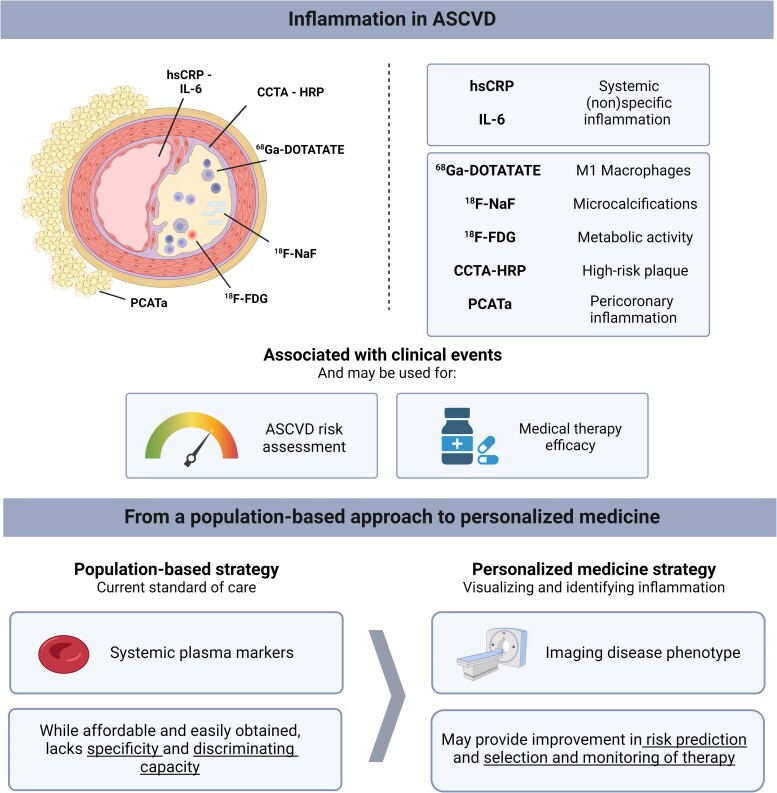
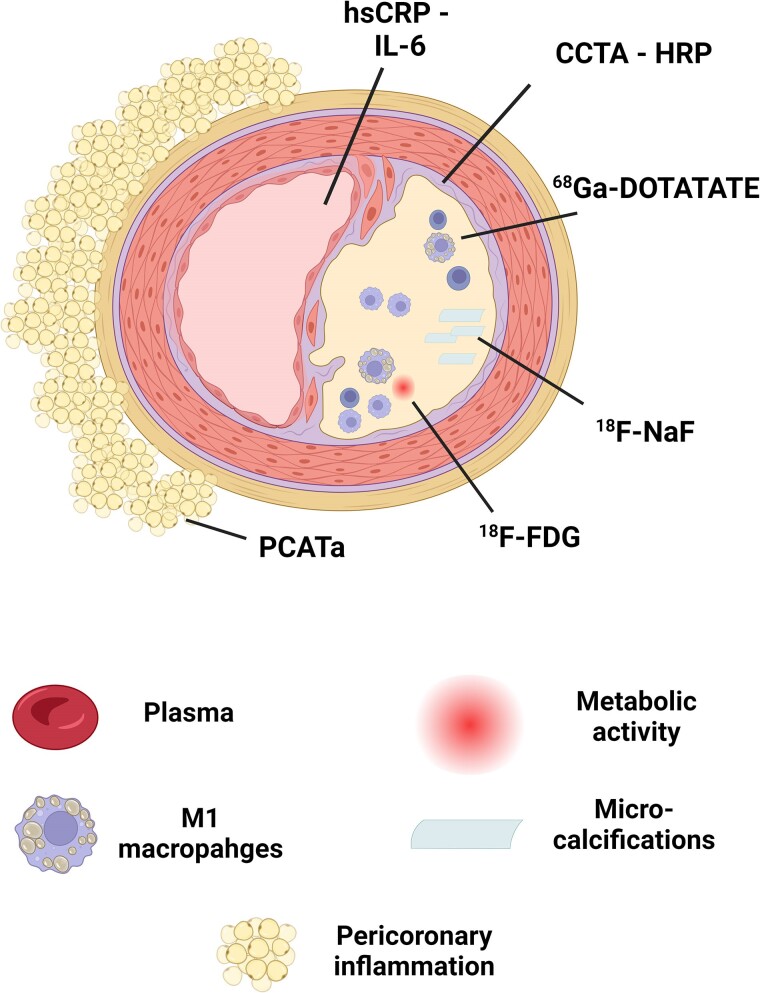
Inflammation is an important driver of disease in the context of atherosclerosis, and several landmark trials have shown that targeting inflammatory pathways can reduce cardiovascular event rates. However, the high cost and potentially serious adverse effects of anti-inflammatory therapies necessitate more precise patient selection. Traditional biomarkers of inflammation, such as high-sensitivity C-reactive protein, show an association with cardiovascular risk on a population level but do not have specificity for local plaque inflammation. Nowadays, advancements in non-invasive imaging of the vasculature enable direct assessment of vascular inflammation. Positron emission tomography (PET) tracers such as 18F-fluorodeoxyglucose enable detection of metabolic activity of inflammatory cells but are limited by low specificity and myocardial spillover effects. 18F-sodium fluoride is a tracer that identifies active micro-calcification in plaques, indicating vulnerable plaques. Gallium-68 DOTATATE targets pro-inflammatory macrophages by binding to somatostatin receptors, which enhances specificity for plaque inflammation. Coronary computed tomography angiography (CCTA) provides high-resolution images of coronary arteries, identifying high-risk plaque features. Measuring pericoronary adipose tissue attenuation on CCTA represents a novel marker of vascular inflammation. This review examines both established and emerging methods for assessing atherosclerosis-related inflammation, emphasizing the role of advanced imaging in refining risk stratification and guiding personalized therapies. Integrating these imaging modalities with measurements of systemic and molecular biomarkers could shift atherosclerotic cardiovascular disease management towards a more personalized approach.
Keywords: atherosclerosis; computed tomography; imaging; inflammation; positron emission tomography.
© The Author(s) 2024. Published by Oxford University Press on behalf of the European Society of Cardiology.
Conflict of interest statement
Conflict of interest: J.M.K. is partly funded by the Klinkerpad Foundation. R.F.O. has received speaker fees from Daiichi Sankyo. E.S.G.S. has received fees paid to his institution from Amgen, Akcea, Athera, Sanofi-Regeneron, Esperion, Novo Nordisk, Lily, and Novartis. N.S.N. reports grants from the Dutch Heart Foundation (Dekker 03-007-2023-0068) and European Atherosclerosis Society (2023), research funding/speaker fees from Cleerly, Daiichi Sankyo, and Novartis, and is co-founder of Lipid Tools. The remaining authors report no conflicts of interest.
Figures
References
-
- Ridker PM, Everett BM, Thuren T, MacFadyen JG, Chang WH, Ballantyne C et al. Antiinflammatory therapy with canakinumab for atherosclerotic disease. N Engl J Med 2017;377:1119–31. - PubMed
-
- Nidorf SM, Fiolet ATL, Mosterd A, Eikelboom JW, Schut A, Opstal TSJ et al. Colchicine in patients with chronic coronary disease. N Engl J Med 2020;383:1838–47. - PubMed
-
- Fernández-Friera L, Fuster V, López-Melgar B, Oliva B, García-Ruiz JM, Mendiguren J et al. Normal LDL-cholesterol levels are associated with subclinical atherosclerosis in the absence of risk factors. J Am Coll Cardiol 2017;70:2979–91. - PubMed
Publication types
MeSH terms
Substances
Grants and funding
LinkOut - more resources
Full Text Sources
Medical
Research Materials
