


Focus on patient perspectives in climate action policies for healthcare. A German survey analysis on what patients are willing to do
- PMID: 39659718
- PMCID: PMC11629199
- DOI: 10.3389/fpubh.2024.1477313
Focus on patient perspectives in climate action policies for healthcare. A German survey analysis on what patients are willing to do
Abstract
Background: The healthcare sector, while dedicated to improving health, paradoxically contributes significantly to global carbon emissions, accounting for approximately 4.9% of global emissions. Despite growing public concern about climate change, few studies have explored patients' awareness and attitudes toward the environmental impact of healthcare. This study aims to assess patients' perspectives on climate change and the sustainability of healthcare practices.
Methods: A cross-sectional survey was conducted at Ludwig-Maximilians-University (LMU) Hospital in Munich, Germany. Patients were invited to participate in a voluntary, anonymous online survey via strategically placed QR codes throughout the hospital. The survey explored patients' demographic information, environmental awareness, attitudes toward climate-friendly practices in healthcare, and willingness to support sustainable initiatives. Descriptive statistics and regression analyses were used to analyze the data.
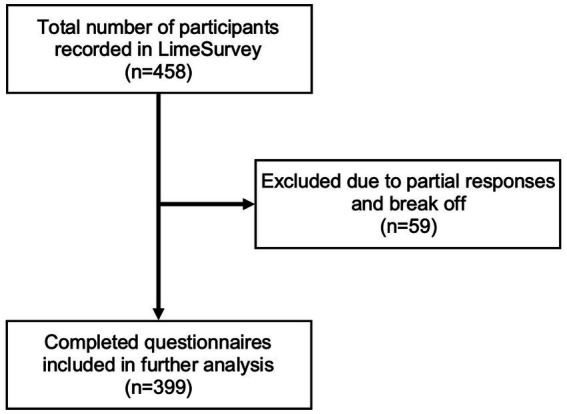
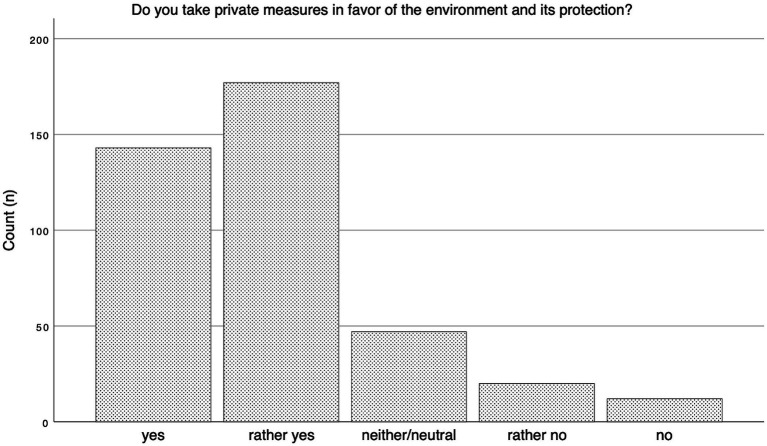
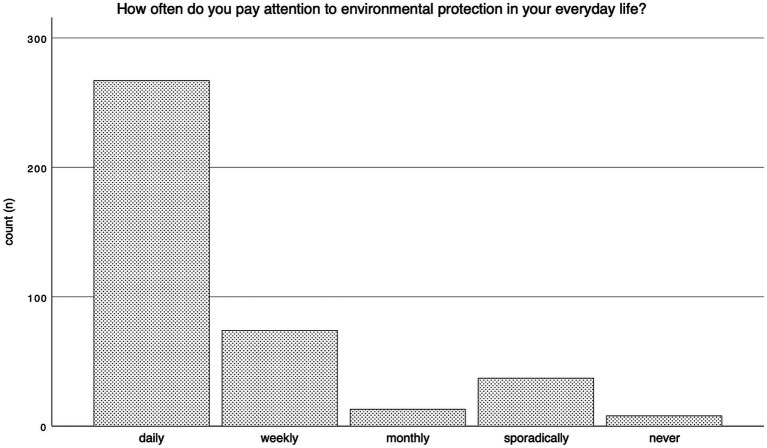
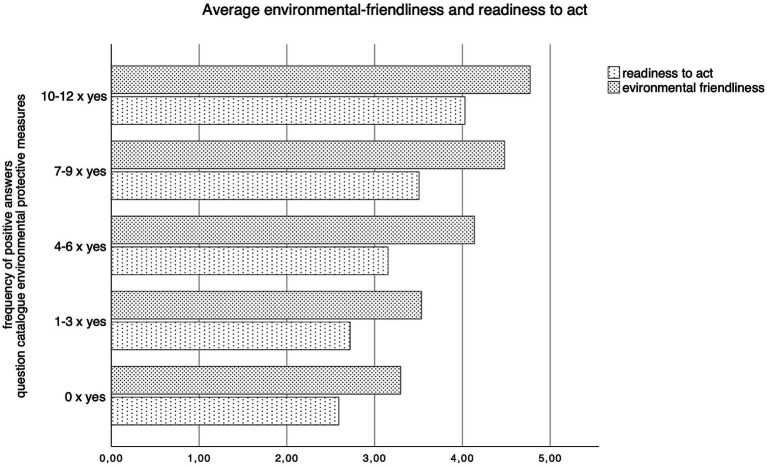
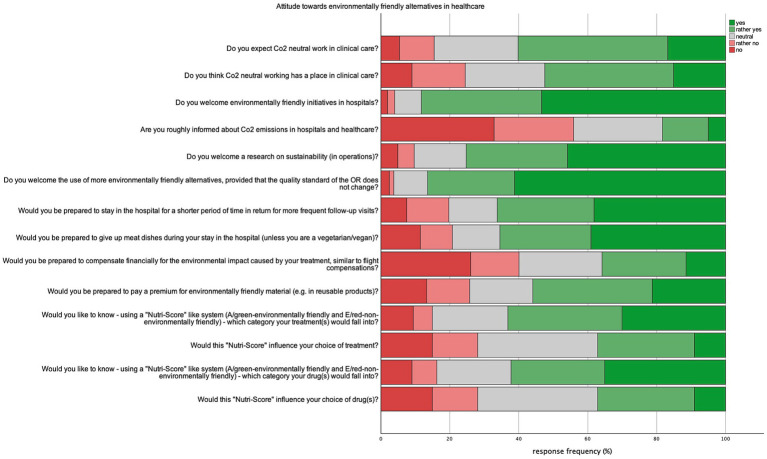
Results: A total of 399 patients completed the survey (87% completion rate). The majority of respondents (92.3%) were aware of climate change, and 82.7% reported prioritizing climate-friendly practices in their personal lives. However, 55.9% of respondents were unaware of the healthcare system's contribution to carbon emissions, and only 18.3% knew about hospitals' climate impact. Despite this, 88.2% of respondents supported environmentally friendly initiatives in hospitals, and 86.5% were open to sustainable alternatives, provided that quality standards were maintained. Participants expressed significant interest in knowing the environmental impact of their treatments, with 63.2% in favor of a Nutri-Score-like system that would display the carbon footprint of medical procedures. Among those, 54.4% indicated that such a system would influence their choice of treatment. Similarly, 62.2% of respondents were interested in knowing the environmental impact of their medications, with 65% reporting that this information would affect their medication choices. A notable proportion of patients (66.2%) indicated willingness to support sustainable healthcare through shorter hospital stays and increased follow-up visits, while 35.8% were open to paying a CO2 compensation fee for their treatments. However, 81% were unwilling to pay higher insurance premiums to support environmentally friendly practices in hospitals. Regression analyses revealed that older age groups and having children were positively associated with environmental awareness (p < 0.05). However, factors such as gender, education level, relationship status, and illness severity did not significantly impact environmental attitudes. There was a significant correlation between patients' environmental friendliness and their readiness to take climate-protective actions (p < 0.001).
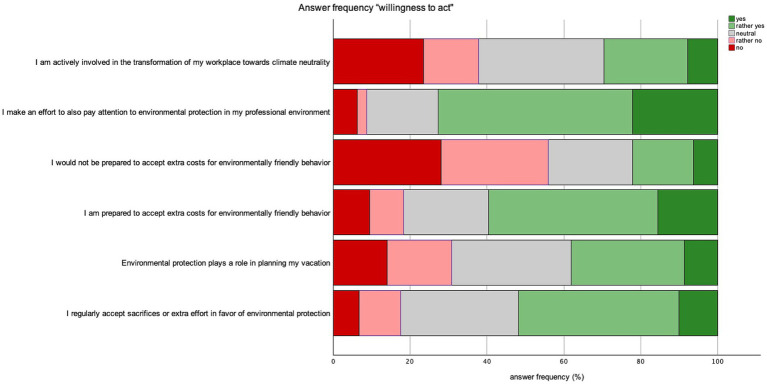
Conclusion: The study highlights a gap between patients' environmental awareness and their knowledge of healthcare's carbon footprint. While patients are generally supportive of sustainable practices in healthcare, their willingness to act diminishes when personal costs or discomfort are involved. A coordinated approach involving policy changes, patient education, and market innovations is essential to promote sustainable practices in healthcare without compromising patient care quality. Further research is needed to explore strategies for bridging the gap between environmental awareness and action in healthcare settings.
Keywords: advocacy; climate change; healthcare; implementing change; patient perspective; policy.
Copyright © 2024 Scholz, Börner, Schust, Schardey, Kühn, Renz, Angele, Werner, Guba and Jacob.
Conflict of interest statement
The authors declare that the research was conducted in the absence of any commercial or financial relationships that could be construed as a potential conflict of interest.
Figures
References
-
- Speake J, LaFlaur M. The Oxford essential dictionary of foreign terms in English Oxford University Press; (1999).
-
- Calvin K, Dasgupta D, Krinner G, et al. IPCC, 2023: climate change 2023: synthesis report. Contribution of working groups I, II and III to the sixth assessment report of the intergovernmental panel on climate change [Core writing team, H. Lee and J. Romero (Eds.)]. IPCC, Geneva, Switzerland. (Arias P, Bustamante M, Elgizouli I, et al., eds.). (2023).
-
- Watts N, Amann M, Arnell N, Ayeb-Karlsson S, Belesova K, Boykoff M, et al. The 2019 report of the lancet countdown on health and climate change: ensuring that the health of a child born today is not defined by a changing climate. Lancet. (2019) 394:1836–78. doi: 10.1016/S0140-6736(19)32596-6 - DOI - PMC - PubMed
-
- Andre P, Boneva T, Chopra F, Falk A. Globally representative evidence on the actual and perceived support for climate action. Nat Clim Chang. (2024) 14:253–9. doi: 10.1038/s41558-024-01925-3 - DOI
MeSH terms
LinkOut - more resources
Full Text Sources
Medical
Miscellaneous
