


Impact of Obstructive Sleep Apnea and Continuous Positive Airway Pressure Treatment on Dry Eye Disease: A Systematic Review and Meta-Analysis
- PMID: 39659892
- PMCID: PMC11629664
- DOI: 10.2147/NSS.S495883
Impact of Obstructive Sleep Apnea and Continuous Positive Airway Pressure Treatment on Dry Eye Disease: A Systematic Review and Meta-Analysis
Abstract
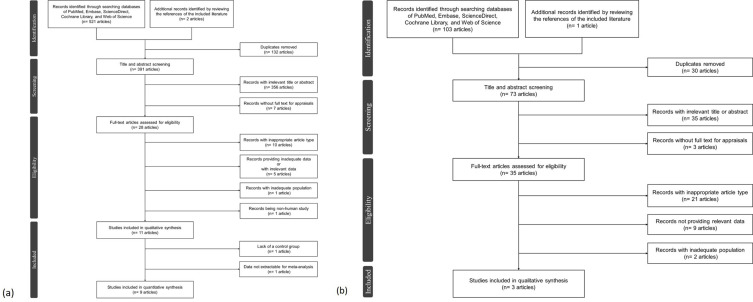
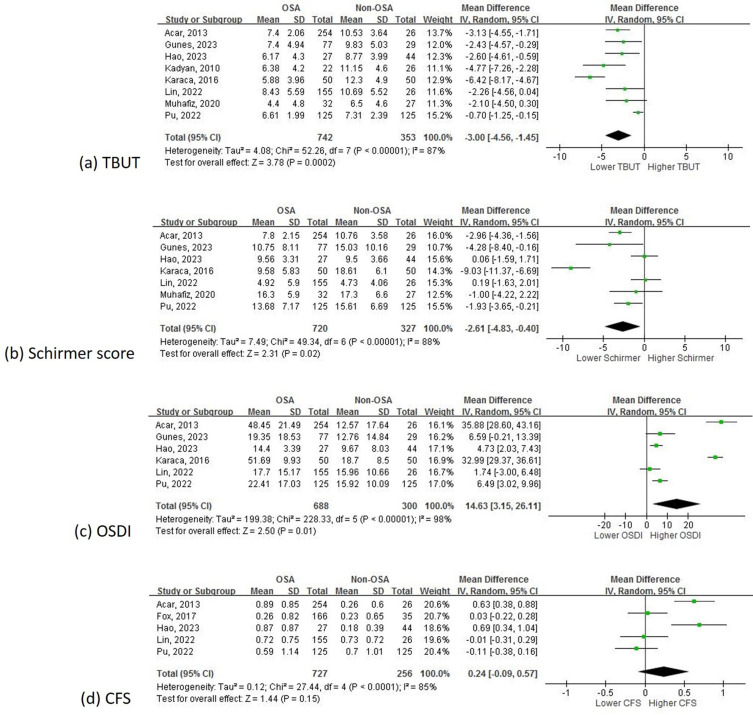
Obstructive sleep apnea (OSA) has been reported to influence the ocular surface and may lead to dry eye disease (DED). Continuous positive airway pressure (CPAP) is the first-line conservative treatment for OSA. However, CPAP might also have mask-related side effects that could deteriorate DED simultaneously. This study investigated the impact of OSA on DED (Aim 1), and CPAP on DED (Aim 2). Five databases were searched for articles published up to May, 2024. OSA severity, CPAP usage, and DED parameters, including tear breakup time (TBUT), Schirmer test, Ocular Surface Disease Index (OSDI), and Corneal Fluorescence Staining Score (CFS), were analyzed. For Aim 1, the random-effects model was used for meta-analysis, and the leave-one-out method was used for sensitivity analysis. For Aim 2, a narrative synthesis with critical appraisal of the literature was performed. Eleven studies with 1,526 patients for Aim 1 and three studies with 180 patients for Aim 2 were included. For Aim 1, OSA patients had poorer dry eye profiles of TBUT, Schirmer test, and OSDI when compared to non-OSA patients. For Aim 2, it seemed that those wearing CPAP for less than half a year did not have enough improvement in dry eye status. Instead, those wearing CPAP for at least a year reached greater therapeutic effects for OSA and DED. We concluded that OSA patients may suffer from poorer dry eye condition compared to non-OSA patients. Besides, wearing CPAP for long enough duration (at least 1 year) seemed to have better improvement in DED.
Keywords: Obstructive sleep apnea; continuous positive airway pressure; dry eye disease; meta-analysis.
© 2024 Lin et al.
Conflict of interest statement
All authors certify that they have no affiliations with or involvement in any organization or entity with any financial interest, or non-financial interest in the subject matter or materials discussed in this manuscript.
Figures
References
Publication types
LinkOut - more resources
Full Text Sources
