


Enduring effects of psychotherapy, antidepressants and their combination for depression: a systematic review and meta-analysis
- PMID: 39664326
- PMCID: PMC11632389
- DOI: 10.3389/fpsyt.2024.1415905
Enduring effects of psychotherapy, antidepressants and their combination for depression: a systematic review and meta-analysis
Abstract
Introduction: Although depressive disorders are frequently associated with relapses, the sustained efficacy of therapies after their termination has been insufficiently investigated.
Objective: The aim of this study was to evaluate the current evidence of enduring effects of psychotherapy, antidepressants and their combination after the end of treatment.
Methods: PubMed and PsychINFO were systematically screened according to PRISMA guidelines (except for preregistration). Only randomized controlled trials (RCTs) between 1980 and 2022 comparing the efficacy of psychotherapy, antidepressants and their combination in adult depression at follow-up at least 12 months after termination of therapy, which could be acute phase, maintenance or relapse prevention therapy, were included. Risk of bias was assessed by using the Cochrane risk of bias tool.
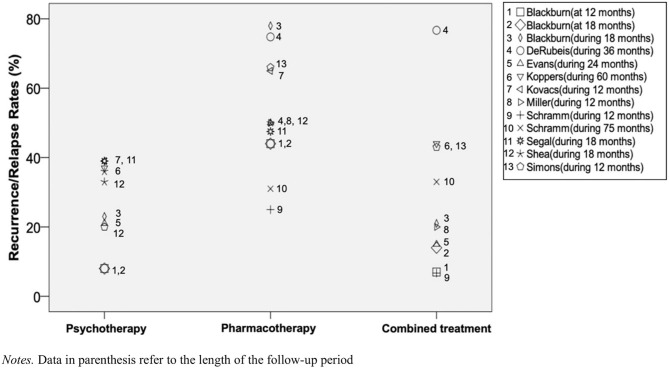
Results: In total 19 RCTs with a total of 1154 participants were included. Psychotherapy was significantly superior to pharmacotherapy regarding relapse rates and Beck Depression Inventory scores at follow-up after acute treatment in two of nine RCTs. Combined treatment performed significantly better than pharmacotherapy, but not psychotherapy, regarding relapse and remission in five out of nine RCTs at least 12 months after treatment termination. Pairwise meta-analyses indicated a superiority of combined treatment compared to pharmacotherapy alone regarding relapse, recurrence, and rehospitalization rates (RR=0.60, 95%-CI: 0.37-0.97, p=.041) and for psychotherapy compared to pharmacotherapy alone regarding relapse and recurrence rates (RR=0.58, 95%-CI: 0.38-0.89, p=.023), however comparative treatment effects between psychotherapy and combined treatment were insignificant.
Conclusions: Current findings suggest a superiority of psychotherapy and combined treatment over pharmacotherapy alone in major depressive disorder depression. Major limitations were a low number of studies reporting follow-up data after termination of study periods and a heterogeneity in definitions of treatment outcomes. Practice guidelines and participatory decision-making processes for the choice of treatment should consider the current knowledge on long-term effects of antidepressant therapy methods more than has been the case to date.
Keywords: antidepressants; carry-over effect; depression; follow-up; long-term; psychotherapy.
Copyright © 2024 Voderholzer, Barton, Favreau, Zisler, Rief, Wilhelm and Schramm.
Conflict of interest statement
Authors ES, WR and UV receive fees for books, lectures and workshops on psychotherapy and pharmacotherapy. The remaining authors declare that the research was conducted in the absence of any commercial or financial relationships that could be construed as a potential conflict of interest.
Figures


References
-
- Brakemeier E, Radtke M, Zimmermann J, Tuschen-Caffier B, Hautzinger M, Schramm E, et al. . Overcoming treatment resistance in chronic depression: a pilot study on outcome and feasibility of the cognitive behavioral analysis system of psychotherapy as an inpatient treatment program. Psychother psychosomatics. (2015) 84:51–6. doi: 10.1159/000369586 - DOI - PubMed
Publication types
LinkOut - more resources
Full Text Sources
