Trends in Gestational Weight Gain and Prepregnancy Obesity in South Carolina, 2015-2021
- PMID: 39666870
- PMCID: PMC11640805
- DOI: 10.5888/pcd21.240137
Trends in Gestational Weight Gain and Prepregnancy Obesity in South Carolina, 2015-2021
Abstract
Introduction: We examined trends in prepregnancy obesity and gestational weight gain, with a focus on racial and ethnic differences, before and during the COVID-19 pandemic in South Carolina.
Methods: Hospital and emergency department discharge codes were linked to birth certificates. Prepregnancy obesity was defined as a body mass index (kg/m2) of 30 or higher. Gestational weight gain was defined as inadequate, adequate, or excessive based on the 2009 Institute of Medicine guidelines. A generalized linear model with a multinomial distribution and glogit link estimated the risk of inadequate weight gain and excessive weight gain with adequate weight gain as the reference group. The generalized linear model with a modified Poisson distribution and log link estimated prepregnancy obesity risk with nonobese as the reference group.
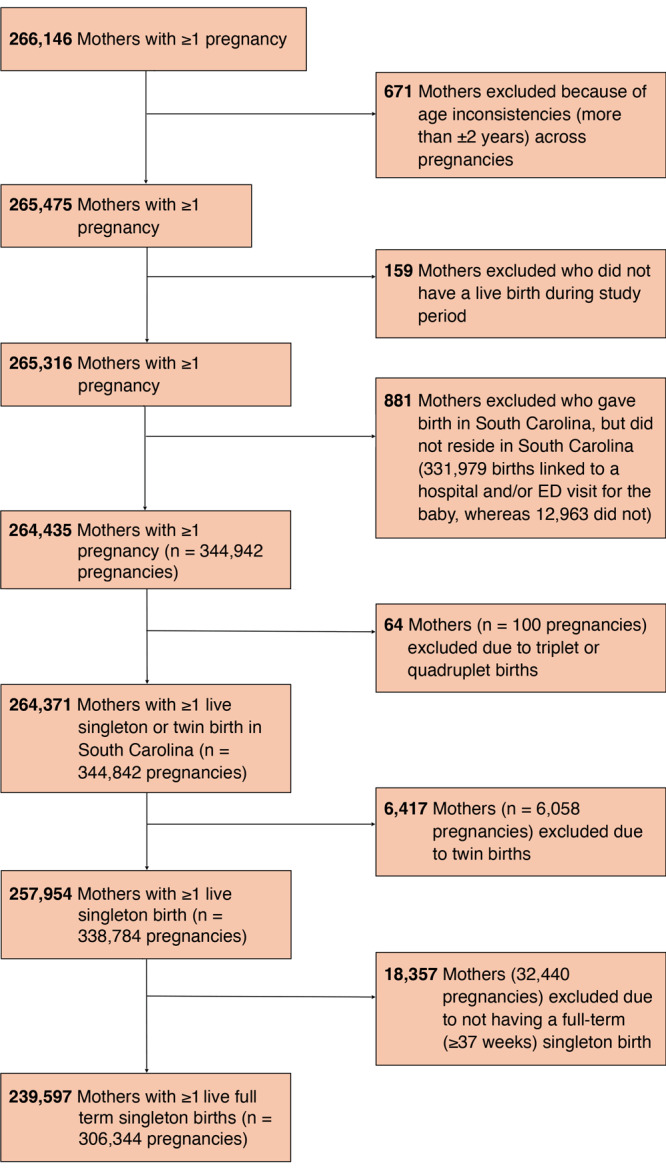
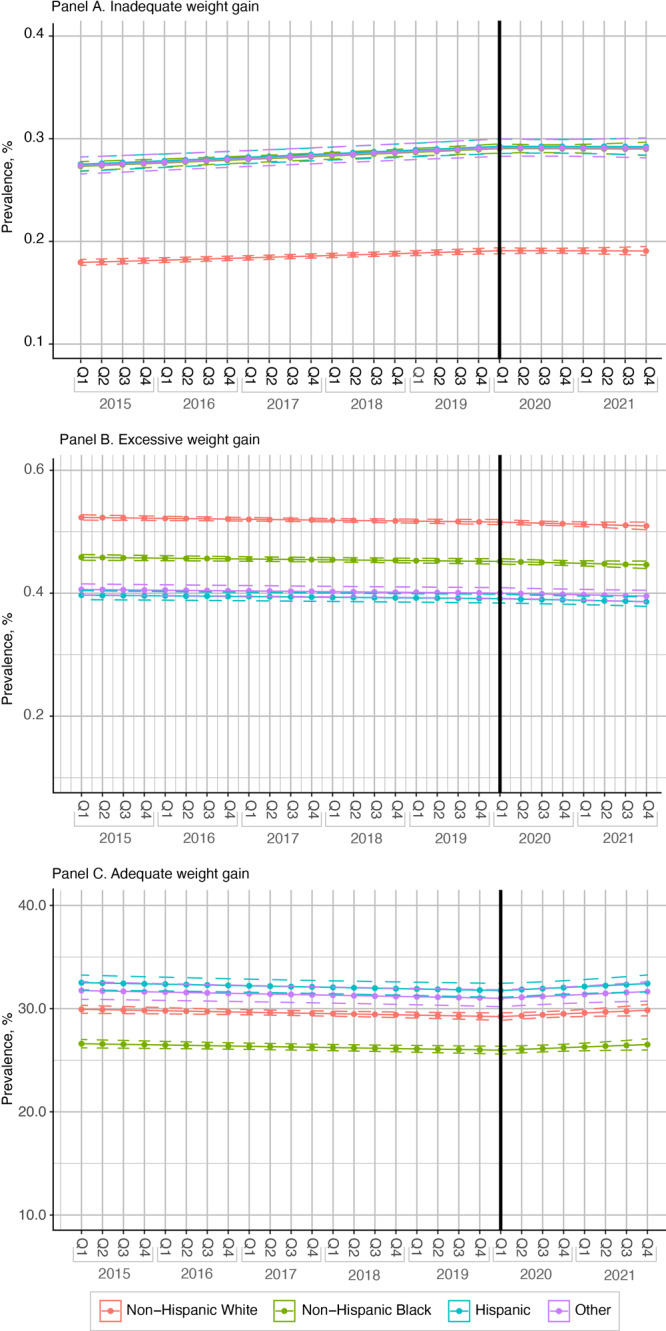
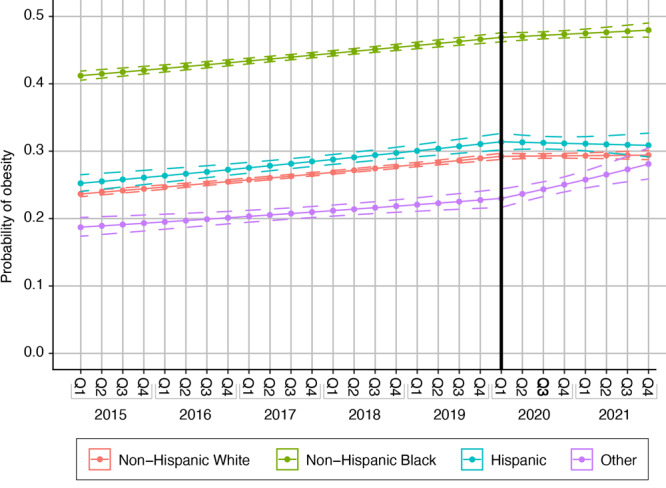
Results: Our study included 306,344 full-term, singleton live births among 239,597 mothers from 2015 through 2021. The prevalence of inadequate weight gain increased across all racial and ethnic groups prepandemic (relative risk [RR] = 1.02; 95% CI, 1.01-1.02) and attenuated during the pandemic (RR = 0.99; 95% CI, 0.96-1.01). The prevalence of excessive weight gain was high and remained stable across all races and ethnicities before and during the pandemic. The prevalence of prepregnancy obesity increased across all racial and ethnic groups prepandemic; the prevalence after the start of the pandemic increased only among women of "other" races and ethnicities (RR = 1.12; 95% CI, 1.05-1.19) while attenuating among Hispanic, non-Hispanic Black, and non-Hispanic White women.
Conclusion: The COVID-19 pandemic did not alter trends of gestational weight gain; however, it did have a small effect on trends in prepregnancy obesity, with differential effects across racial and ethnic groups. The prevalence of prepregnancy obesity, inadequate weight gain, and excessive weight gain remains high among pregnant women in South Carolina. Obesity and weight gain are risk factors for many adverse maternal and infant pregnancy outcomes. Their high prevalence indicates the importance of developing effective weight management programs for women of childbearing age and pregnant women.
Figures
References
MeSH terms
Grants and funding
LinkOut - more resources
Full Text Sources
Medical