


Quantitative fibrosis identifies biliary tract involvement and is associated with outcomes in pediatric autoimmune liver disease
- PMID: 39670860
- PMCID: PMC11637754
- DOI: 10.1097/HC9.0000000000000594
Quantitative fibrosis identifies biliary tract involvement and is associated with outcomes in pediatric autoimmune liver disease
Abstract
Background: Children with autoimmune liver disease (AILD) may develop fibrosis-related complications necessitating a liver transplant. We hypothesize that tissue-based analysis of liver fibrosis by second harmonic generation (SHG) microscopy with artificial intelligence analysis can yield prognostic biomarkers in AILD.
Methods: Patients from single-center studies with unstained slides from clinically obtained liver biopsies at AILD diagnosis were identified. Baseline demographics and liver biochemistries at diagnosis and 1 year were collected. Clinical endpoints studied included the presence of varices, variceal bleeding, ascites, HE, and liver transplant. In collaboration with HistoIndex, unstained slides underwent SHG/artificial intelligence analysis to map fibrosis according to 10 quantitative fibrosis parameters based on tissue location, including total, periportal, perisinusoidal, and pericentral area and length of strings.
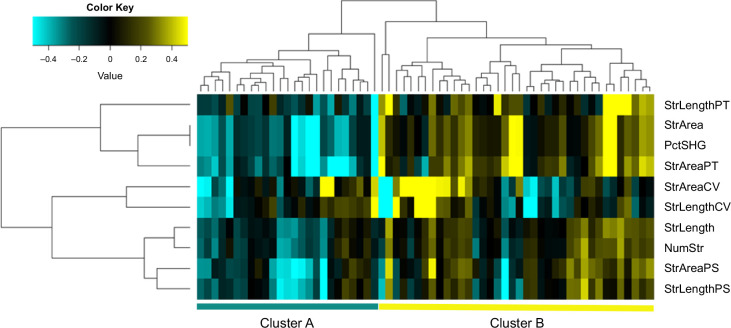
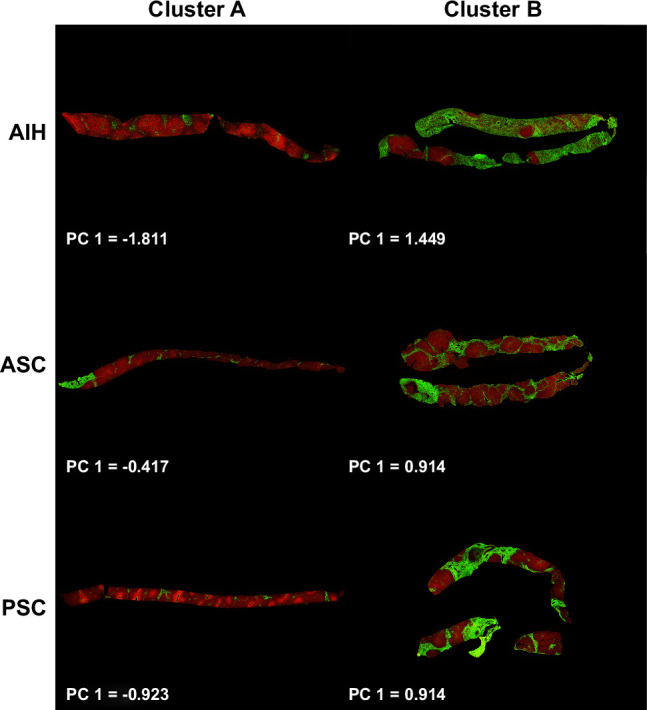
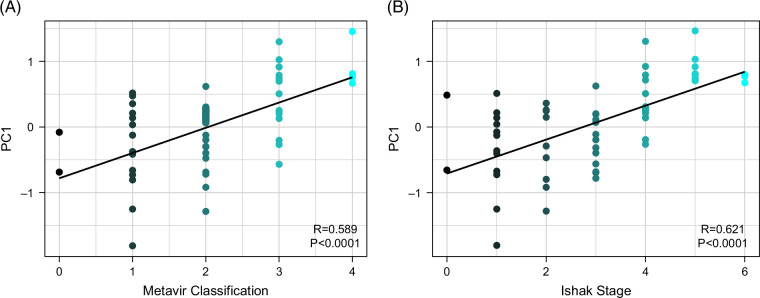
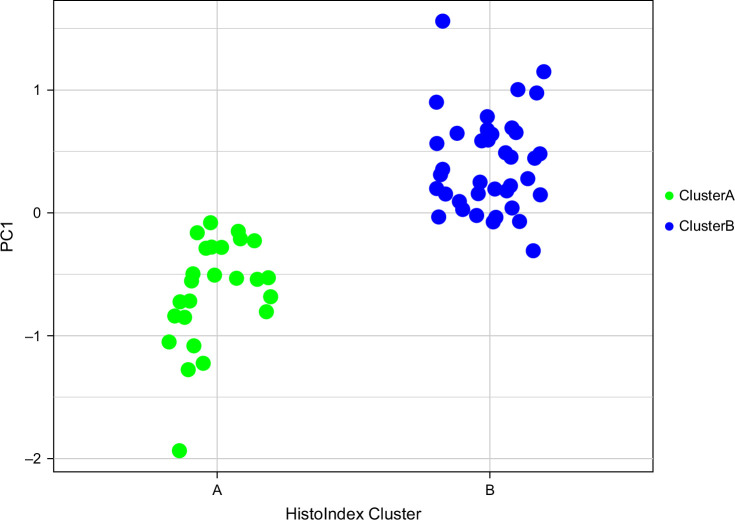
Results: Sixty-three patients with AIH (51%), primary sclerosing cholangitis (30%), or autoimmune sclerosing cholangitis (19%) at a median of 14 years old (range: 3-24) were included. An unsupervised analysis of quantitative fibrosis parameters representing total and portal fibrosis identified a patient cluster with more primary sclerosing cholangitis/autoimmune sclerosing cholangitis. This group had more fibrosis at diagnosis by METAVIR classification of histopathological review of biopsies (2.5 vs. 2; p = 0.006). This quantitative fibrosis pattern also predicted abnormal 12-month ALT with an OR of 3.6 (1.3-10, p = 0.014), liver complications with an HR of 3.2 (1.3-7.9, p = 0.01), and liver transplantation with an HR of 20.1 (3-135.7, p = 0.002).
Conclusions: The application of SHG/artificial intelligence algorithms in pediatric-onset AILD provides improved insight into liver histopathology through fibrosis mapping. SHG allows objective identification of patients with biliary tract involvement, which may be associated with a higher risk for refractory disease.
Copyright © 2024 The Author(s). Published by Wolters Kluwer Health, Inc. on behalf of the American Association for the Study of Liver Diseases.
Conflict of interest statement
Xiao Teng is employed by and owns stock in HistoIndex. Alexander G. Miethke consults and received grants from Mirum Pharmaceuticals. The remaining authors have no conflicts to report.
Figures
References
-
- Maggiore G, Bernard O, Mosca A, Ballot E, Johanet C, Jacquemin E. Long-term outcomes of patients with type 1 or 2 autoimmune hepatitis presenting in childhood. J Hepatol. 2023;78:979–988. - PubMed
-
- Deneau M, Jensen KM, Holmen J, Williams MS, Book LS, Guthery SL. Primary sclerosing cholangitis, autoimmune hepatitis, and overlap in Utah children: Epidemiology and natural history. Hepatology. 2013;58:1392–1400.. - PubMed
-
- Gregorio GV, Portmann B, Reid F, Donaldson PT, Doherty DG, McCartney M, et al. Autoimmune hepatitis in childhood: A 20-year experience. Hepatology. 1997;25:541–547. - PubMed
-
- Saadah OI, Smith AL, Hardikar W. Long-term outcome of autoimmune hepatitis in children. J Gastroenterol Hepatol. 2001;16:1297–1302. - PubMed
-
- Gregorio G. Autoimmune hepatitis/sclerosing cholangitis overlap syndrome in childhood: A 16-year prospective study. Hepatology. 2001;33:544–553. - PubMed
MeSH terms
Grants and funding
LinkOut - more resources
Full Text Sources
Medical
