


The microbiota metabolite, phloroglucinol, confers long-term protection against inflammation
- PMID: 39676480
- PMCID: PMC11651279
- DOI: 10.1080/19490976.2024.2438829
The microbiota metabolite, phloroglucinol, confers long-term protection against inflammation
Abstract
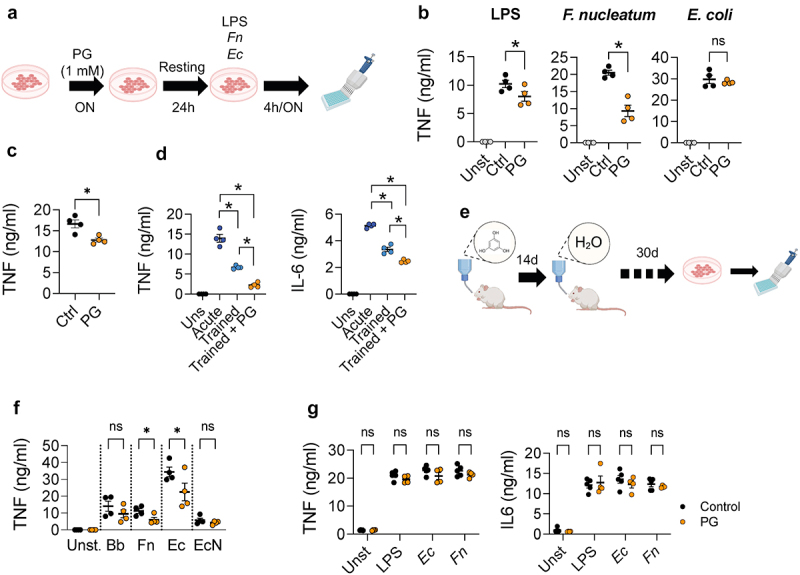
Phloroglucinol is a key byproduct of gut microbial metabolism that has been widely used as a treatment for irritable bowel syndrome. Here, we demonstrate that phloroglucinol tempers macrophage responses to pro-inflammatory pathogens and stimuli. In vivo, phloroglucinol administration decreases gut and extraintestinal inflammation in murine models of inflammatory bowel disease and systemic infection. The metabolite induces modest modifications in the microbiota. However, the presence of an active microbiota is required to preserve its anti-inflammatory activity. Remarkably, the protective effect of phloroglucinol lasts partially at least 6 months. Single-cell transcriptomic analysis of bone marrow progenitors demonstrates the capacity of the metabolite to induce long-lasting innate immune training in hematopoietic lineages, at least partially through the participation of the receptor and transcription factor, aryl hydrocarbon receptor (AhR). Phloroglucinol induces alterations in metabolic and epigenetic pathways that are most prevalent in upstream progenitors as hallmarks of central trained immunity. These data identify phloroglucinol as a dietary-derived compound capable of inducing central trained immunity and modulating the response of the host to inflammatory insults.
Keywords: Microbiota byproducts; central trained immunity; inflammation; phenolic derivatives.
Conflict of interest statement
No potential conflict of interest was reported by the author(s).
Figures




References
-
- Stutz MR, Dylla NP, Pearson SD, Lecompte-Osorio P, Nayak R, Khalid M, Adler E, Boissiere J, Lin H, Leiter W, et al. Immunomodulatory fecal metabolites are associated with mortality in COVID-19 patients with respiratory failure. Nat Commun. 2022;13(1):6615. doi: 10.1038/s41467-022-34260-2. - DOI - PMC - PubMed
MeSH terms
Substances
LinkOut - more resources
Full Text Sources
