


Plant-Based Diet and Sports Performance
- PMID: 39676988
- PMCID: PMC11635497
- DOI: 10.1021/acsomega.4c07560
Plant-Based Diet and Sports Performance
Abstract
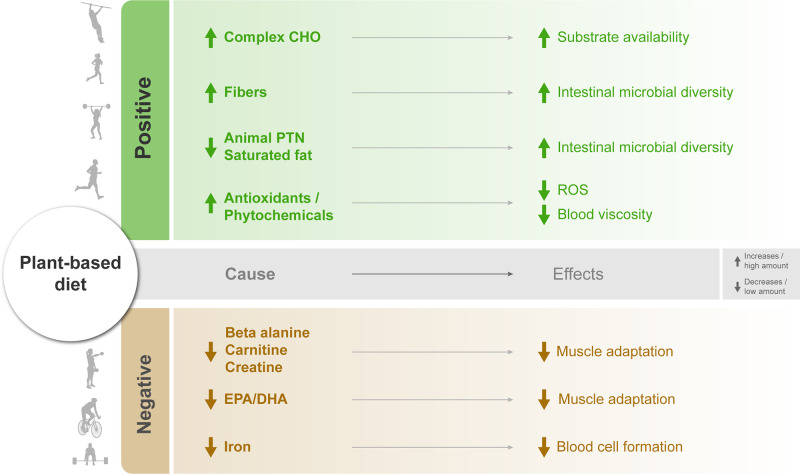
Recently, interest in plant-based diets has grown significantly, driven by health and environmental concerns. Plant-based diets offer potential health benefits, including decreased risk of cardiovascular disease, weight management, and blood glucose regulation. This diet profile is rich in complex carbohydrates, antioxidants, dietary fiber, and phytochemicals. However, antinutrients in some plant foods can make nutrient absorption difficult, necessitating careful dietary planning. Plant-based diets can also improve sports performance; in addition, they can positively influence the intestinal microbial community, which can promote health and performance. The present study covered a review from 1986 to 2024 and involved an experimental design with human participants. The main objective was to evaluate the impact of plant-based diets on sports performance. Recent research suggests that plant-based diets do not harm athletic performance and may positively impact sports performance by improving blood flow and reducing oxidative stress. These findings have potential clinical significance, particularly for athletes seeking to optimize their physical capabilities through dietary interventions.
© 2024 The Authors. Published by American Chemical Society.
Conflict of interest statement
The authors declare no competing financial interest.
Figures

References
-
- Leahy E. L.; Richard S. J.. An estimate of the number of vegetarians in the word. Available at https://www.econstor.eu/handle/10419/50160; 2010. Accessed on March 5, 2024.
-
- Slywitch E.The International Vegan Nutrition Guide for Adults of the International Vegetarian Union (IVU), 1st ed.; International Vegetarian Union, Department of Medicine and Nutrition: Altrincham, U.K., 2022, pp 1–28.
Publication types
LinkOut - more resources
Full Text Sources