


Vitamin D in patients with low tumor-burden indolent non-Hodgkin lymphoma treated with rituximab therapy (ILyAD): a randomized, phase 3 clinical trial
- PMID: 39677358
- PMCID: PMC11638608
- DOI: 10.1016/j.eclinm.2024.102959
Vitamin D in patients with low tumor-burden indolent non-Hodgkin lymphoma treated with rituximab therapy (ILyAD): a randomized, phase 3 clinical trial
Abstract
Background: There is a significant association between low vitamin D levels at diagnosis of indolent B-cell lymphomas and inferior overall survival (OS). To determine whether supplemental vitamin D improves event-free survival (EFS) in these patients, we conducted a comparative double-blind study of vitamin D3 vs. placebo.
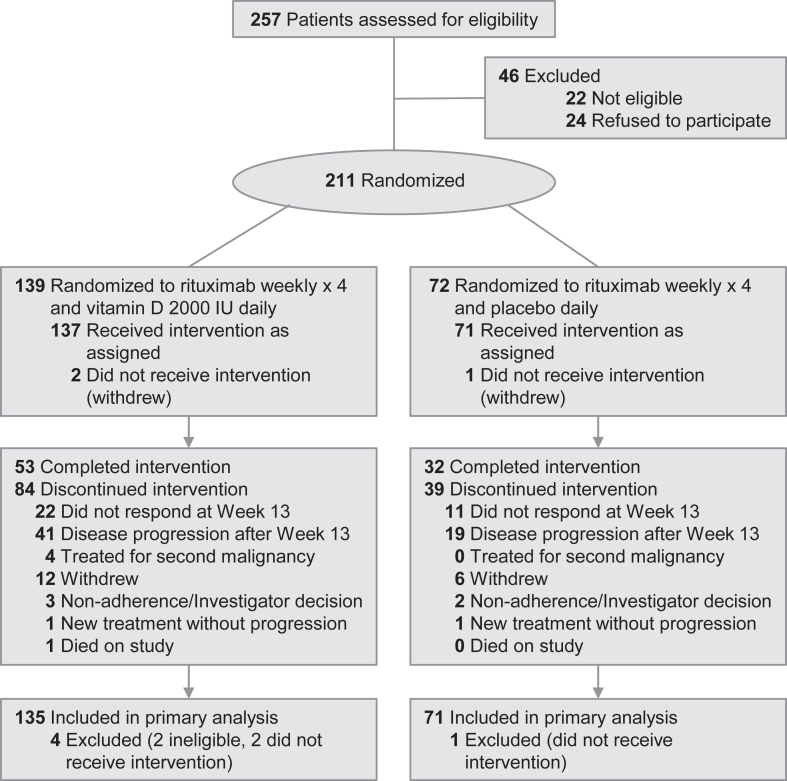
Methods: In this phase 3, randomized, double-blind, placebo-controlled trial, patients with low tumor burden follicular, marginal zone or small lymphocytic lymphoma, age 18 or older, with stage two or greater disease and no prior systemic treatment were enrolled at 7 academic cancer centers. Patients were stratified by histology and FLIPI (Follicular Lymphoma International Prognostic Index) score and randomized 2:1 to receive 2000 IU vitamin D3 or placebo daily beginning on day one with rituximab 375 mg/m2 administered weekly times four. 257 patients were assessed for participation: 24 were not eligible and 22 refused. Patients with stable disease or disease progression at week 13 counted as events; responding patients continued treatment with vitamin D or placebo until progression for up to three years. The primary endpoint was EFS, defined as the time from randomization to lack of response at week 13, initiation of a new treatment, disease progression or death. Secondary endpoints included week 13 response and OS. This trial is registered at clinicaltrials.gov, NCT03078855.
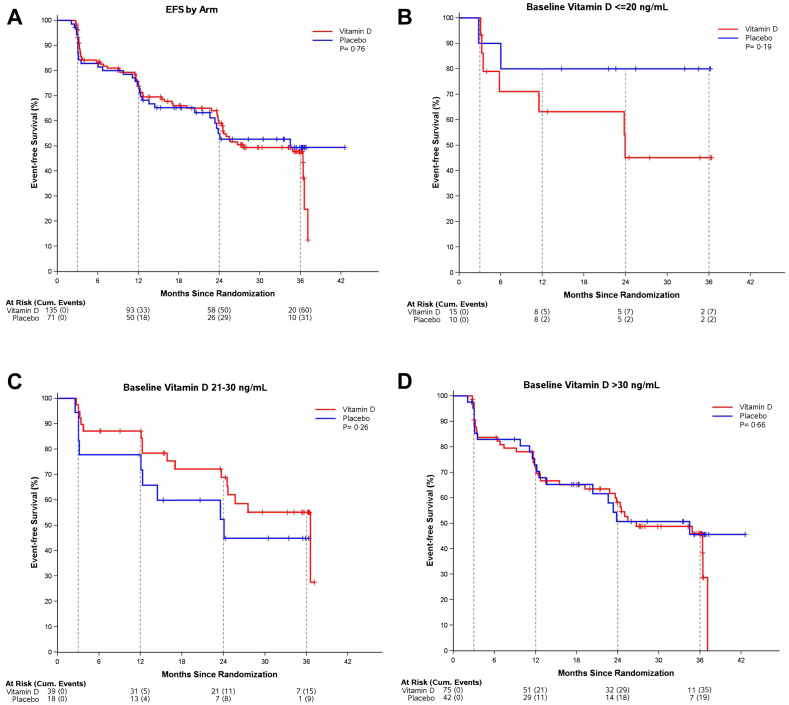
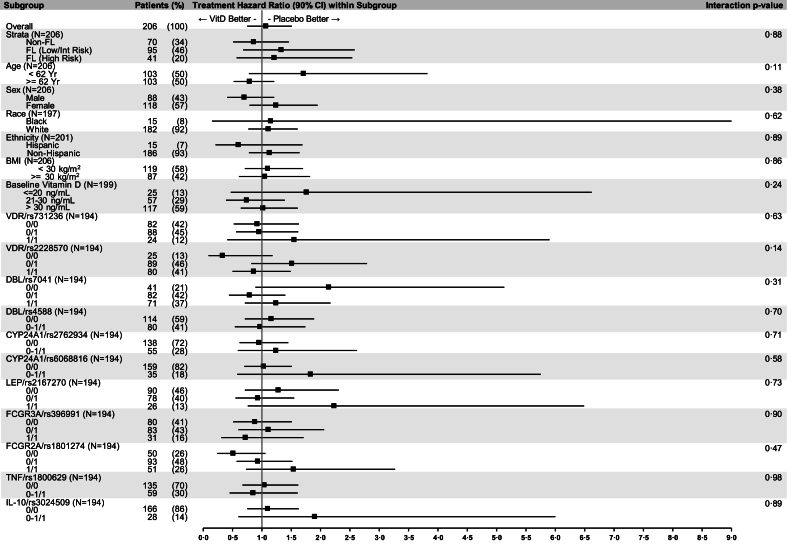
Findings: 206 evaluable patients (135 on vitamin D and 71 on placebo) were enrolled between September 2017 and March 2022 with a median EFS follow-up of 19.6 months (IQR, 9.3-33.5). The median age was 62 years (IQR, 54-70); 118 (57%) female; 182 (89%) white. At week 13 the mean vitamin D level increased to 41.6 ng/mL (SD 10.1) in the vitamin D arm vs. remaining stable (31.3 ng/mL, SD 11.2) in the placebo arm. There was insufficient evidence of a difference in EFS between the two arms (P = 0.26): three-year EFS in the vitamin D arm was 47.7% (95% CI, 39.0-58.4) compared to 49.5% (95% CI, 37.6-65.0) in the placebo arm. There was no difference in week 13 response between the arms (both 84%). Adverse events associated with vitamin D supplementation were rare. The median OS follow-up was 35.1 months (IQR, 22.9-45.1), overall survival was 96.6% (95% CI, 93.1-98.6) and there was no significant difference between the vitamin D and placebo arms (P = 0.47).
Interpretation: As tested in this study, there is no benefit to routine vitamin D supplementation in patients with indolent lymphoma treated with rituximab. These results have implications for ongoing and planned studies of vitamin D supplementation in other malignancies.
Funding: This study was funded by the National Institutes of Health, National Cancer Institute grant R01CA214890.
Keywords: Cholecalciferol; Lymphoma; Vitamin D.
© 2024 The Author(s).
Conflict of interest statement
The authors declare no competing interests.
Figures
References
-
- Solal-Celigny P., Roy P., Colombat P., et al. Follicular lymphoma international prognostic index. Blood. 2004;104(5):1258–1265. - PubMed
Associated data
Grants and funding
LinkOut - more resources
Full Text Sources
Medical
Research Materials
