


Sarcomere gene variants did not improve cardiac function in pediatric patients with dilated cardiomyopathy from Japanese cohorts
- PMID: 39681577
- PMCID: PMC11649763
- DOI: 10.1038/s41598-024-77360-3
Sarcomere gene variants did not improve cardiac function in pediatric patients with dilated cardiomyopathy from Japanese cohorts
Abstract
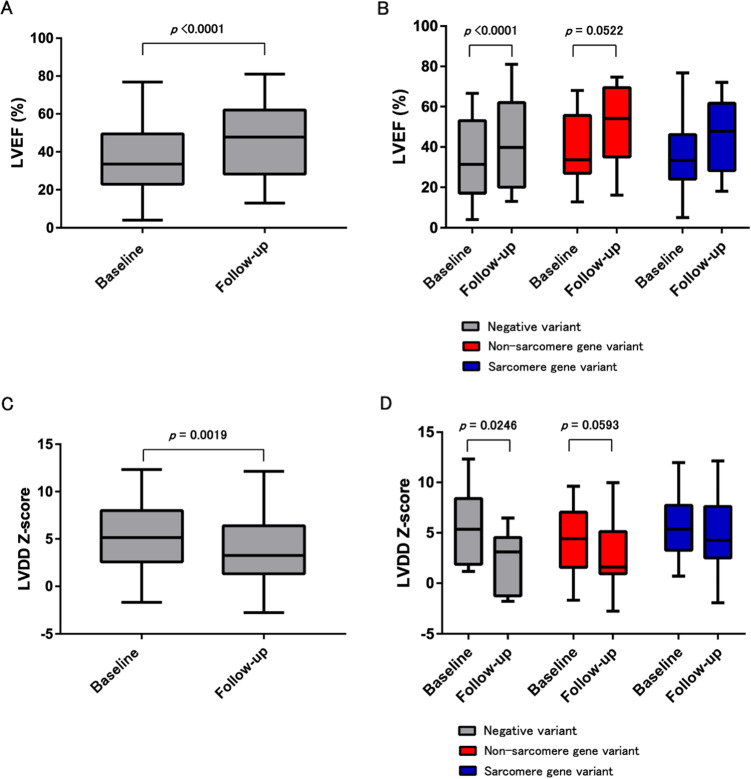
Dilated cardiomyopathy (DCM) is a progressive myocardial disorder characterized by impaired cardiac contraction and ventricular dilation. However, some patients with DCM improve when experiencing left ventricular reverse remodeling (LVRR). Currently, the detailed association between genotypes and clinical outcomes, including LVRR, particularly among children, remains uncertain. Pediatric patients with DCM from multiple Japanese institutions recorded between 2014 and 2023 were enrolled. We identified their DCM-related genes and explored the association between gene variants and clinical outcomes, including LVRR. We included 123 pediatric patients (62 males; median age: 8 [1-51] months) and found 50 pathogenic variants in 45 (35.0%) of them. The most identified gene was MYH7 (14.0%), followed by RYR2 (12.0%) and TPM1 (8.0%). LVRR was achieved in 47.5% of these patients. The left ventricular ejection fraction remained unchanged (31.4% to 39.8%, P = 0.1913) in patients with sarcomere gene variants and in those with non-sarcomere gene variants (33.4% to 47.8%, P = 0.0522) but significantly increased in those without gene variants (33.6% to 54.1%, P < 0.0001). LVRR was not uniform across functional gene groups. Hence, an individualized gene-guided prediction approach may be adopted for children with DCM.
Keywords: Dilated cardiomyopathy; Genetics; Heart failure; Left ventricular reverse remodeling; Sarcomere gene.
© 2024. The Author(s).
Conflict of interest statement
Declarations. Competing interests: The authors declare no competing interests.
Figures



References
-
- Kirk, R. et al. The International Society for Heart and Lung Transplantation Guidelines for the management of pediatric heart failure: Executive summary. [Corrected]. J Heart Lung Transplant33, 888–909, 10.1016/j.healun.2014.06.002 (2014). - PubMed
MeSH terms
Substances
LinkOut - more resources
Full Text Sources
Miscellaneous
