. 2024 Dec 16;14(1):30508.
doi: 10.1038/s41598-024-82466-9.

Differential characteristics of vaginal versus endometrial microbiota in IVF patients

Affiliations

Differential characteristics of vaginal versus endometrial microbiota in IVF patients

Alina Polifke et al. Sci Rep. .

Abstract

Abnormal female reproductive tract microbiota are associated with gynecological disorders such as endometriosis or chronic endometritis and may affect reproductive outcomes. However, the differential diagnostic utility of the vaginal or the endometrial microbiome and the impact of important technical covariates such as the choice of hypervariable regions for 16 S rRNA sequencing remain to be characterized. The aim of this retrospective study was to compare vaginal and endometrial microbiomes in IVF patients diagnosed with implantation failure (IF) and/or recurrent pregnancy loss (RPL) and to investigate the overlap between established vaginal and endometrial microbiome classification schemes. An additional aim was to characterize to which extent the choice of V1-V2 or V2-V3 16 S rRNA sequencing schemes influences the characterization of genital microbiomes. We compared microbiome composition based on V1-V2 rRNA sequencing between matched vaginal smear and endometrial pipelle-obtained biopsy samples (n = 71); in a sub-group (n = 61), we carried out a comparison between V1-V2 and V2-V3 rRNA sequencing. Vaginal and endometrial microbiomes were found to be Lactobacillus-dominated in the majority of patients, with the most abundant Lactobacillus species typically shared between sample types of same patient. Endometrial microbiomes were found to be more diverse than vaginal microbiomes (average Shannon entropy = 1.89 v/s 0.75, p = 10-5) and bacterial species such as Corynebacterium sp., Staphylococcus sp., Prevotella sp. and Propionibacterium sp. were found to be enriched in the endometrial samples. The use of two widely used clinical classification schemes to detect microbiome dysbiosis in the reproductive tract often led to inconsistent results vaginal community state type (CST) IV, which is associated with bacterial vaginosis, was detected in 9.8% of patients; however, 31,0% of study participants had a non-Lactobacillus-dominated (NLD) endometrial microbiome associated with unfavorable reproductive outcomes. Results based on V2-V3 rRNA sequencing were generally consistent with V1-V2-based; differences were observed for a small number of species, e.g. Bifidobacterium sp., Propionibacterium sp. and Staphylococcus sp. and with respect to slightly increased detection rates of CST IV and NLD. Our study showed that endometrial microbiomes differ substantially from their vaginal counterparts, the application of a trans-cervical sampling method notwithstanding. Characterization of endometrial microbiomes may contribute to the improved detection of women with an unfavorable reproductive outcome prognosis in IVF patients..

Keywords: Endometrial; Genital microbiota; IVF patients; RIF; RM; Vaginal.


Conflict of interest statement

Declarations. Competing interests: The authors declare no competing interests.

Figures
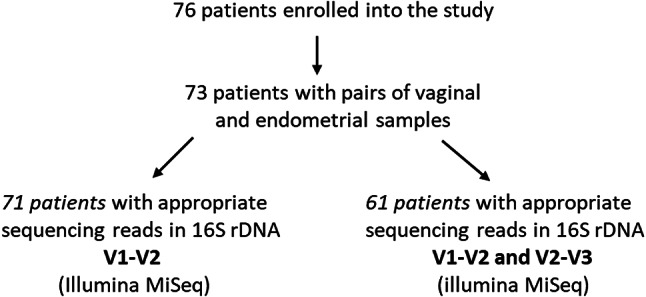
Fig. 1
Fig. 1
Overview of the study cohort. V1-V2, 16 S hypervariable regions 1 and 2; V2-V3, 16 S hypervariable regions 2 and 3.
Fig. 2
Fig. 2
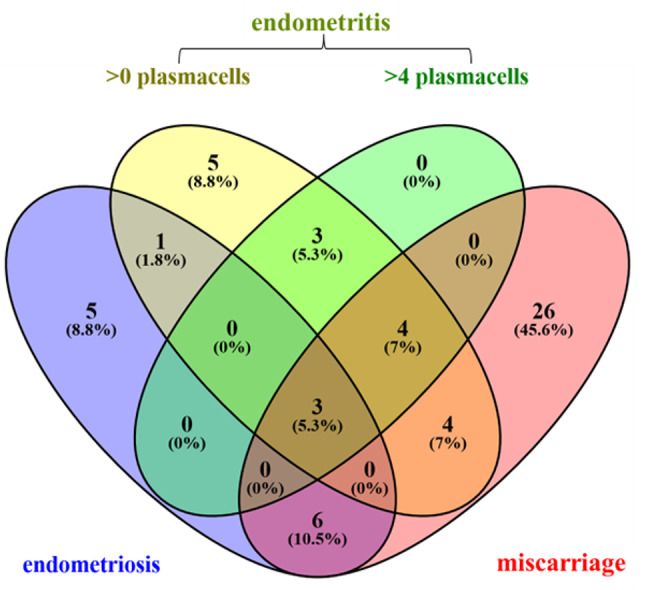
Multi-set Venn diagram showing unique and shared diagnoses across the study cohort (n = 71 patients).
Fig. 3
Fig. 3
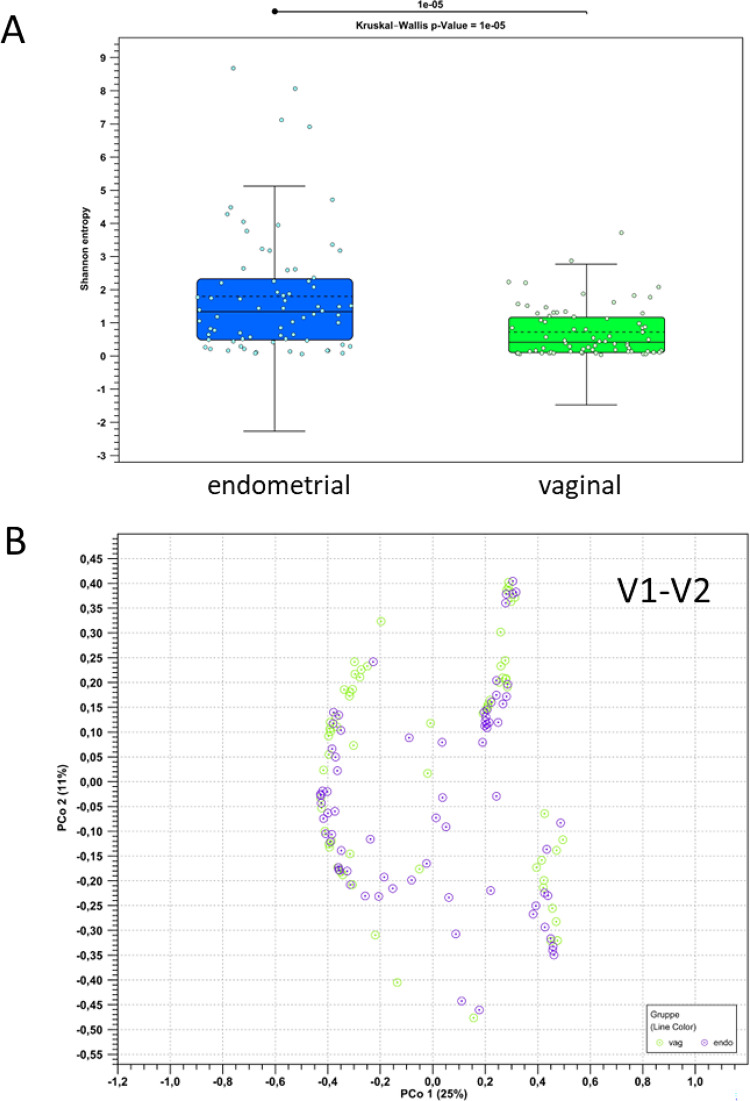
Shannon diversity (A) and PCoA visualization (B) of vaginal and endometrial microbiome compositions for n = 71 patients, based on V1-V2 16 S rRNA sequencing. The reported p-value for comparing the diversity between vaginal and endometrial samples was calculated using the Kruskal-Wallis test.
Fig. 4
Fig. 4
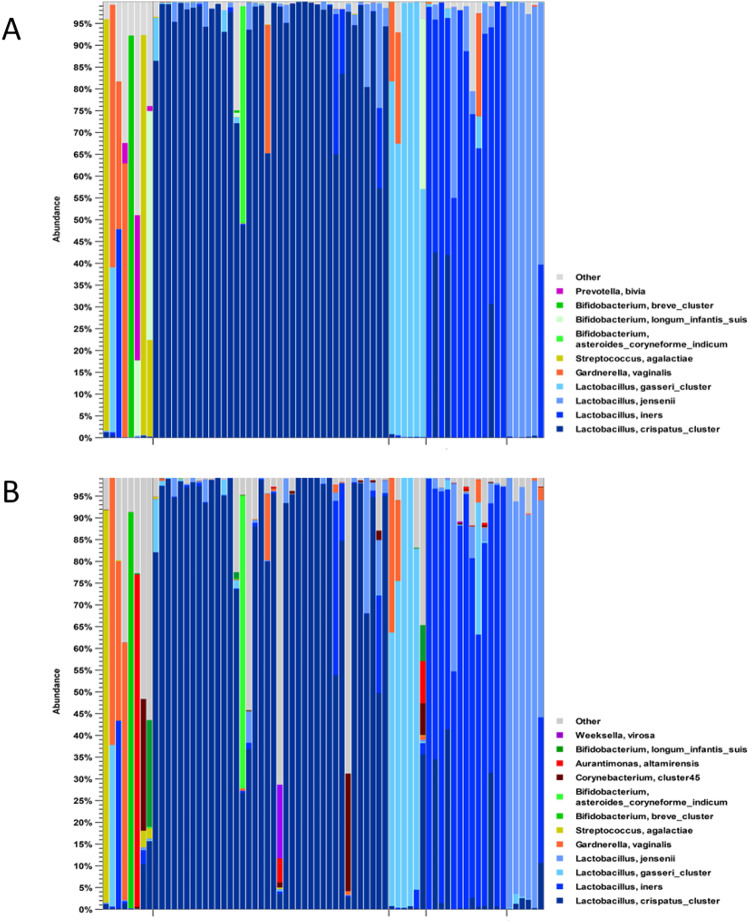
Per-patient taxonomic composition of vaginal (A) and endometrial (B) samples from n = 71 patients, based on V1-V2 16 S rRNA sequencing. Vaginal and endometrial samples from the same patients are aligned vertically.
Fig. 5
Fig. 5
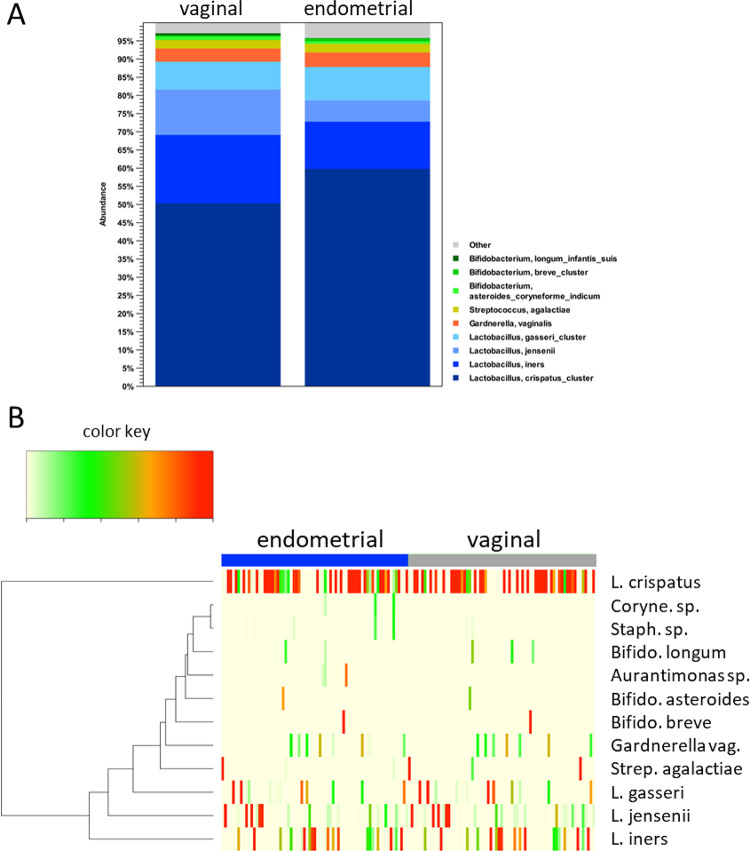
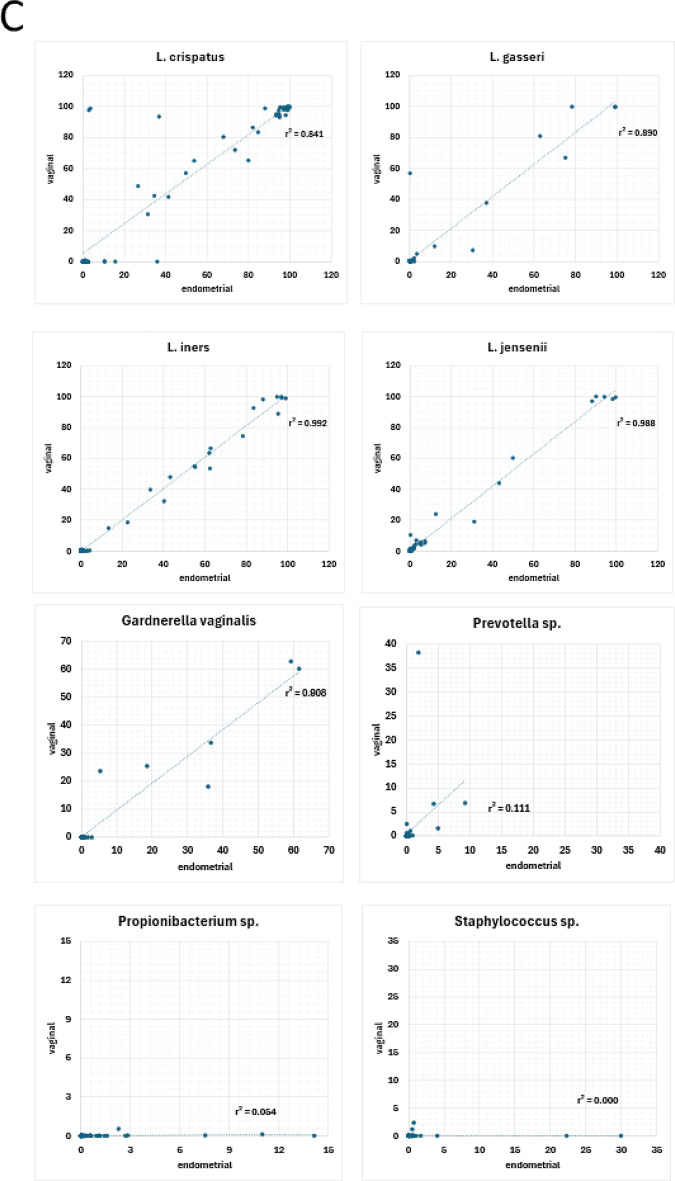
Abundances of specific bacterial species in vaginal and endometrial samples from n = 71 patients, based on V1-V2 16 S rRNA sequencing. (A) Bar charts showing the mean values of the most abundant operational taxonomic units / bacterial species in vaginal and endometrial samples. (B) Heatmap representing operational taxonomic units / bacterial species in vaginal and endometrial samples. The rows show bacterial species, the columns represent subjects. L.: Lactobacillus, Coryne.: Corynebacterium, Staph.: Staphylococcus, Bifido.: Bifidobacterium, Strep.: Streptococcus. (C) Within-patient comparison and correlations of vaginal and endometrial abundances for specific bacterial species.
Fig. 5
Fig. 5
Abundances of specific bacterial species in vaginal and endometrial samples from n = 71 patients, based on V1-V2 16 S rRNA sequencing. (A) Bar charts showing the mean values of the most abundant operational taxonomic units / bacterial species in vaginal and endometrial samples. (B) Heatmap representing operational taxonomic units / bacterial species in vaginal and endometrial samples. The rows show bacterial species, the columns represent subjects. L.: Lactobacillus, Coryne.: Corynebacterium, Staph.: Staphylococcus, Bifido.: Bifidobacterium, Strep.: Streptococcus. (C) Within-patient comparison and correlations of vaginal and endometrial abundances for specific bacterial species.
Fig. 6
Fig. 6
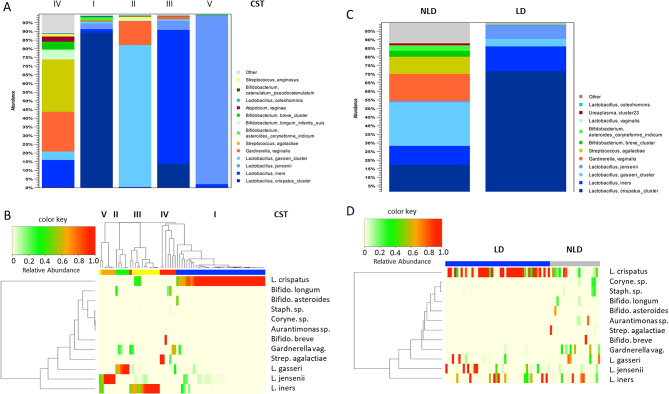
Mean abundances of specific bacterial taxa in vaginal (A) and endometrial (C) and heatmaps representing operational taxonomic units / bacterial species in vaginal (B) and endometrial (D) samples; the rows show bacterial species, the columns represent subjects. L.: Lactobacillus, Coryne. Corynebacterium, Staph.: Staphylococcus, Bifido.: Bifidobacterium, Strep.: Streptococcus. Samples from n = 71 patients, grouped according to CST (https://github.com/ravel-lab/VALENCIA) and LD/NLD (Moreno et al., 2016) classification and based on V1-V2 16 S rRNA sequencing.
Fig. 7
Fig. 7
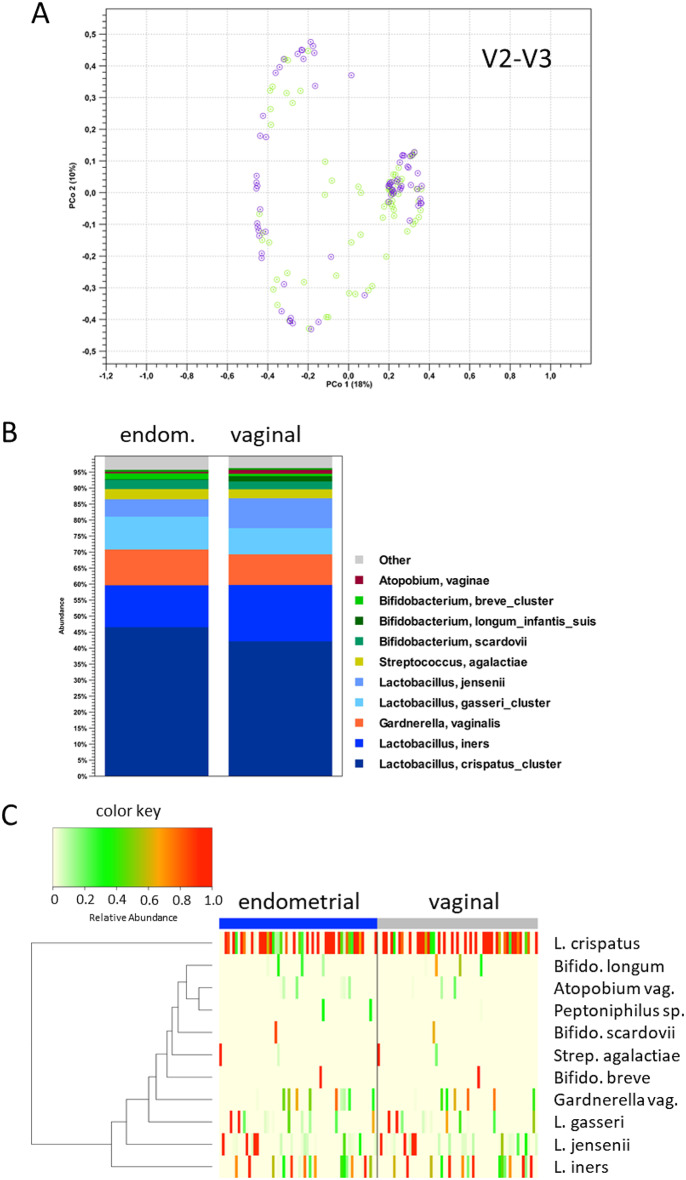
(A) PCoA visualization of vaginal (green) and endometrial (blue) microbiome compositions. (B) Mean abundances of specific bacterial species in vaginal and endometrial samples. (C) Heatmap representing operational taxonomic units / bacterial species in vaginal and endometrial samples; the rows show bacterial species, the columns represent subjects. L.: Lactobacillus, Coryne.: Corynebacterium, Staph.: Staphylococcus, Bifido.: Bifidobacterium. Analyses based on V2-V3 16 S rRNA sequencing (n = 61 patients).
Fig. 8
Fig. 8
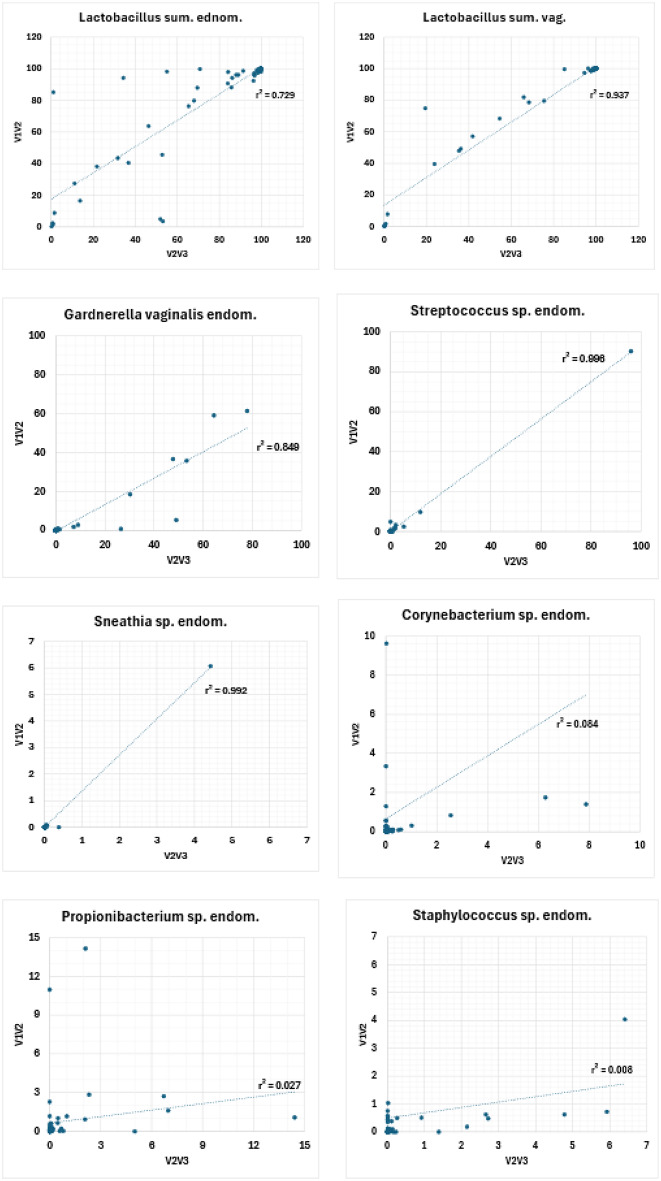
Comparison of the relative abundances of specific bacterial taxa based on V1-V2 and V2-V3 16 S rDNA sequencing for vaginal (vag.) and endometrial (endom.) samples. Lactobacillus sum. includes L. crispatus, L. gasseri, L. iners and L. jensenii.

References

    1. Chen, C. et al. The microbiota continuum along the female reproductive tract and its relation to uterine-related diseases. Nat. Commun.18, 875 (2017). - PMC - PubMed
    1. Ravel, J. et al. Vaginal microbiome of reproductive-age women. Proc. Natl. Acad. Sci. U S A. 108 (Suppl 1)), 4680–4687 (2011). - PMC - PubMed
    1. Dai, W., Du, H., Li, S. & Wu, R. Cervicovaginal microbiome factors in clearance of human papillomavirus infection. Front. Oncol.11, 7226392021 (2021). - PMC - PubMed
    1. Baker, J. M., Chase, D. M. & Herbst-Kralovetz, M. M. Uterine microbiota: residents, tourists, or invaders? Front. Immunol.9, 208 (2018). - PMC - PubMed
    1. Reschini, M. et al. Endometrial microbiome: sampling, assessment, and possible impact on embryo implantation. Sci. Rep.12, 8467 (2022). - PMC - PubMed

Substances

LinkOut - more resources