


An Analysis of the Digestive and Reproductive Tract Microbiota in Infertile Women with Obesity
- PMID: 39684312
- PMCID: PMC11641297
- DOI: 10.3390/ijms252312600
An Analysis of the Digestive and Reproductive Tract Microbiota in Infertile Women with Obesity
Abstract
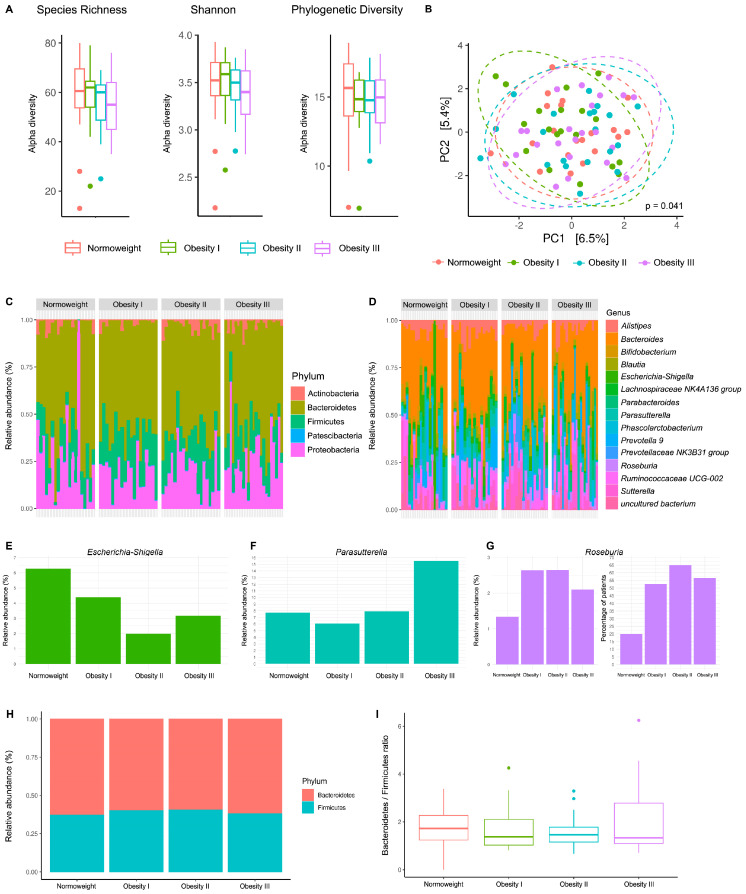
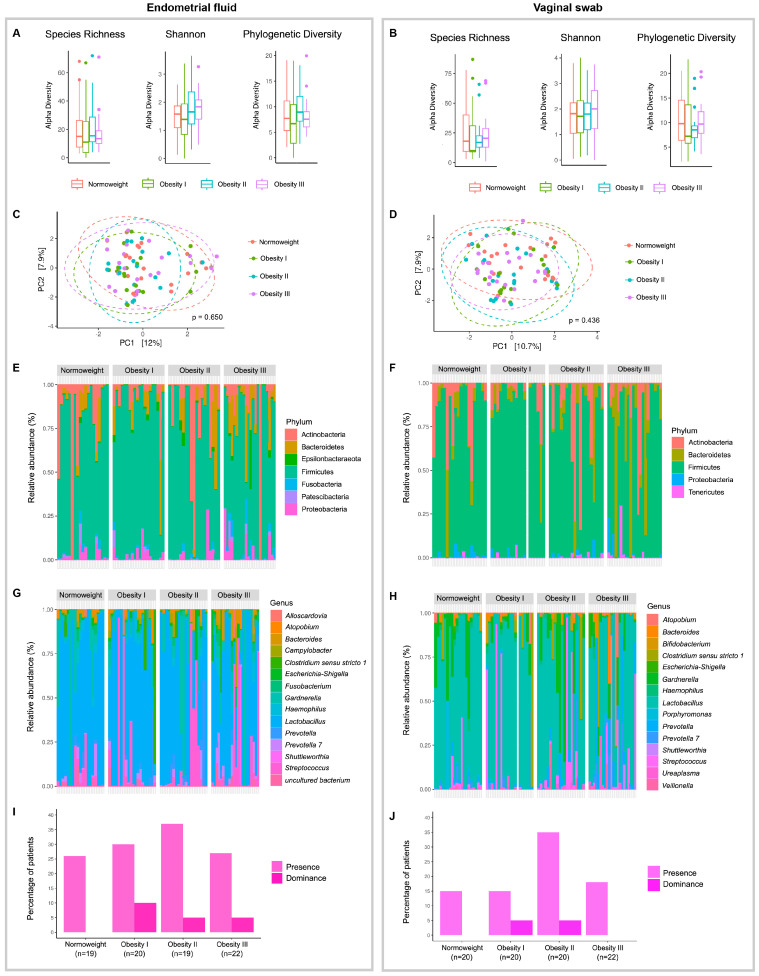
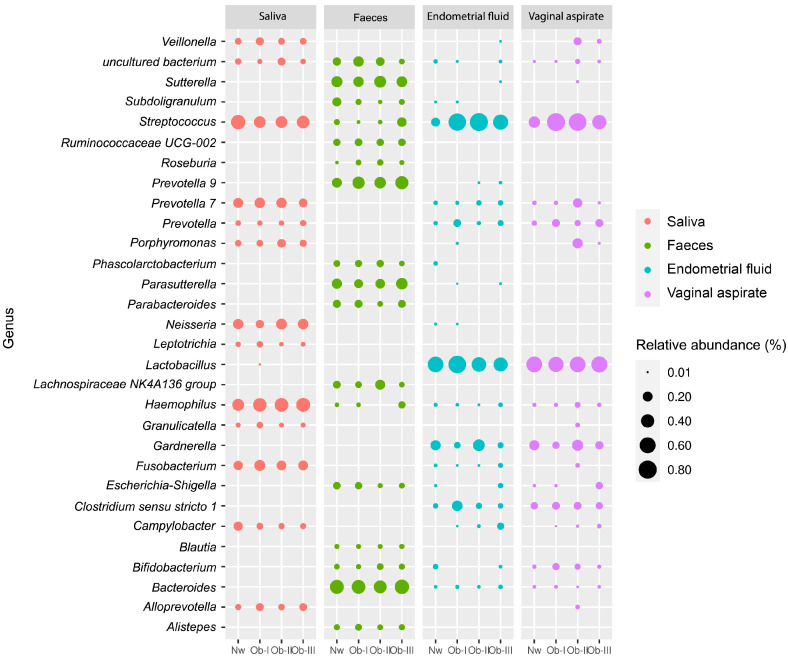
Previous studies have linked the microbiome of distinct body habitats to obesity and infertility; however, the often-divergent results observed have left the role of the so-called "second genome" in obese infertile patients incompletely explored. Here, we present a prospective observational multicenter study of oral, gut, endometrial, and vaginal microbiota of infertile patients classified according to BMI. Patients collected saliva/fecal samples, while vaginal/endometrial fluid samples were collected in the clinic. Total bacterial DNA was extracted, and microbiota profiles were analyzed by 16S rRNA gene sequencing. Our results showed no differences in the Bacteroidetes/Firmicutes ratio (proposed obesity hallmark) in the gut microbiota between patients with obesity and normal weight; however, a tendency for higher levels of genera such as Escherichia-Shigella in normal-weight patients was observed; in comparison, patients with obesity possessed increased numbers of Parasutterella and Roseburia. In the reproductive tract, vaginal samples possessed a similar microbiota to endometrial fluid, both largely colonised by Lactobacillus, Gardnerella, and Streptococcus, supporting the hypothesis that uterine colonisation proceeds from vaginal bacteria ascension. Additionally, higher prevalence of a Streptococcus-dominated (>50%) endometrial microbiota was observed among patients with obesity. This first description of the human digestive and reproductive tract microbiota in infertile women with obesity may explain their poor reproductive outcomes.
Keywords: Streptococcus; endometrium; female infertility; gut microbiota; obesity; reproductive tract microbiota.
Conflict of interest statement
C.S. is a member of the Scientific Advisory Board of Igenomix S.L. D.V. is employed by Igenomix R&D. The remaining authors declare no competing interests.
Figures
References
-
- Laru J., Nedelec R., Koivuaho E., Ojaniemi M., Järvelin M.-R., Tapanainen J.S., Franks S., Tolvanen M., Piltonen T.T., Sebert S., et al. BMI in Childhood and Adolescence Is Associated with Impaired Reproductive Function—A Population-Based Cohort Study from Birth to Age 50 Years. Hum. Reprod. 2021;36:2948–2961. doi: 10.1093/humrep/deab164. - DOI - PMC - PubMed
-
- Hernáez Á., Rogne T., Skåra K.H., Håberg S.E., Page C.M., Fraser A., Burgess S., Lawlor D.A., Magnus M.C. Body Mass Index and Subfertility: Multivariable Regression and Mendelian Randomization Analyses in the Norwegian Mother, Father and Child Cohort Study. Hum. Reprod. 2021;36:3141–3151. doi: 10.1093/humrep/deab224. - DOI - PMC - PubMed
-
- Provost M.P., Acharya K.S., Acharya C.R., Yeh J.S., Steward R.G., Eaton J.L., Goldfarb J.M., Muasher S.J. Pregnancy Outcomes Decline with Increasing Body Mass Index: Analysis of 239,127 Fresh Autologous in Vitro Fertilization Cycles from the 2008–2010 Society for Assisted Reproductive Technology Registry. Fertil. Steril. 2016;105:663–669. doi: 10.1016/j.fertnstert.2015.11.008. - DOI - PubMed
-
- Provost M.P., Acharya K.S., Acharya C.R., Yeh J.S., Steward R.G., Eaton J.L., Goldfarb J.M., Muasher S.J. Pregnancy Outcomes Decline with Increasing Recipient Body Mass Index: An Analysis of 22,317 Fresh Donor/Recipient Cycles from the 2008–2010 Society for Assisted Reproductive Technology Clinic Outcome Reporting System Registry. Fertil. Steril. 2016;105:364–368. doi: 10.1016/j.fertnstert.2015.10.015. - DOI - PubMed
Publication types
MeSH terms
Substances
Grants and funding
LinkOut - more resources
Full Text Sources
Medical
