


Non-Susceptibility Gene Variants in Head and Neck Paragangliomas
- PMID: 39684472
- PMCID: PMC11641674
- DOI: 10.3390/ijms252312762
Non-Susceptibility Gene Variants in Head and Neck Paragangliomas
Abstract
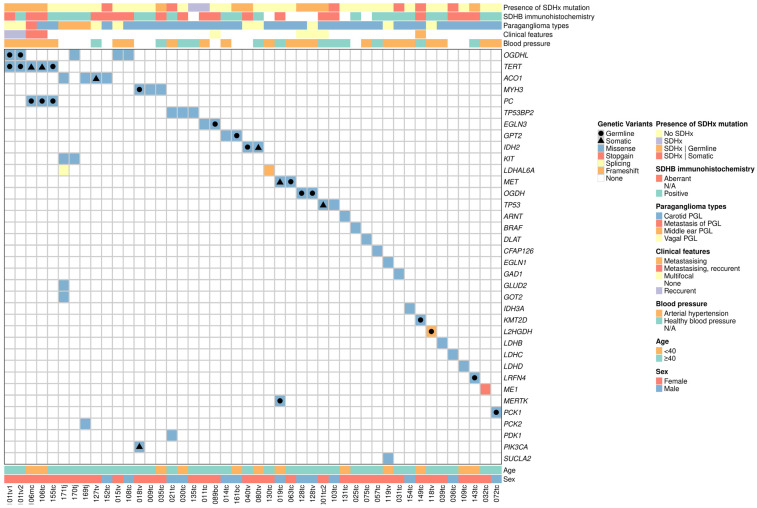
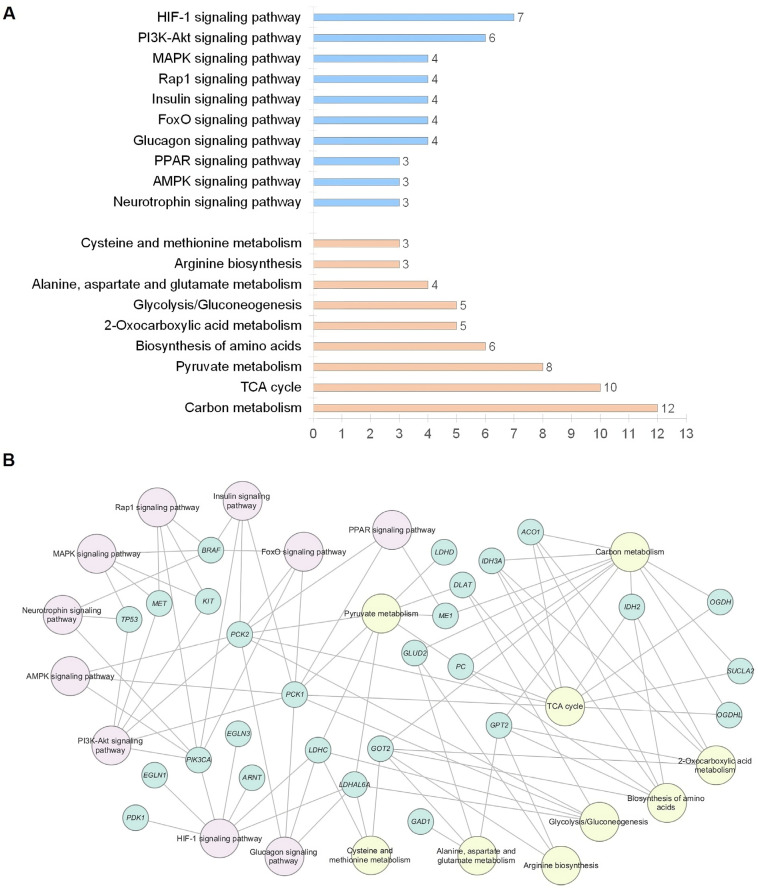
Head and neck paragangliomas (HNPGLs) are rare neoplasms that, along with pheochromocytomas and extra-adrenal paragangliomas, are associated with inherited mutations in at least 12 susceptibility genes in approximately 40% of cases. However, due to the rarity of HNPGLs, only a series of small-scale studies and individual cases have reported mutations in additional genes that may be involved in tumorigenesis. Consequently, numerous disease-causing mutations and genes responsible for the pathogenesis of HNPGLs remain poorly investigated. The aim of this study was to gain a deeper understanding of the genetic basis of HNPGLs by focusing on variants in genes that were not previously identified as well-known drivers. A whole-exome data analysis was conducted on a representative set of 152 HNPGLs. In 30% of the tumors examined, 53 potentially deleterious variants were identified in 36 different genes. The analysis identified pathogenic or likely pathogenic variants in the ARNT, IDH2, L2HGDH, MYH3, PIK3CA, and TERT genes. A functional network analysis of the mutated genes revealed numerous associations and a list of metabolic pathways (e.g., the TCA cycle, carbon metabolism, pyruvate metabolism, etc.) and signaling pathways (e.g., HIF1, PI3K-Akt, FoxO, AMPK, MAPK, etc.) that may play an important role in the development of HNPGLs. The identified range of genetic alterations affecting multiple genes and, potentially, influencing diverse cellular pathways provides an enhanced molecular genetic characterization of HNPGLs.
Keywords: gene network; genetic screening; head and neck paragangliomas; mutations.
Conflict of interest statement
The authors declare that the research was conducted in the absence of any commercial or financial relationships that could be construed as a potential conflict of interest.
Figures
References
-
- Lloyd R., Osamura R., Klöppel G., Rosai J. WHO Classification of Tumours of Endocrine Organs. 4th ed. International Agency for Research on Cancer; Lyon, France: 2017.
-
- El-Naggar A.K., Chan J.K.C., Rubin Grandis J., Takata T., Slootweg P.J., International Agency for Research on Cancer . WHO Classification of Head and Neck Tumours. International Agency for Research on Cancer; Lyon, France: 2017.
MeSH terms
Substances
Grants and funding
LinkOut - more resources
Full Text Sources
Medical
Miscellaneous
