Review
. 2024 Nov 28;25(23):12815.
doi: 10.3390/ijms252312815.

The Oral Microbial Ecosystem in Age-Related Xerostomia: A Critical Review

Affiliations
Review

The Oral Microbial Ecosystem in Age-Related Xerostomia: A Critical Review

Xiao-Meng Pei et al. Int J Mol Sci. .

Abstract

Xerostomia is a widespread condition among the elderly, impacting as many as 50% of individuals within this demographic. This review aims to analyze the association between age-related xerostomia and the oral microbial ecosystem. Xerostomia not only induces discomfort but also heightens the susceptibility to oral diseases, including dental caries and infections. The oral microbial ecosystem, characterized by a dynamic equilibrium of microorganisms, is integral to the maintenance of oral health. Dysbiosis, defined as a microbial imbalance, can further aggravate oral health complications in those suffering from xerostomia. This review investigates the composition, diversity, and functionality of the oral microbiota in elderly individuals experiencing xerostomia, emphasizing the mechanisms underlying dysbiosis and its ramifications for both oral and systemic health. A comprehensive understanding of these interactions is vital for the formulation of effective management and prevention strategies aimed at enhancing the quality of life for older adults.

Keywords: aging; dry mouth; dysbiosis; hyposalivation; oral microbiome; xerostomia.


Conflict of interest statement

The authors declare no conflicts of interest.

Figures
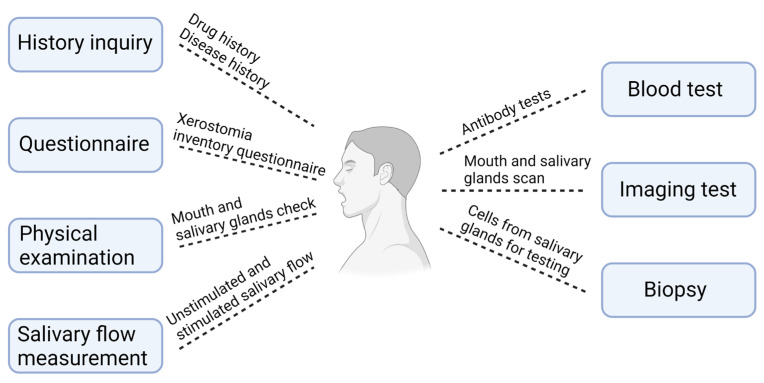
Figure 1
Figure 1
Diagnosis of xerostomia. Seven main approaches, including history inquiry, questionnaire, physical examination, salivary flow measurement, blood test, imaging test, and biopsy, are applied for the dry mouth diagnosis. Created in BioRender. Wong, C. (2024) https://BioRender.com/k08t388 (accessed on 16 October 2024).
Figure 2
Figure 2
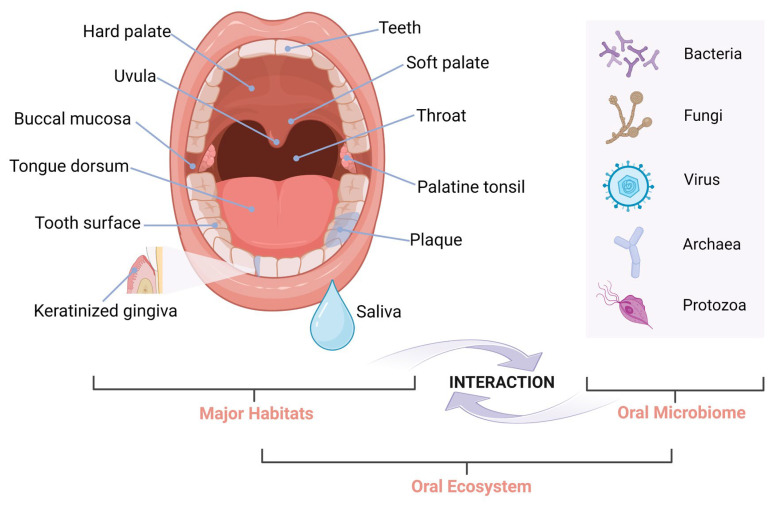
Oral ecosystem. It comprises the oral microbiome (including bacteria, fungi, viruses, archaea, and protozoa), anatomic niches in the oral cavity (the habitats where the microorganisms grow and colonize), and saliva. Interactions take place in between the oral microbiome and its habitats in the ecosystem. Created in BioRender. Wong, C. (2024) https://BioRender.com/m22z208 (accessed on 16 October 2024).
Figure 3
Figure 3
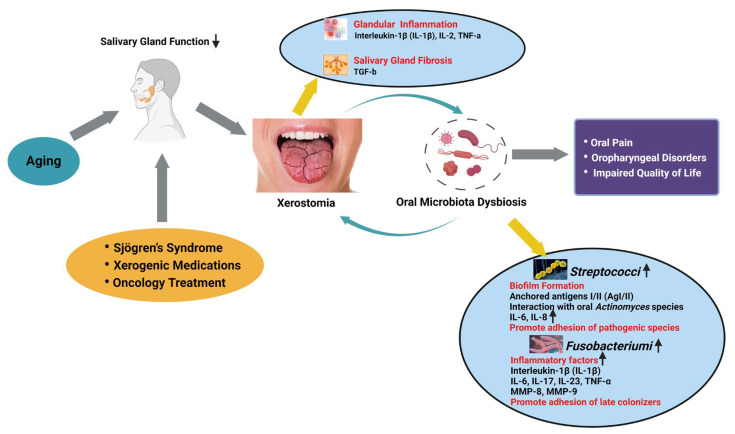
Oral microbiota dysbiosis in age-related xerostomia. The primary cause of xerostomia is attributed to the decline in salivary gland function, typically induced by aging, autoimmune disorders, the effects of xerogenic medications, or oncology treatment. These conditions can trigger severe inflammation and fibrosis within the salivary glands, leading to a reduction in saliva production. The consequent decrease in salivary flow disrupts the balance of the oral microbiome, leading to an increase in pathogenic bacteria, which further exacerbates the local inflammatory response and creates a vicious cycle. This multi-factorial interplay is ultimately responsible for the persistent symptoms of xerostomia and impairs the life quality. Created in BioRender. Wong, C. (2024) https://BioRender.com/h32o507 (accessed on 18 October 2024).

References

    1. Lamster I.B., Asadourian L., Del Carmen T., Friedman P.K. The aging mouth: Differentiating normal aging from disease. Periodontology 2000. 2016;72:96–107. doi: 10.1111/prd.12131. - DOI - PubMed
    1. Ship J.A., Pillemer S.R., Baum B.J. Xerostomia and the geriatric patient. J. Am. Geriatr. Soc. 2002;50:535–543. doi: 10.1046/j.1532-5415.2002.50123.x. - DOI - PubMed
    1. Furness S., Bryan G., McMillan R., Birchenough S., Worthington H.V. Interventions for the management of dry mouth: Non-pharmacological interventions. Cochrane Database Syst. Rev. 2013;2013:CD009603. - PMC - PubMed
    1. Napeñas J.J., Brennan M.T., Fox P.C. Diagnosis and treatment of xerostomia (dry mouth) Odontology. 2009;97:76–83. doi: 10.1007/s10266-008-0099-7. - DOI - PubMed
    1. Visvanathan V., Nix P. Managing the patient presenting with xerostomia: A review. Int. J. Clin. Pract. 2010;64:404–407. doi: 10.1111/j.1742-1241.2009.02132.x. - DOI - PubMed

LinkOut - more resources