Review
. 2024 Nov 28;17(23):5846.
doi: 10.3390/ma17235846.

Advances in the Mitigation of Microbiologically Influenced Concrete Corrosion: A Snapshot

Affiliations
Review

Advances in the Mitigation of Microbiologically Influenced Concrete Corrosion: A Snapshot

Husnu Gerengi et al. Materials (Basel). .

Abstract

Concrete, a versatile construction material, faces pervasive deterioration due to microbiologically influenced corrosion (MIC) in various applications, including sewer systems, marine engineering, and buildings. MIC is initiated by microbial activities such as involving sulfate-reducing bacteria (SRB), sulfur-oxidizing bacteria (SOB), etc., producing corrosive substances like sulfuric acid. This process significantly impacts structures, causing economic losses and environmental concerns. Despite over a century of research, MIC remains a debated issue, lacking standardized assessment methods. Microorganisms contribute to concrete degradation through physical and chemical means. In the oil and gas industry, SRB and SOB activities may adversely affect concrete in offshore platforms. MIC challenges also arise in cooling water systems and civil infrastructures, impacting concrete surfaces. Sewer systems experience biogenic corrosion, primarily driven by SRB activities, leading to concrete deterioration. Mitigation traditionally involves the use of biocides and surface coatings, but their long-term effectiveness and environmental impact are questionable. Nowadays, it is important to design more eco-friendly mitigation products. The microbial-influenced carbonate precipitation is one of the green techniques and involves incorporating beneficial bacteria with antibacterial activity into cementitious materials to prevent the growth and the formation of a community that contains species that are pathogenic or may be responsible for MIC. These innovative strategies present promising avenues for addressing MIC challenges and preserving the integrity of concrete structures. This review provides a snapshot of the MIC in various areas and mitigation measures, excluding underlying mechanisms and broader influencing factors.

Keywords: concrete; concrete corrosion; microbiologically influenced corrosion; microbiome-inhibiting.


Conflict of interest statement

Author Ertugrul Kaya is employed by the 3-S Engineering Consultation Industry and Commerce Incorporated Company. Author Matthew Snape is employed by the SGS MIRAS Consultancy Services. The remaining authors declare that the research was conducted in the absence of any commercial or financial relationships that could be construed as a potential conflict of interest.

Figures
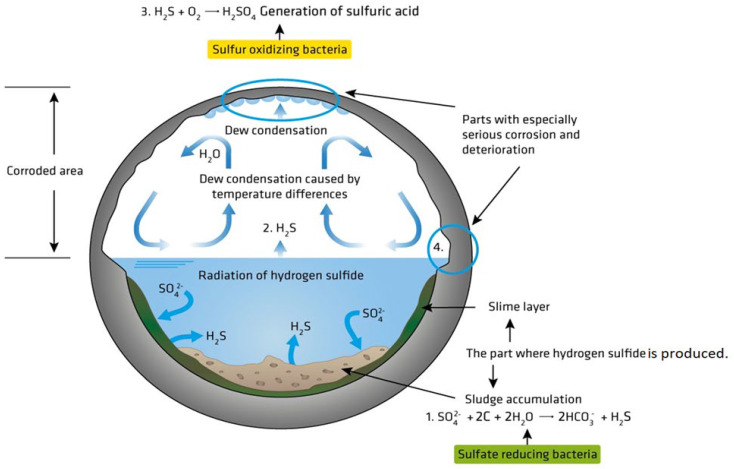
Figure 1
Figure 1
The schematic illustration of the primary events associated with the MIC of concrete when exposed to sewer environments. Reproduced with permission from Wu et al. [19]. © 2019 Elsevier Ltd., Amsterdam, The Netherlands.
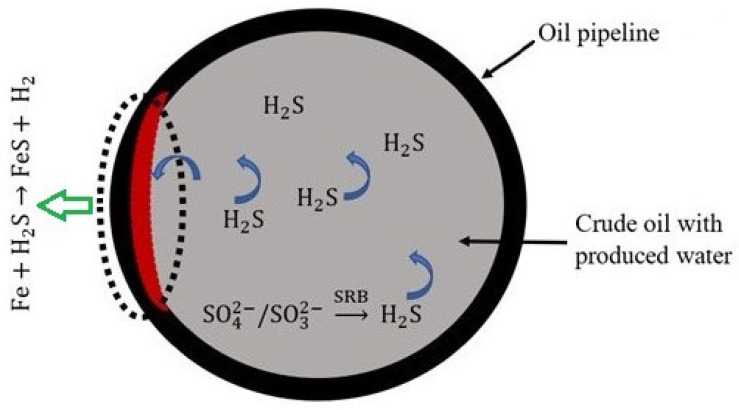
Figure 2
Figure 2
The schematic diagram of microbial corrosion of oil pipelines by the metabolic activities of microorganisms in the environment. Reproduced from Chen et al. [22]. © 2013 Chen et al.; licensee Chemistry Central Ltd., Mountain View, CA, USA.
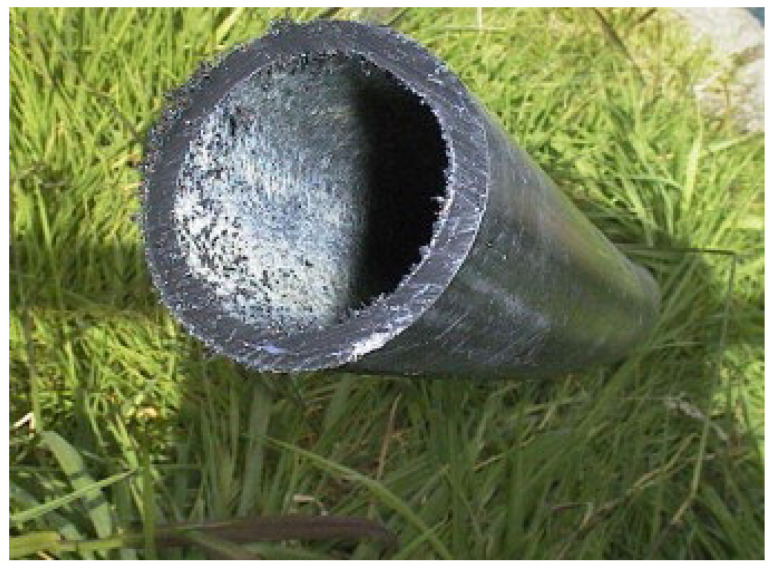
Figure 3
Figure 3
Concrete pipe from a geothermal power plant with an adherent biofilm of sulfur-oxidizing bacteria (white). The Wairakei Power Station is the only geothermal plant in the world with once-through cooling. Shortly after the commissioning of the plant, it was discovered that headspaces in the culverts were suffering from severe acid attacks due to the presence of the oxidation product of H2S, i.e., H2SO4. The pH of the surface moisture was found to be <2, which is common in the presence of “sulfur-oxidizing bacteria” that oxidizes H2S to sulfuric acid. Reproduced with permission from Brown and Bacon [25]. © 2008 Elsevier Ltd., Amsterdam, The Netherlands.
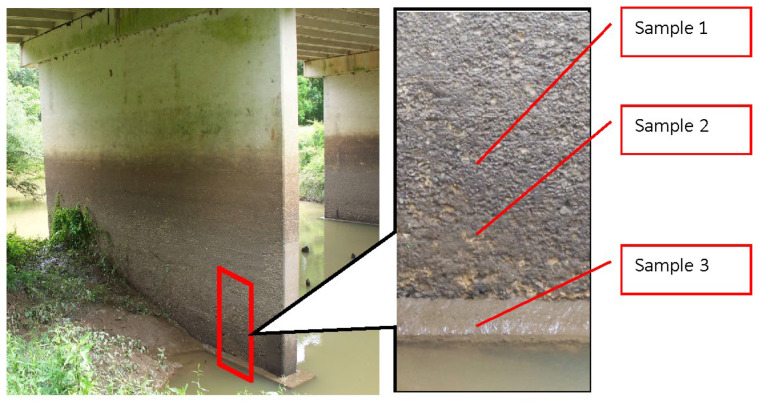
Figure 4
Figure 4
The concrete samples from a bridge site in Texas. Reproduced with permission from Trejo et al. [27].
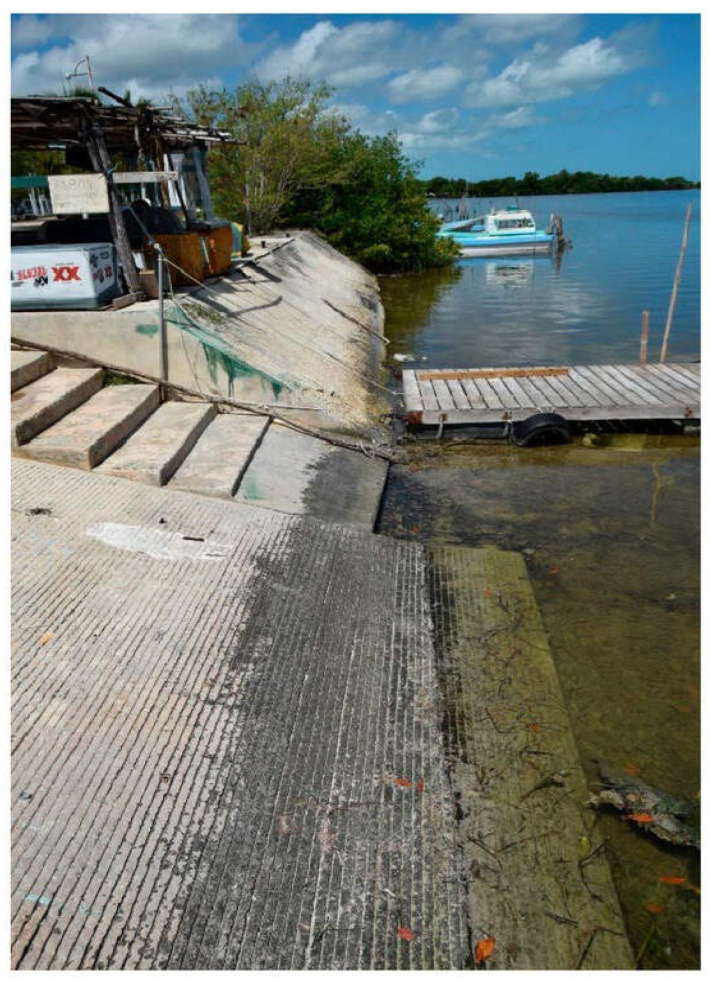
Figure 5
Figure 5
Concrete docks for artisanal fishing boats in Campeche, southern Mexico, are an example of microbial colonization patterns. Reproduced from Gaylarde and Ortega-Morales [30]. © 2023 by the authors. Licensee: MDPI, Basel, Switzerland.
Figure 6
Figure 6
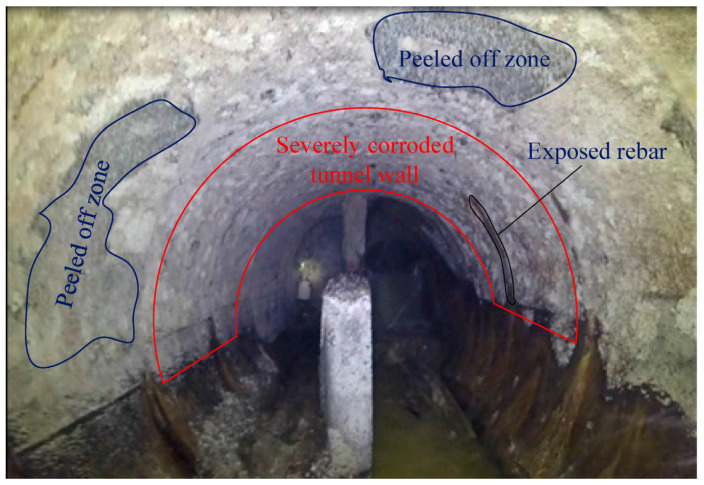
Corrosion conditions in a chamber located under 127 Street and 153 Avenue in Edmonton, Canada. Reproduced from Wu et al. [34]. © 2018 by the authors. Licensee: MDPI, Basel, Switzerland.
Figure 7
Figure 7
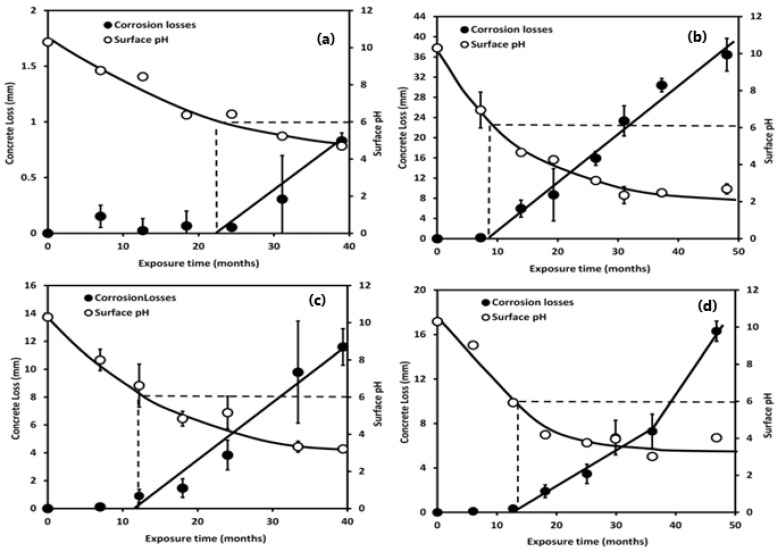
Corrosion losses and surface pH trends for concrete samples from (a) Melbourne A, (b) Perth A, (c) Melbourne B, and (d) Perth B sites. The dotted line shows that the onset of corrosion losses coincides with the point at which the surface pH is reduced to 6, irrespective of the aggressiveness of the site. Reproduced with permission from Wells and Melchers [41]. © 2015 Published by Elsevier Ltd., Amsterdam, The Netherlands.
Figure 8
Figure 8
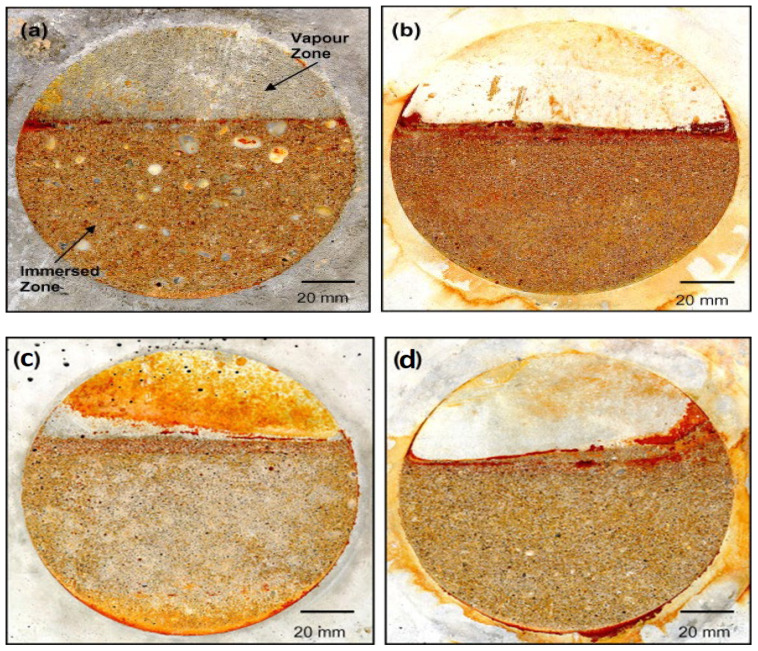
Appearance of (a) ASTM C150 Type V (sulfate-resistant) concrete [43], (b) 40% blast furnace slag concrete, (c) 5% silica fume concrete, and (d) 10% silica fume concrete after exposure to Thiobacillus ferrooxidans. The concrete in (a,b) shows etching and staining in the immersed zone, while the ones in (c,d) show slight etching in the immersed zone. Reproduced with permission from Berndt [43]. © 2011 Elsevier Ltd., Amsterdam, The Netherlands.
Figure 9
Figure 9
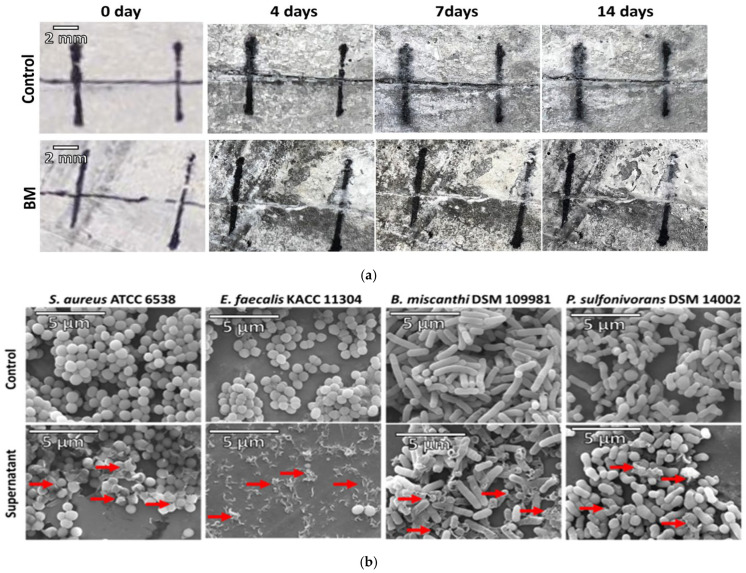
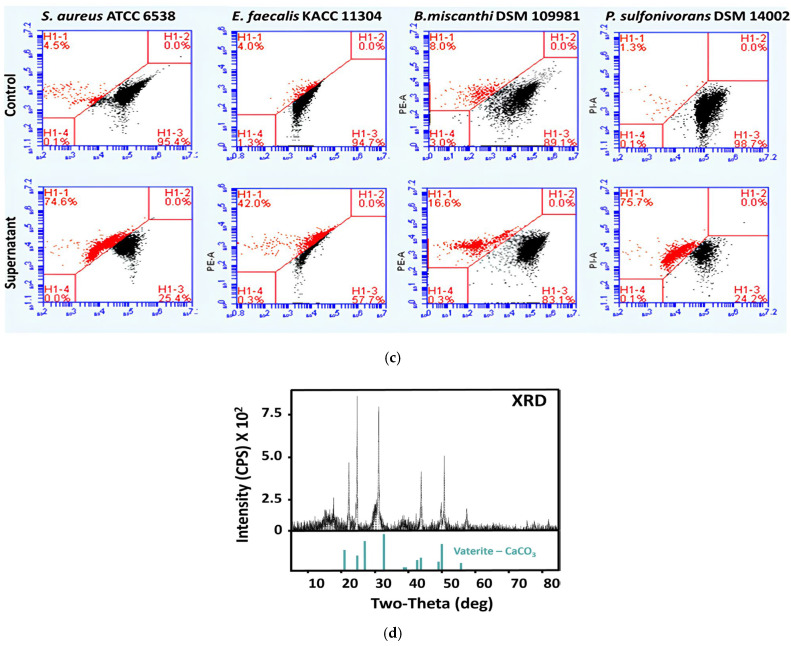
(a) Assessment of crack sealing in mortar as a function of curing time and crack width. Characterization and bactericidal effects of antibacterial substances produced by B. altitudinis B6 against four Gram-positive bacteria. The FE-SEM images reveal that cracks on the BM samples were completely healed within 14 days. (b) FE-SEM images of B6 strain phenotypes indicating the presence or absence of cell-free supernatant treatment. The red arrows show signs of cell death, including cell wall destruction and the presence of cellular debris. (c) Results of the live/dead cell viability assay, stained with fluorescence dyes (SYTO 9, propidium iodide), with flow cytometer analysis for validating the killing effects. (d) XRD analyses of CaCO3 precipitation in BM. The XRD results confirmed that the CaCO3 minerals (the whitish minerals seen on (a)) are vaterite. (BM: mortar treated with the B6 strain; Control: control mortar). Reproduced with permission from Min et al. [80]. © 2024 Elsevier Ltd., Amsterdam, The Netherlands.
Figure 9
Figure 9
(a) Assessment of crack sealing in mortar as a function of curing time and crack width. Characterization and bactericidal effects of antibacterial substances produced by B. altitudinis B6 against four Gram-positive bacteria. The FE-SEM images reveal that cracks on the BM samples were completely healed within 14 days. (b) FE-SEM images of B6 strain phenotypes indicating the presence or absence of cell-free supernatant treatment. The red arrows show signs of cell death, including cell wall destruction and the presence of cellular debris. (c) Results of the live/dead cell viability assay, stained with fluorescence dyes (SYTO 9, propidium iodide), with flow cytometer analysis for validating the killing effects. (d) XRD analyses of CaCO3 precipitation in BM. The XRD results confirmed that the CaCO3 minerals (the whitish minerals seen on (a)) are vaterite. (BM: mortar treated with the B6 strain; Control: control mortar). Reproduced with permission from Min et al. [80]. © 2024 Elsevier Ltd., Amsterdam, The Netherlands.
Figure 10
Figure 10
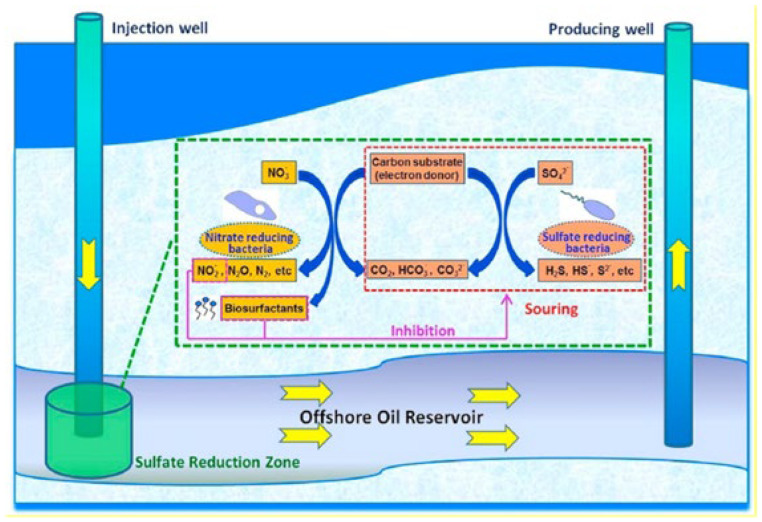
A schematic diagram illustrating the interaction of NRB and SRB in a souring environment. The mechanism of nitrate injection includes the augmentation of heterotrophic nitrate-reducing bacteria to outcompete SRB for available nutrients, promotion of nitrate-reducing sulfide-oxidizing bacteria to directly oxidize sulfide, and SRB inhibition through the resultant nitrite. The yellow arrows illustrate the biosurfactant injection and the prolonged effective duration of nitrate that helped nitrate/nitrite reach deeper zone in the system, resulting in long-term suppression of SRB activities and better souring control. Reproduced with permission from Fan et al. [82]. © 2019 Elsevier Ltd., Amsterdam, The Netherlands.

References

    1. Noeiaghaei T., Mukherjee A., Dhami N., Chae S.-R. Biogenic deterioration of concrete and its mitigation technologies. Constr. Build. Mater. 2017;149:575–586. doi: 10.1016/j.conbuildmat.2017.05.144. - DOI
    1. Li X., O’Moore L., Song Y., Bond P.L., Yuan Z., Wilkie S., Hanzic L., Jiang G. The rapid chemically induced corrosion of concrete sewers at high H2S concentration. Water Res. 2019;162:95–104. doi: 10.1016/j.watres.2019.06.062. - DOI - PubMed
    1. Fytianos G., Tziolas E., Papastergiadis E., Samaras P. Least Cost Analysis for Biocorrosion Mitigation Strategies in Concrete Sewers. Sustainability. 2020;12:4578. doi: 10.3390/su12114578. - DOI
    1. Gutiérrez-Padilla M.G.D., Bielefeldt A., Ovtchinnikov S., Hernandez M., Silverstein J. Biogenic sulfuric acid attack on different types of commercially produced concrete sewer pipes. Cem. Concr. Res. 2010;40:293–301. doi: 10.1016/j.cemconres.2009.10.002. - DOI
    1. Gu J.-D., Ford T.E., Berke N.S., Mitchell R. Biodeterioration of concrete by the fungus Fusarium. Int. Biodeterior. Biodegrad. 1998;41:101–109. doi: 10.1016/S0964-8305(98)00034-1. - DOI

LinkOut - more resources