Prognostic value of serum Mrp 8/14 in sepsis-induced acute respiratory distress syndrome patients: a retrospective cohort study
- PMID: 39686985
- PMCID: PMC11648679
- DOI: 10.7717/peerj.18718
Prognostic value of serum Mrp 8/14 in sepsis-induced acute respiratory distress syndrome patients: a retrospective cohort study
Abstract
Background: Mrp 8/14 is abundantly secreted by activated neutrophils during infection and inflammation. However, its prognostic value in acute respiratory distress dyndrome (ARDS) induced by sepsis is poorly understood. Our aim was to investigate the relationship between serum Mrp 8/14 and the prognosis in sepsis-induced ARDS patients admitted to the intensive care unit (ICU).
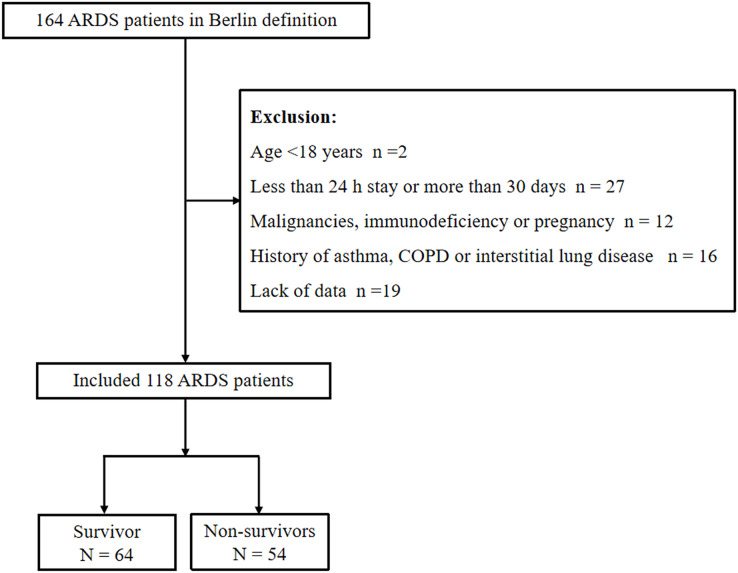
Methods: Serum Mrp 8/14 concentrations were analyzed in 118 ARDS patients induced by sepsis included in the analytical study. Patients were enrolled upon admission to the ICU of Nanjing Hospital affiliated to Nanjing Medical University. The baseline information and clinical outcomes were obtained. Patients were divided into survivor group and non-survivor group according to whether they died during ICU hospitalization.
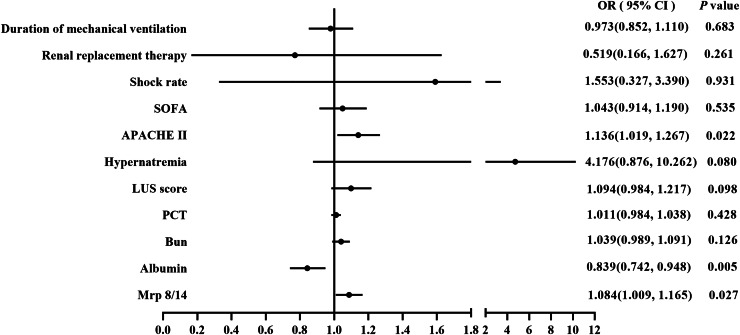
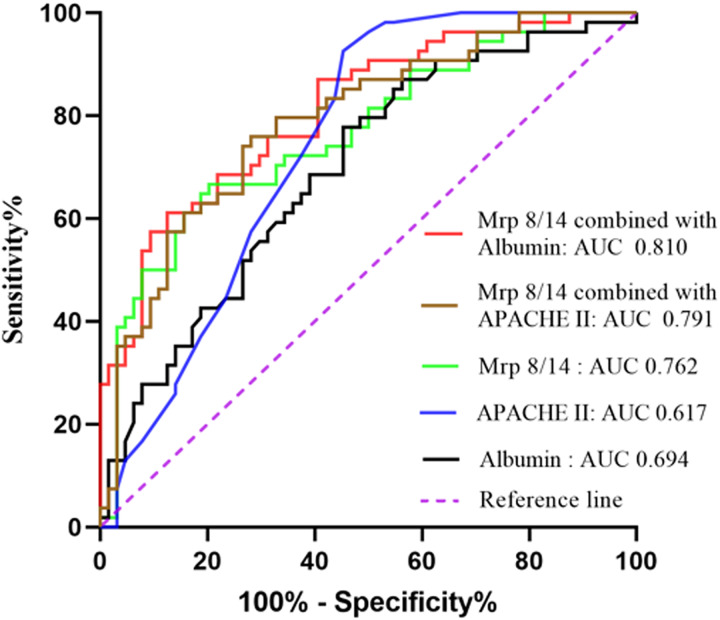
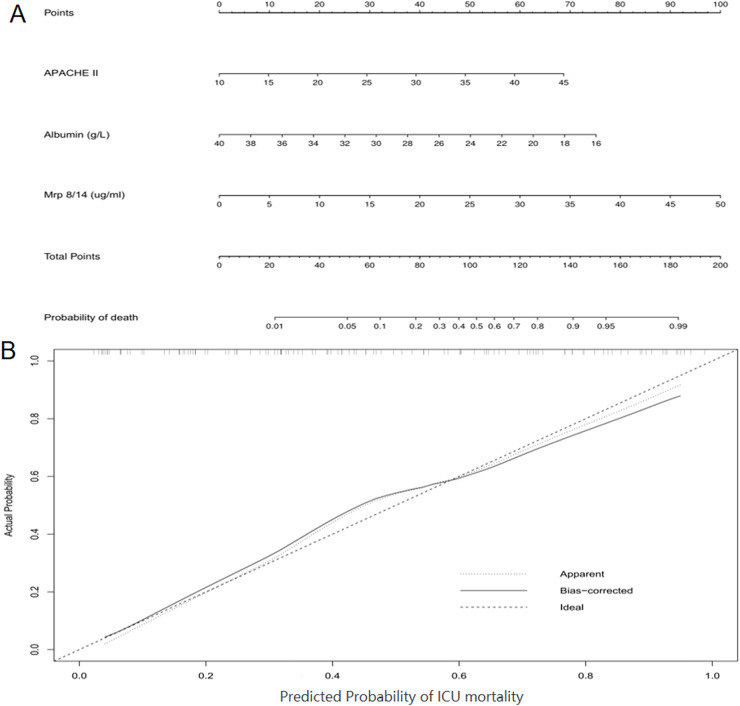
Results: The serum Mrp 8/14 levels were significantly increased in the non-survivor group compared to the survivor group (P < 0.05). Logistic regression analysis showed that serum Mrp 8/14, albumin and APACHE II were the independent factors for predicting the prognosis of sepsis-induced ARDS during ICU hospitalization after adjustment. Additionally, the area under the receiver operating characteristic curve for Mrp 8/14 combined with albumin was associated with ICU mortality and was higher than that of Mrp 8/14, albumin, APACHE II and Mrp 8/14 combined with APACHE II (all P < 0.05). A nomogram was constructed to predict ICU mortality and the c-indexes of predictive accuracy was 0.830 in the cohort (P < 0.05).
Conclusions: The serum Mrp 8/14 upon ICU admission in septic patients may be useful for predicting mortality in sepsis-induced ARDS patients during ICU hospitalization.
Keywords: Acute respiratory distress dyndrome; Mortality; Mrp 8/14; Prognosis; Sepsis.
© 2024 Sun et al.
Conflict of interest statement
The authors declare that they have no competing interests.
Figures
References
-
- ARDS Definition Task Force. Ranieri VM, Rubenfeld GD, Thompson BT, Ferguson ND, Caldwell E, Fan E, Camporota L, Slutsky AS. Acute respiratory distress syndrome: the Berlin Definition. The Journal of the American Medical Association. 2012;307(23):2526–2533. doi: 10.1001/jama.2012.5669. - DOI - PubMed
-
- Auriemma CL, Zhuo H, Delucchi K, Deiss T, Liu T, Jauregui A, Ke S, Vessel K, Lippi M, Seeley E, Kangelaris KN, Gomez A, Hendrickson C, Liu KD, Matthay MA, Ware LB, Calfee CS. Acute respiratory distress syndrome-attributable mortality in critically ill patients with sepsis. Intensive Care Med. 2020;46(6):1222–1231. doi: 10.1007/s00134-020-06010-9. - DOI - PMC - PubMed
-
- Bellani G, Laffey JG, Pham T, Fan E, Brochard L, Esteban A, Gattinoni L, van Haren F, Larsson A, McAuley DF, Ranieri M, Rubenfeld G, Thompson BT, Wrigge H, Slutsky AS, Pesenti A, LUNG SAFE Investigators. ESICM Trials Group Epidemiology, patterns of care, and mortality for patients with acute respiratory distress syndrome in intensive care units in 50 countries. The Journal of the American Medical Association. 2016;315(8):788–800. doi: 10.1001/jama.2016.0291. - DOI - PubMed
MeSH terms
Substances
LinkOut - more resources
Full Text Sources
Medical