


PARylation of HMGA1 desensitizes esophageal squamous cell carcinoma to olaparib
- PMID: 39690136
- PMCID: PMC11652107
- DOI: 10.1002/ctm2.70111
PARylation of HMGA1 desensitizes esophageal squamous cell carcinoma to olaparib
Abstract
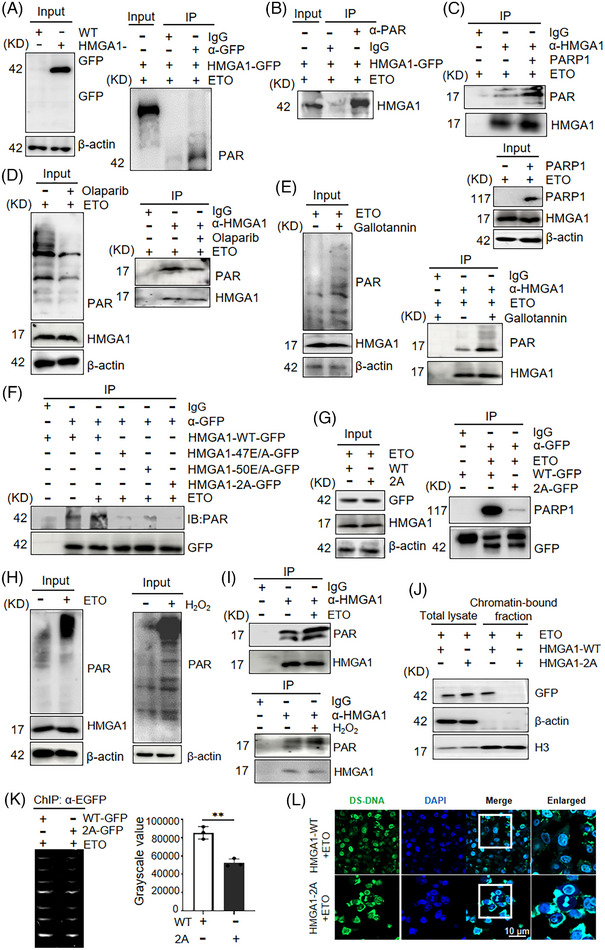
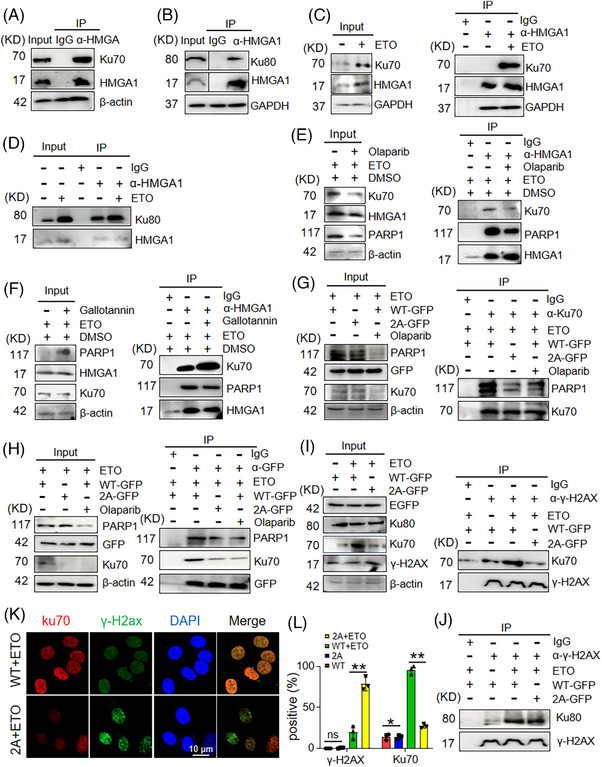
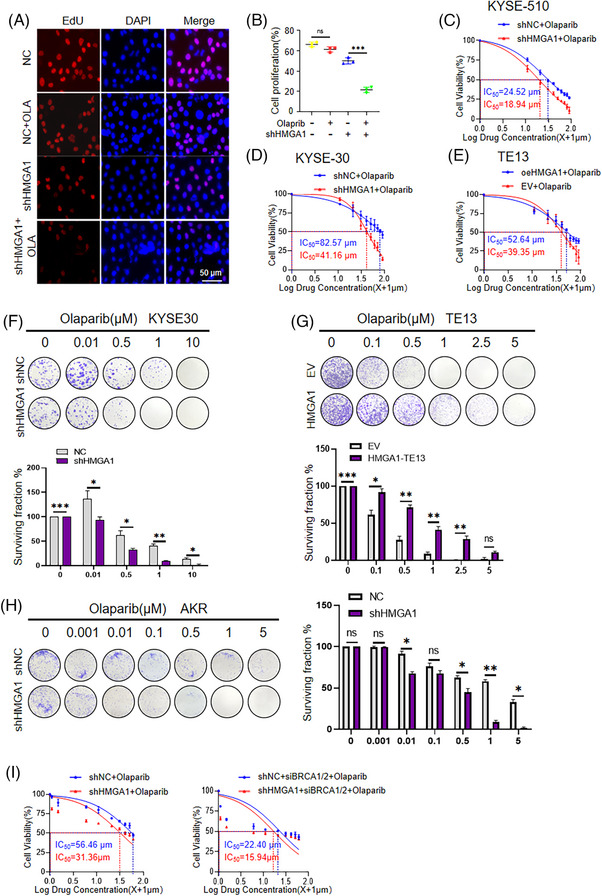
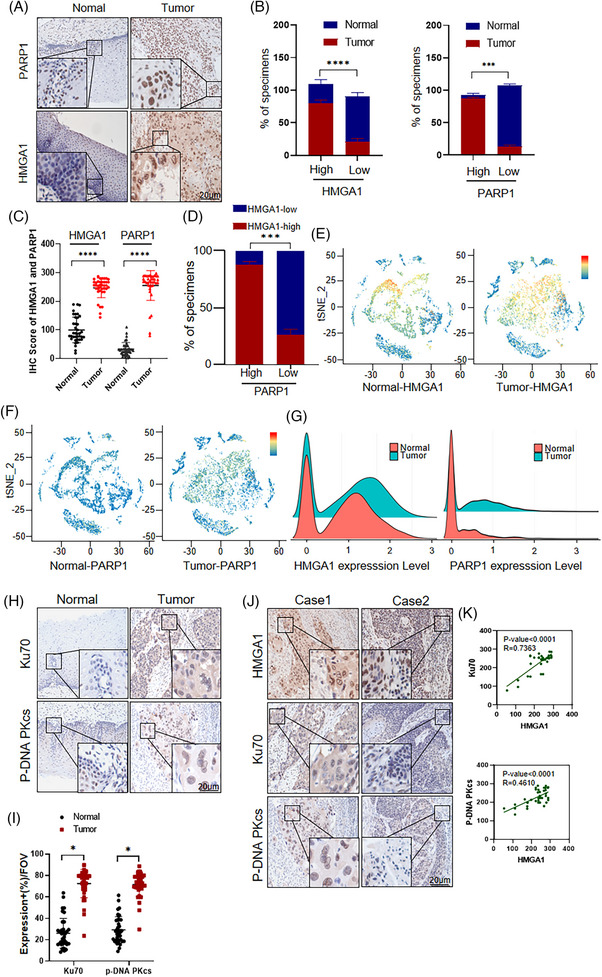
As a chromatin remodelling factor, high mobility group A1 (HMGA1) plays various roles in both physiological and pathological conditions. However, its role in DNA damage response and DNA damage-based chemotherapy remains largely unexplored. In this study, we report the poly ADP-ribosylation (PARylation) of HMGA1 during DNA damage, leading to desensitization of esophageal squamous cell carcinoma (ESCC) cells to the poly(ADP-ribose) polymerase 1 (PARP1) inhibitor, olaparib. We found that HMGA1 accumulates at sites of DNA damage, where it interacts with PARP1 and undergoes PARylation at residues E47 and E50 in its conserved AT-hook domain. This modification enhances the accumulation of Ku70/Ku80 at the site of DNA damage and activates the DNA-dependent protein kinase catalytic subunit, facilitating nonhomologous end-joining repair. In both subcutaneous tumour models and genetically engineered mouse models of in situ esophageal cancer, HMGA1 interference increased tumour sensitivity to olaparib. Moreover, HMGA1 was highly expressed in ESCC tissues and positively correlated with PARP1 levels as well as poor prognosis in ESCC patients. Taken together, these findings reveal a mechanistic link between HMGA1 and PARP1 in regulating cell responses to DNA damage and suggest that targeting HMGA1 could be a promising strategy to increase cancer cell sensitivity to olaparib.
Keywords: DNA damage; ESCC; HMGA1; Olaparib; PARP1; PARylation; chemotherapy sensitivity.
© 2024 The Author(s). Clinical and Translational Medicine published by John Wiley & Sons Australia, Ltd on behalf of Shanghai Institute of Clinical Bioinformatics.
Conflict of interest statement
The authors declare no conflict of interest.
Figures





References
-
- Lagergren J, Lagergren P. Oesophageal cancer. BMJ (Clin Res Ed). 2010;341:c6280. - PubMed
-
- Li X, Chen L, Luan S, et al. The development and progress of nanomedicine for esophageal cancer diagnosis and treatment. Semin Cancer Biol. 2022;86(Pt 2):873‐885. - PubMed
-
- Sung H, Ferlay J, Siegel RL, et al. Global Cancer Statistics 2020: GLOBOCAN estimates of incidence and mortality worldwide for 36 cancers in 185 countries. CA Cancer J Clin. 2021;71(3):209‐249. - PubMed
MeSH terms
Substances
Grants and funding
LinkOut - more resources
Full Text Sources
Medical
Research Materials
Miscellaneous