


Time to deterioration of patient-reported outcome endpoints in cancer clinical trials: targeted literature review and best practice recommendations
- PMID: 39694990
- PMCID: PMC11655910
- DOI: 10.1186/s41687-024-00824-7
Time to deterioration of patient-reported outcome endpoints in cancer clinical trials: targeted literature review and best practice recommendations
Abstract
Background: Time to deterioration (TTD) endpoints are often utilized in the analysis of patient-reported outcome (PRO) data in oncology clinical trials but different endpoint definitions and analysis frameworks exist that can impact result interpretation. This review examined the analysis, reporting and heterogeneity of TTD endpoints in the literature, the impact of analysis methods on results, and provides recommendations for future trials.
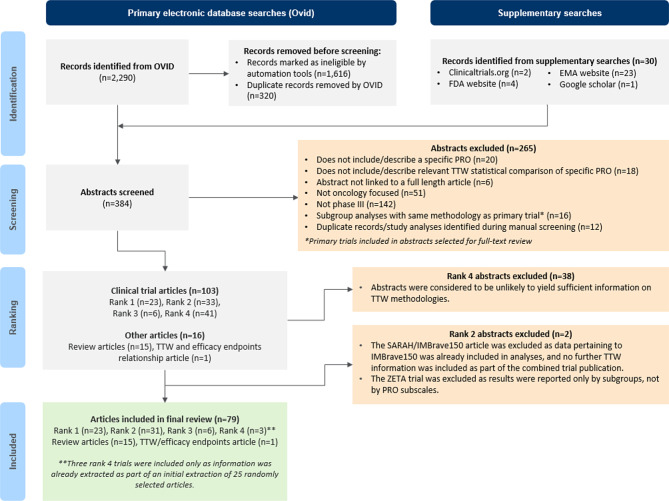
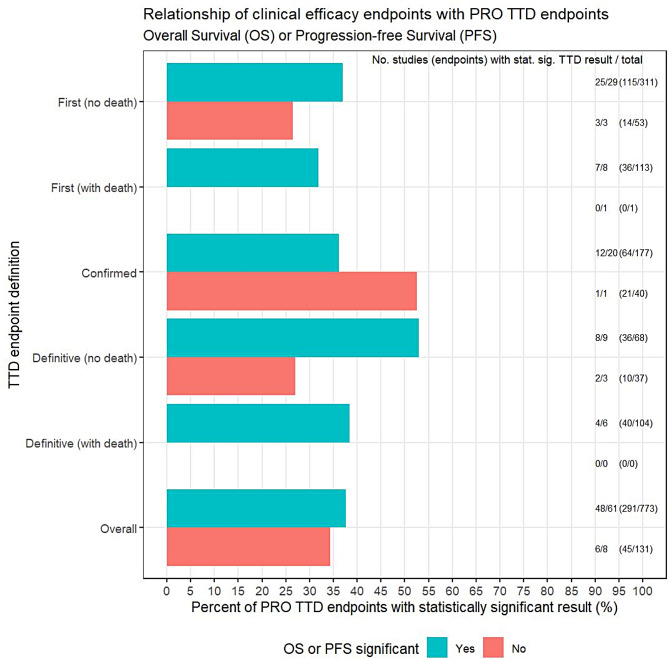
Methods: A targeted literature review of articles published between 2017 and 2022 was performed to collate TTD endpoints reported in oncology randomized controlled trials (RCTs). Details of endpoints and results were extracted including; deterioration definition, PRO assessment schedule, methods for handling intercurrent events, statistical analysis methods, main trial results (overall survival and/or progression-free survival) and TTD endpoint results.
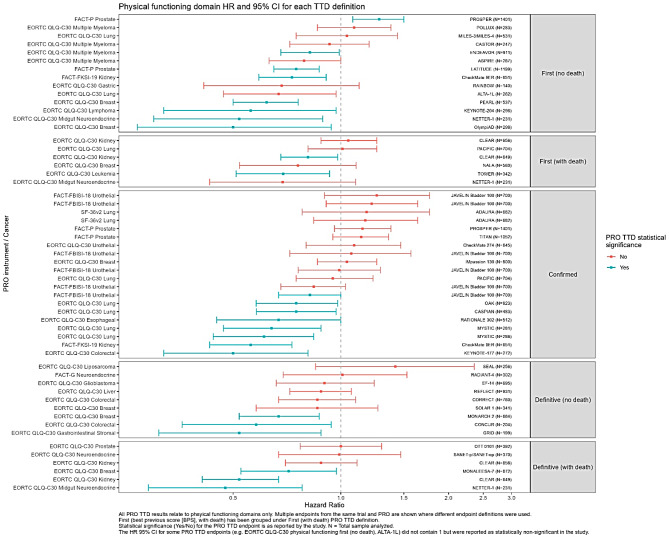
Results: Seventy RCTs were included covering 849 individual TTD endpoints. There were 17 primary cancer types, with lung (26%), breast (11%), and prostate (7%) cancers the most common. Most trials (71%) were for people with advanced cancer. Full definitions of TTD endpoints were often missing. There were no clear trends for a specific TTD definition within cancer types or stages. However, statistical analysis methods were consistent among trials.
Conclusion: The TTD definition can vary and is ultimately driven by the research question. Points to consider for successfully implementing PRO TTD endpoints in oncology include consideration of the trial setting (e.g., early vs. advanced cancer), expected treatment effect (e.g., improvement vs. worsening), likely adverse event profile (including early vs. delayed) and PRO data collection frequency in order to improve utility of these endpoints.
Keywords: Endpoint determination; Neoplasms; Patient reported outcome; Randomized controlled trials; Review literature; Survival analysis.
© 2024. The Author(s).
Conflict of interest statement
Declarations. Ethics approval and consent to participate: Not applicable. Consent for publication: Not applicable. Competing interests: NP is a full-time employee of Eli Lilly and Company and ZLC is an employee and a stockholder of Eli Lilly and Company. Adelphi Values received funding from Eli Lilly and Company to conduct the research.
Figures
References
-
- Food and Drug Administration (FDA) Enhancing the incorporation of the patient’s voice in medical product development and regulatory decision making. https://www.fda.gov/drugs/development-approval-process-drugs/fda-patient...
-
- Chassany O, Engen A, Lai L et al (2022) A call to action to harmonize patient-reported outcomes evidence requirements across key European HTA bodies in oncology. Future Oncol 18(29):3323–3334 - PubMed
Publication types
MeSH terms
LinkOut - more resources
Full Text Sources
Medical
Research Materials
