


Coping strategies to stressful events in adolescents with migraine
- PMID: 39695412
- PMCID: PMC11657877
- DOI: 10.1186/s10194-024-01934-9
Coping strategies to stressful events in adolescents with migraine
Abstract
Objective: Several studies examined stress factors in both adult and pediatric patients with migraine, but few of them have analyzed coping strategies adopted to deal with stressful events in pediatric age. In particular, some of these studies have focused on specific migraine populations or have not employed standardized instruments. Our study used a standardized tool to investigate the coping strategies adopted by patients with primary migraine in dealing with stressful events. We aimed at exploring: 1) Coping responses to stressful events and their possible association with migraine characteristics such as headache frequency, pain intensity and use of prophylactic treatment; (2) Potential differences in anxiety and depression symptoms based on migraine characteristics, and (3) Association between migraine characteristics, coping strategies, and psychological aspects.
Methods: We studied 81 adolescents (mean age 13.8 ± 1.6 years; 18 M and 63 F). They were divided into: (1) high frequency (weekly to daily episodes) and low frequency (≤ 4 episodes per month); (2) mild and severe pain; (3) need for prophylactic treatment or not. To evaluate patients' anxiety, depression and coping strategies we used respectively SAFA-A, SAFA-D and CRI-Y questionnaires.
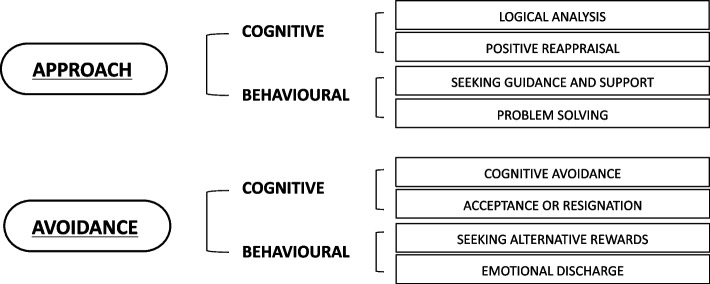
Results: School and socialization represent the most commonly reported stressful events among our patients with migraine. Patients with high frequency of headache tend to adopt maladaptive coping strategies in "Logical Analysis" (p = 0.012), "Positive Reappraisal" (p = 0.002) and "Total Approach" (p = < 0.001). Moreover, patients with a high frequency of headache showed higher anxiety and depression scores (p = < 0.050). On the other hand, lower scores in some subscales of anxiety and depression emerged in high frequency patients who used "Logical Analysis" maladaptively (p = < 0.050).
Conclusion: Adolescents with a more disabling migraine pattern tend to employ maladaptive coping strategies focused on active behavioral responses to the stressful events.
Keywords: Adolescents; Anxiety; Coping strategies; Depression; Migraine; Stressful events.
© 2024. The Author(s).
Conflict of interest statement
Declarations. Ethics approval and consent to participate: The study was approved by the Ethical Committee of Bambino Gesù Children’s Hospital. Consent for publication: Informed consent was obtained from all subjects involved in the study. Competing interests: The authors declare no competing interests.
Figures
References
-
- Guidetti V, Galli F, Cerutti R, Fabrizi P (2000) Chronic daily headache in develop- mental ages: diagnostic issues. J Headache Pain 1(1):S89–S93 - DOI
MeSH terms
LinkOut - more resources
Full Text Sources
Medical
