


Are we cultivating the perfect storm for a human avian influenza pandemic?
- PMID: 39695812
- PMCID: PMC11658083
- DOI: 10.1186/s40659-024-00570-6
Are we cultivating the perfect storm for a human avian influenza pandemic?
Abstract
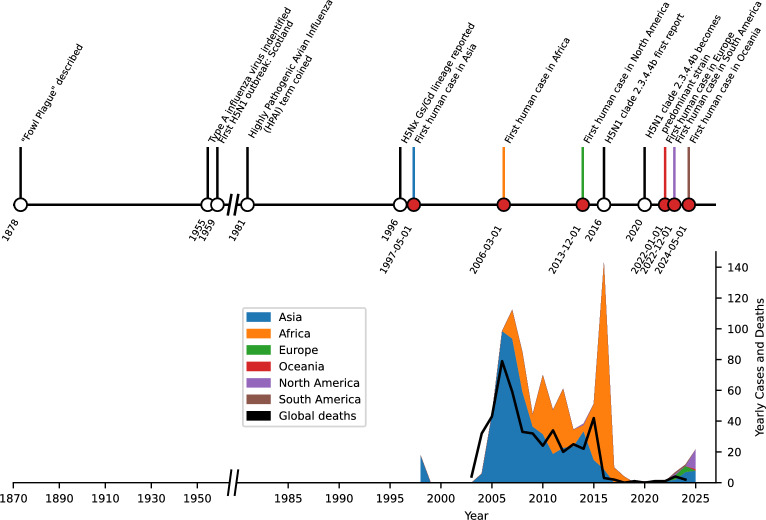
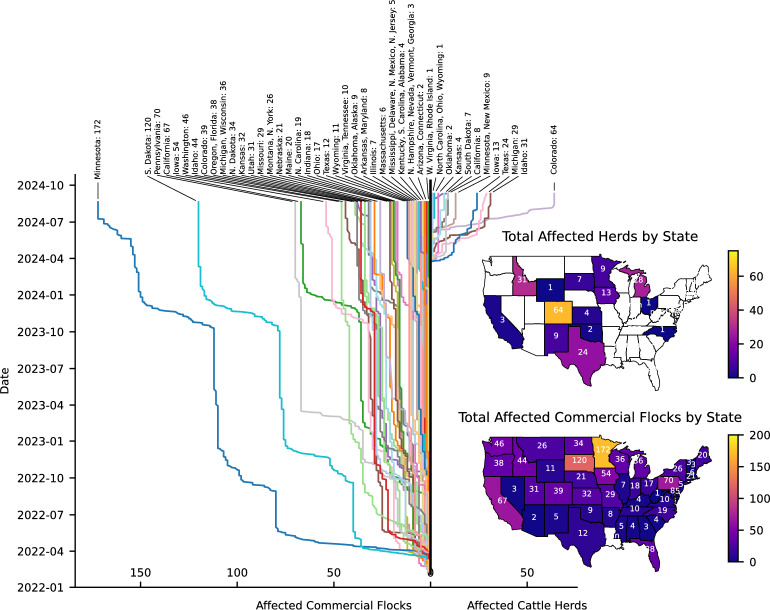
The emergence of highly pathogenic avian influenza (HPAI) A H5N1 virus in dairy cattle marks a troubling new chapter in the ongoing battle against zoonotic diseases. Since its initial detection in 1955, the H5N1 virus has primarily been associated with poultry, posing significant threats to both animal and human health. However, recent outbreaks in U.S. dairy herds across nine states have revealed an alarming expansion of the virus, with over 190 herds affected as of September 2024. This unprecedented spread in cattle has sparked intense concern among scientists and health officials, especially with reports indicating that up to 20% of dairy products may contain traces of the virus. The implications of the H5N1 virus establishing itself in cattle populations are profound. This potential endemic presence could transform dairy farms into reservoirs of the virus, facilitating its evolution and increasing the risk of human transmission. Mutations enhancing viral replication in mammals have already been identified, including the notorious PB2 E627K mutation linked to increased virulence. Moreover, the detection of the virus in the central nervous system of infected animals, including cats, underscores the broad tissue tropism and severe pathogenic potential of the H5N1 virus. Current containment efforts include stringent biosecurity measures and financial incentives for enhanced testing and personal protective equipment (PPE) for farmers. Yet, gaps in testing infrastructure and the resurgence of raw milk consumption pose significant challenges. The U.S. Department of Agriculture (USDA) and the Centers for Disease Control and Prevention (CDC) emphasize the critical need for comprehensive testing and pasteurization to mitigate the risk of human infection. As the scientific community races to adapt existing antiviral treatments and develop effective vaccines, the concept of a One Health approach becomes increasingly vital. This holistic strategy calls for coordinated actions across human, animal, and environmental health sectors to preemptively tackle emerging zoonotic threats. Strengthening surveillance, fostering international cooperation, and investing in research are essential steps to prevent the H5N1 virus from igniting the next global health crisis. The current avian influenza outbreak serves as a stark reminder of the delicate balance between human activities and viral evolution. Our collective ability to respond effectively and proactively will determine whether we can avert the perfect storm brewing on the horizon.
Keywords: Dairy cattle; H5N1; HPAI; Pandemic.
© 2024. The Author(s).
Conflict of interest statement
Declarations. Ethics approval and consent to participate: Not applicable. Consent for publication: Not applicable. Competing interests: The authors declare that they have no competing interests.
Figures
Similar articles
-
The emergence of highly pathogenic avian influenza H5N1 in dairy cattle: implications for public health, animal health, and pandemic preparedness.Eur J Clin Microbiol Infect Dis. 2025 Aug;44(8):1817-1833. doi: 10.1007/s10096-025-05147-z. Epub 2025 May 14. Eur J Clin Microbiol Infect Dis. 2025. PMID: 40369349 Free PMC article. Review.
-
Comprehensive Insights into Highly Pathogenic Avian Influenza H5N1 in Dairy Cattle: Transmission Dynamics, Milk-Borne Risks, Public Health Implications, Biosecurity Recommendations, and One Health Strategies for Outbreak Control.Pathogens. 2025 Mar 13;14(3):278. doi: 10.3390/pathogens14030278. Pathogens. 2025. PMID: 40137763 Free PMC article. Review.
-
Avian influenza A (H5N1) virus in dairy cattle: origin, evolution, and cross-species transmission.mBio. 2024 Dec 11;15(12):e0254224. doi: 10.1128/mbio.02542-24. Epub 2024 Nov 13. mBio. 2024. PMID: 39535188 Free PMC article. Review.
-
Highly pathogenic avian influenza H5N1: history, current situation, and outlook.J Virol. 2025 Apr 15;99(4):e0220924. doi: 10.1128/jvi.02209-24. Epub 2025 Mar 27. J Virol. 2025. PMID: 40145745 Free PMC article. Review.
-
The panzootic spread of highly pathogenic avian influenza H5N1 sublineage 2.3.4.4b: a critical appraisal of One Health preparedness and prevention.Lancet Infect Dis. 2024 Dec;24(12):e774-e781. doi: 10.1016/S1473-3099(24)00438-9. Epub 2024 Aug 9. Lancet Infect Dis. 2024. PMID: 39134084 Free PMC article. Review.
Cited by
-
Occupational Risk from Avian Influenza Viruses at Different Ecological Interfaces Between 1997 and 2019.Microorganisms. 2025 Jun 14;13(6):1391. doi: 10.3390/microorganisms13061391. Microorganisms. 2025. PMID: 40572281 Free PMC article. Review.
-
H5N1 influenza A virus: lessons from past outbreaks and emerging threats.Infez Med. 2025 Mar 1;33(1):76-89. doi: 10.53854/liim-3301-7. eCollection 2025. Infez Med. 2025. PMID: 40071262 Free PMC article. Review.
-
Highly Pathogenic Avian Influenza (H5N1) Clade 2.3.4.4b in Cattle: A Rising One Health Concern.Animals (Basel). 2025 Jul 3;15(13):1963. doi: 10.3390/ani15131963. Animals (Basel). 2025. PMID: 40646862 Free PMC article. Review.
-
The emergence of highly pathogenic avian influenza H5N1 in dairy cattle: implications for public health, animal health, and pandemic preparedness.Eur J Clin Microbiol Infect Dis. 2025 Aug;44(8):1817-1833. doi: 10.1007/s10096-025-05147-z. Epub 2025 May 14. Eur J Clin Microbiol Infect Dis. 2025. PMID: 40369349 Free PMC article. Review.
-
Highly Pathogenic Avian Influenza A(H5N1) Virus: How Far Are We from a New Pandemic?Vet Sci. 2025 Jun 9;12(6):566. doi: 10.3390/vetsci12060566. Vet Sci. 2025. PMID: 40559803 Free PMC article.
References
-
- Subbarao K, Klimov A, Katz J, Regnery HL, Lim W, Hall H, Perdue M, Swayne D, Bender C, Huang J, Hemphill M, Rowe T, Shaw M, Xu X, Fukuda K, Cox N. Characterization of an avian influenza A (H5N1) virus isolated from a child with a fatal respiratory illness. Science. 1998;279(5349):393–6. 10.1126/SCIENCE.279.5349.393. - PubMed
-
- Swayne D, Suarez D. Highly pathogenic avian influenza. Revue scientifique et technique-office international des epizooties. 2000;19(2):463–75. - PubMed
-
- Stephenson I, Democratis J. Influenza: current threat from avian influenza. Br Med Bull. 2005;75–76:63–80. 10.1093/BMB/LDH063. - PubMed
Publication types
MeSH terms
Grants and funding
LinkOut - more resources
Full Text Sources
Medical
Research Materials
Miscellaneous
