


A maternal sweet diet is associated with the gut dysbiosis in the first trimester of pregnancy
- PMID: 39695908
- PMCID: PMC11657500
- DOI: 10.1186/s40795-024-00972-5
A maternal sweet diet is associated with the gut dysbiosis in the first trimester of pregnancy
Abstract
Background: The composition of maternal gut phylum in each trimester of pregnancy has been associated with fetal development, separately. Diet is a main effective factor on the gut composition of phylum. However, associations between dietary glycemic index (GI), load (GL) and total antioxidant capacity (TAC) not studied with the gut population of phylum in mothers at the first trimester of pregnancy.
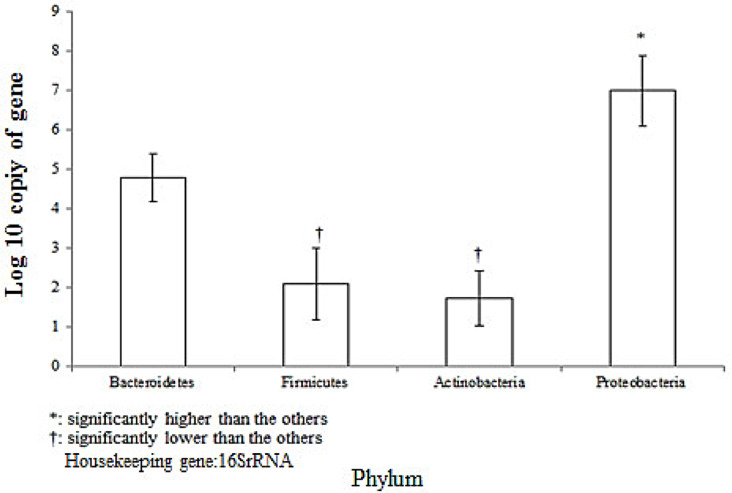
Materials and methods: Ninety healthy pregnant women aged 18-40 yrs, in the first trimester, were participated. Stool samples were gathered in a fasting state. Population of dominant phylum was determined after DNA extraction based on the 16SrRNA expression, as a housekeeping gene. Dietary intake was collected by a validated food frequency questionnaire and dietary indices were computed.
Results: The Proteobacteria population was significantly higher in the gut of pregnant mothers than the other phylum (p < 0.001). Participants in the highest level of dietary GI had lower Bacteroidetes (p < 0.001) and Actinobacteria (p = 0.04) in their gut compared to the lowest level. Participants in the lowest level of dietary GL had higher Bacteroidetes (p < 0.001) and lower proteobacteria (p = 0.04) in their gut than the highest level. Dietary selenium showed a significant negative effect on the Firmicutes (p = 0.04) and Proteobacteria (p = 0.04), however positively affected the Actinobacteria (p = 0.01) population. Dietary zinc and manganese showed a negative effect on the Firmicutes population (p = 0.01 and p = 0.003). Zinc and vitamin E showed a negative effect on the Proteobacteria population (p = 0.04 and p = 0.03).
Conclusions: A maternal diet with high GI and GL have been associated with the gut dysbiosis, however dietary intake of selenium, zinc, manganese and vitamin E act in favor of the intestinal eubiosis in the first trimester of pregnancy.
Keywords: Glycemic index; Glycemic load; Gut phyla; Manganese; Selenium; Zinc.
© 2024. The Author(s).
Conflict of interest statement
Declarations. Ethics approval and consent to participate: All methods of the present study were carried out in accordance with Declaration of Helsinki guidelines. Ethic committee of Zanjan University of Medical Sciences ethically approved this project under the code of IR.ZUMS.REC.1401.346. The informed written/verbal consent was obtained from all subjects and/or their legal guardians. Consent for publication: Not applicable. Competing interests: The authors declare no competing interests.
Figures
References
LinkOut - more resources
Full Text Sources