


Prevalence of depression among women with polycystic ovary syndrome in mainland China: a systematic review and meta-analysis
- PMID: 39696087
- PMCID: PMC11656941
- DOI: 10.1186/s12888-024-06378-8
Prevalence of depression among women with polycystic ovary syndrome in mainland China: a systematic review and meta-analysis
Abstract
Objective: Polycystic ovary syndrome (PCOS), a prevalent endocrine disorder among women, is frequently comorbid with depression. This systematic review and meta-analysis aimed to estimate the prevalence of depression among women with PCOS in mainland China.
Method: A comprehensive literature search was conducted in PubMed, EMBASE, the Cochrane Central Register of Controlled Trials, and Chinese databases (CNKI, WanFang, and VIP) up to August 2024. Random-effects models were applied to estimate the pooled prevalence of depression with 95% confidence intervals. The methodological quality assessment was assessed using the risk of bias tool. The primary outcome was the pooled prevalence of depression in women with PCOS.
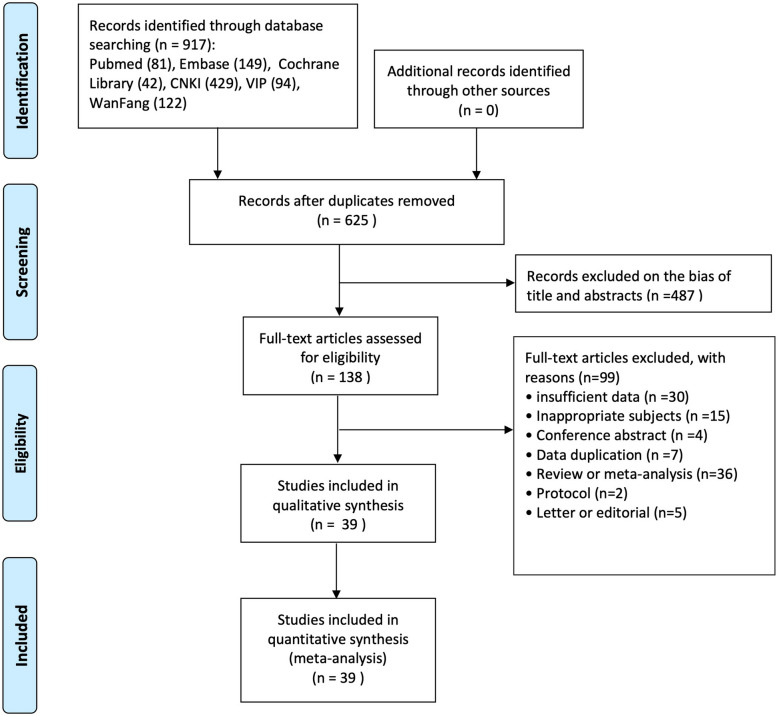
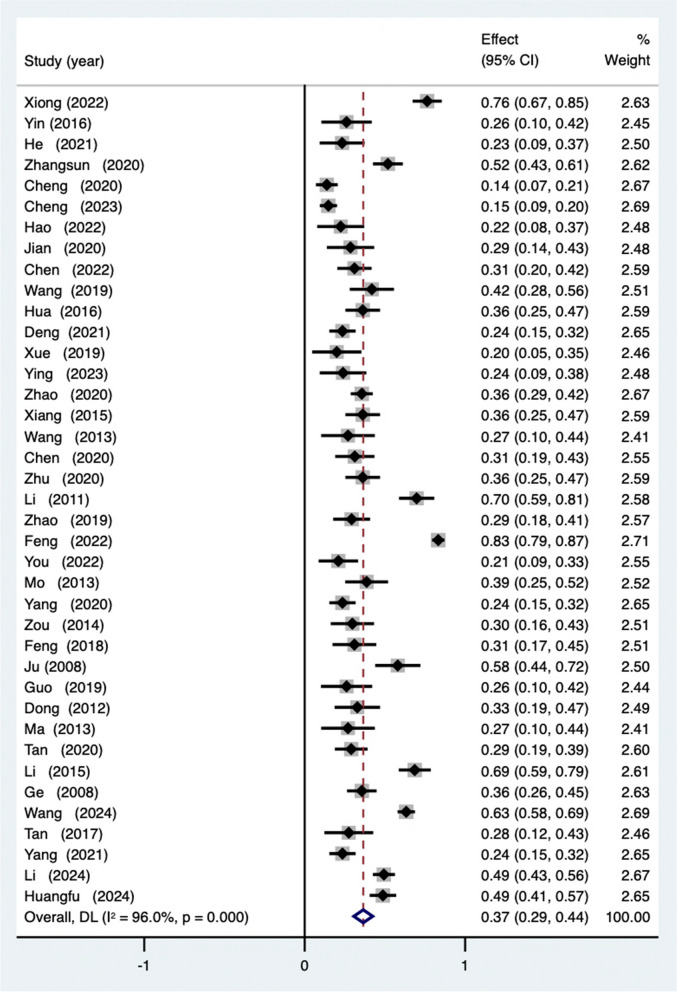
Results: Thirty-nine studies encompassing 9796 participants were analyzed. The pooled prevalence of depression was 37% (95% CI, 29%-44%), with substantial heterogeneity (I2 = 96%, p < 0.001). In subgroup analysis, the prevalence of depression among women with PCOS in West, Central, East, and Northeast China was 37%, 37%, 38%, and 25%, respectively. The prevalence of depression among women with PCOS surveyed before and after 2015 was 40% and 35%, respectively. The prevalence of depression among women with PCOS aged < 26 and > / = 26 years were 42% and 33%, respectively. The prevalence of depression among women with PCOS that participants' BMI < 24 and > / = 24 kg/m2 were 38% and 34%, respectively. The prevalence of depression among women with PCOS that used Self-rating Depression Scale (SDS), Patient Health Questionnaire-9 (PHQ-9), Beck Depression Inventory (BDI), and Hospital Anxiety and Depression Scale (HADS) were 40%, 34%, 31%, and 24%, respectively. Sensitivity analysis and meta-regression confirmed the stability of the findings. Evidence of publication bias was detected.
Conclusions: The high prevalence of depression among women with PCOS in China underscores the need for integrated screening and management. The results of this meta-analysis show high heterogeneity and indicate publication bias, which reduces the generalizability of the findings. Future research should address heterogeneity and enhance the applicability of results.
Keywords: China; Depression; Polycystic ovary syndrome; Prevalence; Systematic review.
© 2024. The Author(s).
Conflict of interest statement
Declarations. Ethics approval and consent to participate: Not applicable. Consent for publication: Not applicable. Competing interest: The authors declare no competing interests.
Figures
References
-
- Azziz R, Carmina E, Chen Z, Dunaif A, Laven JS, Legro RS, et al. Polycystic ovary syndrome. Nat Rev Dis Primers. 2016;2:16057. - PubMed
-
- Lizneva D, Suturina L, Walker W, Brakta S, Gavrilova-Jordan L, Azziz R. Criteria, prevalence, and phenotypes of polycystic ovary syndrome. Fertil Steril. 2016;106(1):6–15. - PubMed
-
- Copp T, Muscat DM, Hersch J, McCaffery KJ, Doust J, Dokras A, et al. The challenges with managing polycystic ovary syndrome: A qualitative study of women’s and clinicians’ experiences. Patient Educ Couns. 2022;105(3):719–25. - PubMed
-
- Li R, Zhang Q, Yang D, Li S, Lu S, Wu X, et al. Prevalence of polycystic ovary syndrome in women in China: a large community-based study. Hum Reprod. 2013;28(9):2562–9. - PubMed
Publication types
MeSH terms
Grants and funding
LinkOut - more resources
Full Text Sources
Medical
