


National and Regional Molecular Epidemiology of HIV-1 - China, 2004-2023
- PMID: 39698329
- PMCID: PMC11649986
- DOI: 10.46234/ccdcw2024.252
National and Regional Molecular Epidemiology of HIV-1 - China, 2004-2023
Abstract
Introduction: The genetic diversity of human immunodeficiency virus (HIV)-1 subtypes significantly influences the effectiveness of diagnostic tools, antiretroviral therapy (ART), and vaccine development. This study aimed to assess the regional and national prevalence of HIV-1 subtypes and recombinants in China between 2004 and 2023 using pol gene segment analysis.
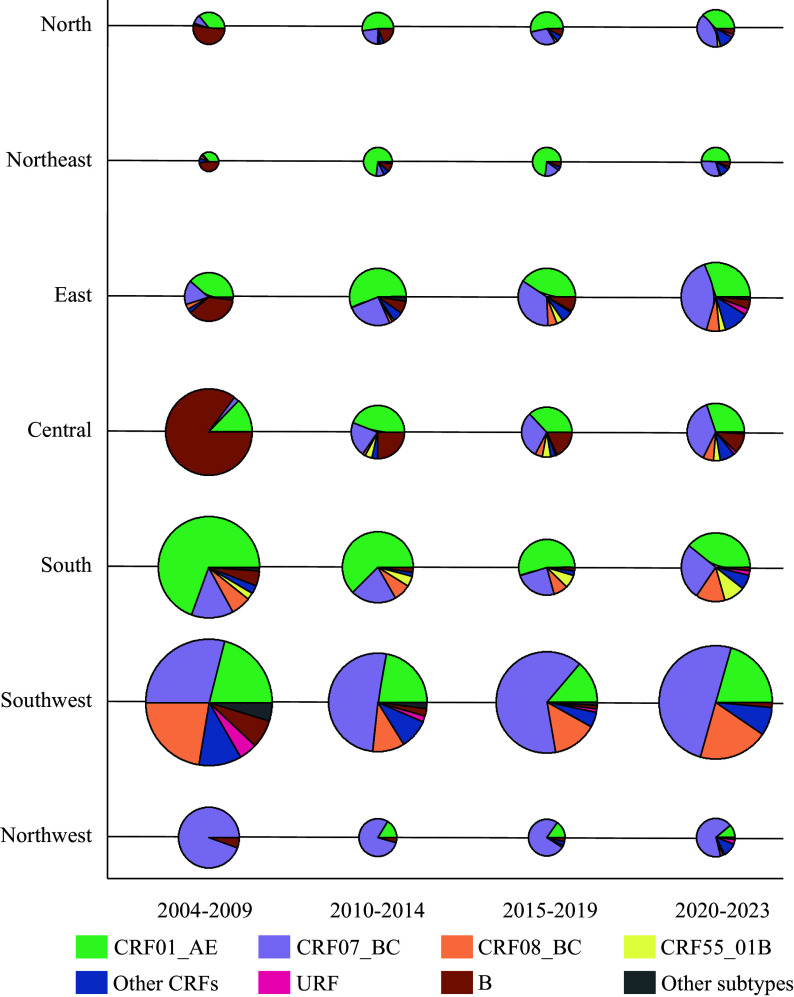
Methods: We analyzed annual HIV/AIDS reports and pol gene segment sequences from all Chinese provinces between 2004 and 2023. The distribution of HIV-1 subtypes and recombinants across China and within its regions was estimated by multiplying the proportion of each subtype, circulating recombinant form (CRF), and unique recombinant form (URF) in each province by the corresponding number of reported HIV infections.
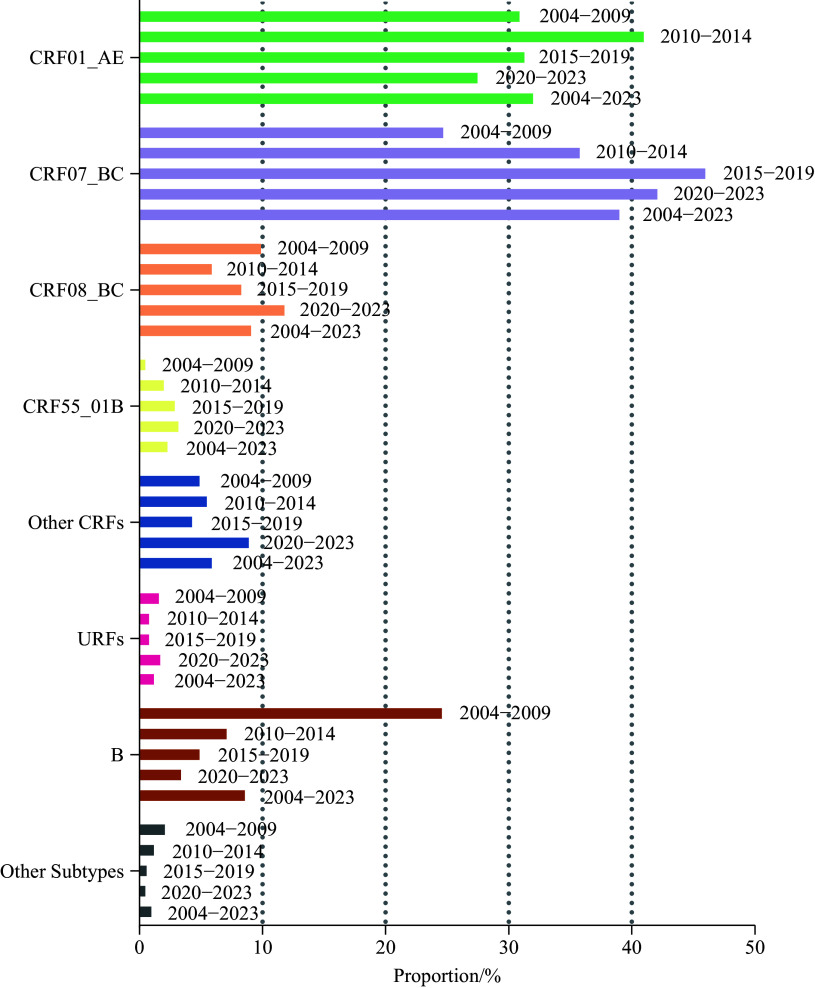
Results: Analysis of 94,476 pol gene segments from 31 provinces revealed that CRF01_AE strain accounted for 32.1% of HIV-1 infections during 2004-2023, while CRF07_BC lineage represented 39.1%. CRF08_BC strain contributed 9.2%, followed by subtype B (8.7%) and CRF55_01B (2.4%). Other CRFs collectively comprised 6.0% of infections, while URFs and other subtypes accounted for 1.3% and 1.1%, respectively.
Conclusions: The study revealed significant regional variations and temporal changes in the proportions of HIV-1 CRFs, subtypes, and URFs across China, emphasizing the importance of continued surveillance of strain distribution patterns.
Keywords: HIV-1; distributions; subtype; surveillance.
Copyright © 2024 by Chinese Center for Disease Control and Prevention.
Conflict of interest statement
No conflicts of interest.
Figures
References
-
-
UNAIDS. Global AIDS update 2024,https://www.unaids.org, [2024].
-
-
- Gregson J, Tang M, Ndembi N, Hamers RL, Rhee SY, Marconi VC, et al Global epidemiology of drug resistance after failure of WHO recommended first-line regimens for adult HIV-1 infection: a multicentre retrospective cohort study. Lancet Infect Dis. 2016;16(5):565–75. doi: 10.1016/S1473-3099(15)00536-8. - DOI - PMC - PubMed
LinkOut - more resources
Full Text Sources