


Health-Related Quality of Life due to malaria in the Brazilian Amazon using EQ-5D-3L
- PMID: 39700260
- PMCID: PMC11698565
- DOI: 10.1371/journal.pntd.0012739
Health-Related Quality of Life due to malaria in the Brazilian Amazon using EQ-5D-3L
Abstract
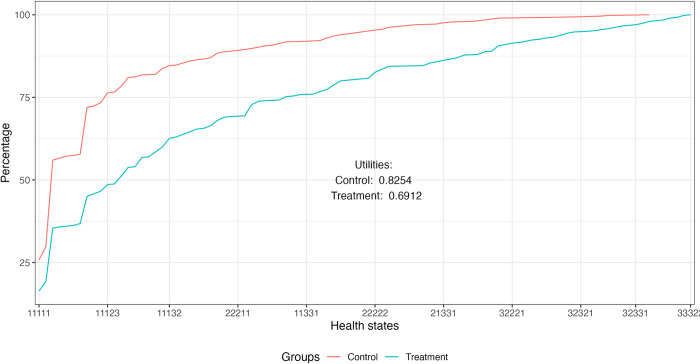
Malaria is a mosquito-borne infectious disease caused by protozoa of the genus Plasmodium. Despite of the progress in malaria control in the last decades, malaria remains a major public health problem, contributing to increased morbidity and mortality in tropical and subtropical countries. Among American countries, Bolivia, Venezuela, and Brazil account for 73% of the cases. In Brazil, the majority of malaria cases is concentrated in Amazon region. This study estimated health-related quality of life (HRQoL) losses due to malaria in endemic areas of the Brazilian Amazon using the EQ-5D-3L instrument. We collected data from a convenience sample of 1,179 individuals aged 18 years or older. To measure the HRQoL loss, we matched individuals from the treatment group (with recent malaria) to those from the control group (without recent malaria) using Propensity Score Matching (PSM) and compared the difference in mean health utility between the groups. The results show a significant loss of HRQoL due to malaria. The mean utility was 0.69 and 0.83 for the treatment and control groups, respectively, representing a loss of quality of life of approximately 16.3% for individuals with recent malaria episodes. These findings underscore the importance of effective malaria prevention and treatment strategies, especially in areas where adverse socioeconomic conditions and a challenging epidemiological context exacerbate the impact of the disease. Continued investment in malaria control programs and improved access to health services are essential to mitigate the negative impact of this disease on the quality of life of affected populations.
Copyright: © 2024 Andrade et al. This is an open access article distributed under the terms of the Creative Commons Attribution License, which permits unrestricted use, distribution, and reproduction in any medium, provided the original author and source are credited.
Conflict of interest statement
The authors have declared that no competing interests exist.
Figures

References
-
- World Health Organization. World malaria report 2018. Geneva: World Health Organization; 2018.
-
- World malaria report 2023. Geneva: World Health Organization, 2023.
-
- Dia da Malária nas Américas—um panorama da malária no Brasil em 2022 e no primeiro semestre de 2023. Brasília: 2024.
-
- Ueno TMRL Lima LNGC, Sardinha DM Rodrigues YC, Souza HUSd Teixeira PR, et al. Socio-epidemiological features and spatial distribution of malaria in an area under mining activity in the Brazilian Amazon region. International Journal of Environmental Research and Public Health. 2021:10384. doi: 10.3390/ijerph181910384 - DOI - PMC - PubMed
MeSH terms
LinkOut - more resources
Full Text Sources
Medical
Miscellaneous
