. 2025 Jan 2;112(1):59-74.
doi: 10.1016/j.ajhg.2024.11.007. Epub 2024 Dec 18.

Bi-allelic variants in DAP3 result in reduced assembly of the mitoribosomal small subunit with altered apoptosis and a Perrault-syndrome-spectrum phenotype

Affiliations

Bi-allelic variants in DAP3 result in reduced assembly of the mitoribosomal small subunit with altered apoptosis and a Perrault-syndrome-spectrum phenotype

Thomas B Smith et al. Am J Hum Genet. .

Abstract

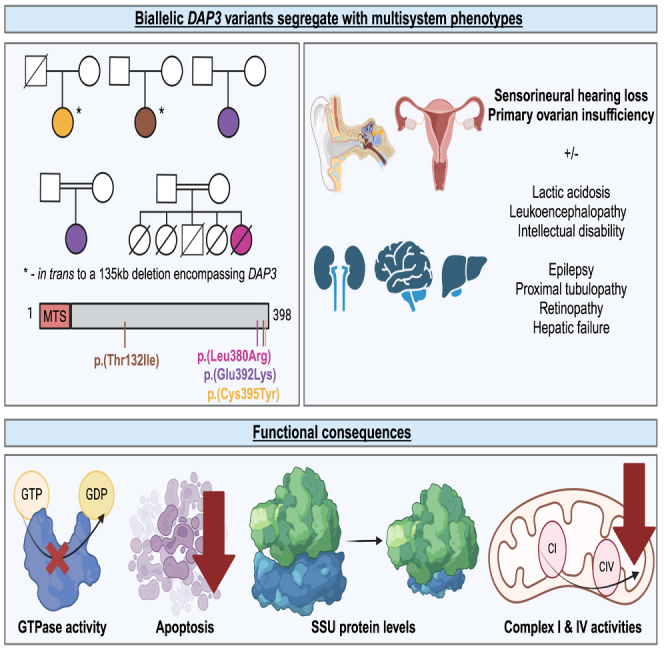
The mitochondrial ribosome (mitoribosome) synthesizes 13 protein subunits of the oxidative phosphorylation system encoded by the mitochondrial genome. The mitoribosome is composed of 12S rRNA, 16S rRNA, and 82 mitoribosomal proteins encoded by nuclear genes. To date, variants in 12 genes encoding mitoribosomal proteins are associated with rare monogenic disorders and frequently show combined oxidative phosphorylation deficiency. Here, we describe five unrelated individuals with bi-allelic variants in death-associated protein 3 (DAP3), a nuclear gene encoding mitoribosomal small subunit 29 (MRPS29), with variable clinical presentations ranging from Perrault syndrome (sensorineural hearing loss and ovarian insufficiency) to an early childhood neurometabolic phenotype. Assessment of respiratory-chain function and proteomic profiling of fibroblasts from affected individuals demonstrated reduced MRPS29 protein amounts and, consequently, decreased levels of additional protein components of the mitoribosomal small subunit, as well as an associated combined deficiency of complexes I and IV. Lentiviral transduction of fibroblasts from affected individuals with wild-type DAP3 cDNA increased DAP3 mRNA expression and partially rescued protein levels of MRPS7, MRPS9, and complex I and IV subunits, demonstrating the pathogenicity of the DAP3 variants. Protein modeling suggested that DAP3 disease-associated missense variants can impact ADP binding, and in vitro assays demonstrated that DAP3 variants can consequently reduce both intrinsic and extrinsic apoptotic sensitivity, DAP3 thermal stability, and DAP3 GTPase activity. Our study presents genetic and functional evidence that bi-allelic variants in DAP3 result in a multisystem disorder of combined oxidative phosphorylation deficiency with pleiotropic presentations, consistent with mitochondrial dysfunction.

Keywords: DAP3; MRPS29; Perrault syndrome; leukodystrophy; mitochondria; mitoribosomal small subunit; mitoribosome; ovarian insufficiency; rare disease; sensorineural hearing loss.


Conflict of interest statement

Declaration of interests The authors declare no competing interests.

Figures
None
Graphical abstract
Figure 1
Figure 1
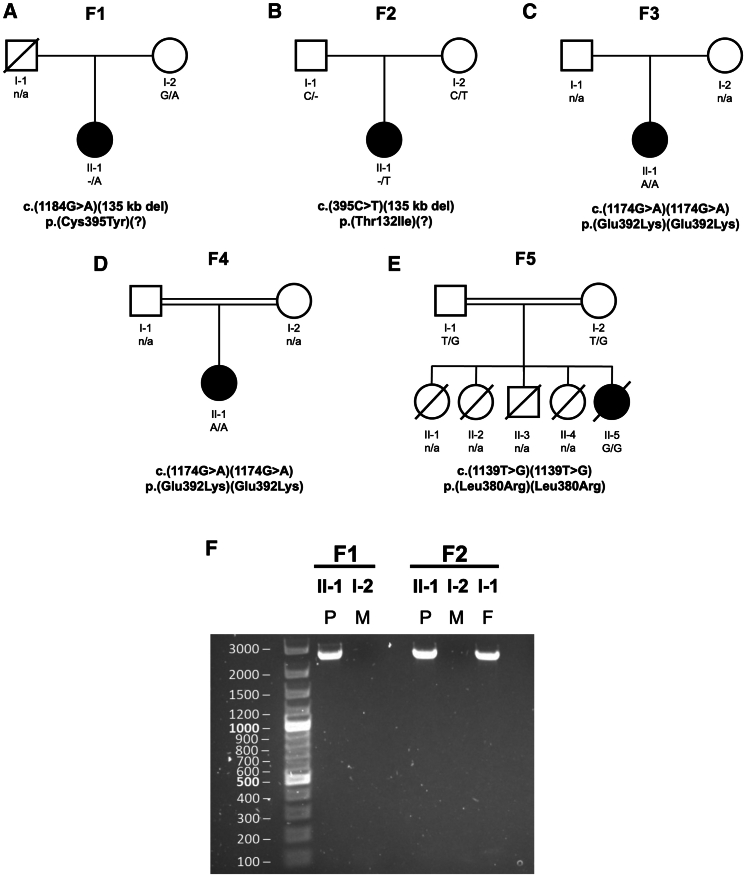
Family pedigrees and characterization of the DAP3 deletion fusion product present in F1 and F2 (A–E) Pedigrees for the five families; known segregation and variant details are listed. All variants are annotated against the DAP3 reference sequence GenBank: NM_004632.4. (F) PCR analysis of F1 and F2 DNA using gel electrophoresis to detect a fusion product for the 135 kb deletion. P, proband; M, mother; F, father.
Figure 2
Figure 2
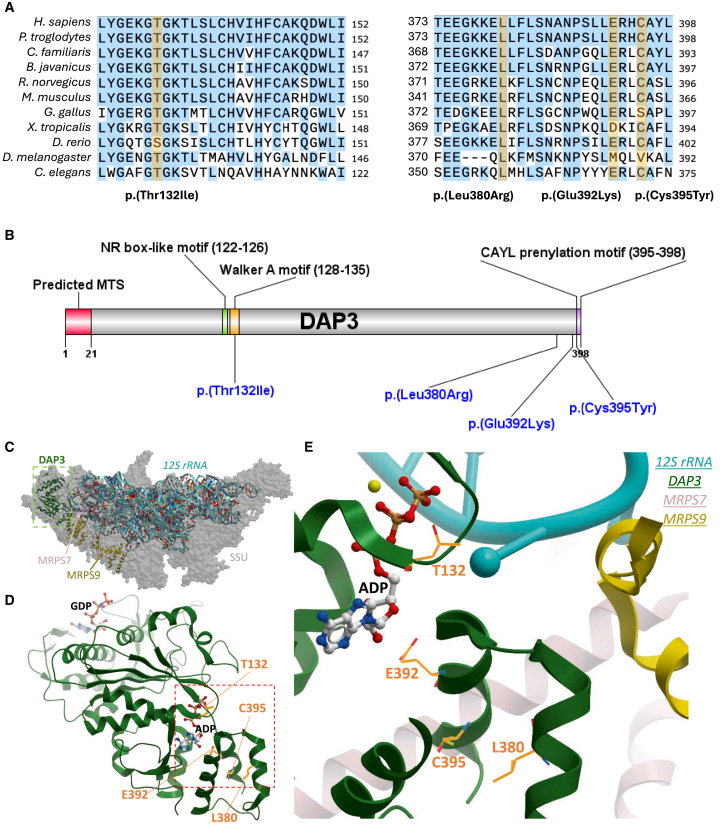
DAP3 variant residue-conservation status, variant locations, and structural context (A) Evolutionary conservation of affected DAP3 residues; a broad selection of species are highlighted. Variant amino acids highlighted in black, and yellow signifies matching to the associated human residue. Sequences were aligned via Jalview 2.11.2.7. The DAP3 reference sequences used for these species are listed accordingly: H. sapiens (GenBank: NP_001186778.1); P. troglodytes (GenBank: XP_016802675.2); C. familiaris (GenBank: XP_038527847.1); B. taurus (GenBank: NP_001106765.1); R. norvegicus (GenBank: NP_001011950.2); M. musculus (GenBank: NP_001158005.1); G. gallus (GenBank: XP_040546712.1); X. tropicalis (GenBank: NP_001016002.1); D. rerio (GenBank: NP_001092207.1); D. melanogaster (GenBank: NP_523811.1); and C. elegans (GenBank: AAD20727.1). (B) Overview of DAP3 variant locations, with additional regions or domains of interest for additional context. MTS, mitochondrial targeting sequence; NR, nuclear receptor; CAYL, cysteine alanine tyrosine leucine (final four residues at the DAP3 C terminus). (C) Cryo-EM structure of human mitochondrial ribosome small subunit at 2.40 Å resolution (PDB: 7P2E), highlighting DAP3 (green), MRPS7 (rose), and MRPS9 (yellow) subunits. (D) Cartoon representation of DAP3 bound with GDP and ADP. (E) ADP binding site of DAP3 in proximity to the four sites of mutation (orange sticks).
Figure 3
Figure 3
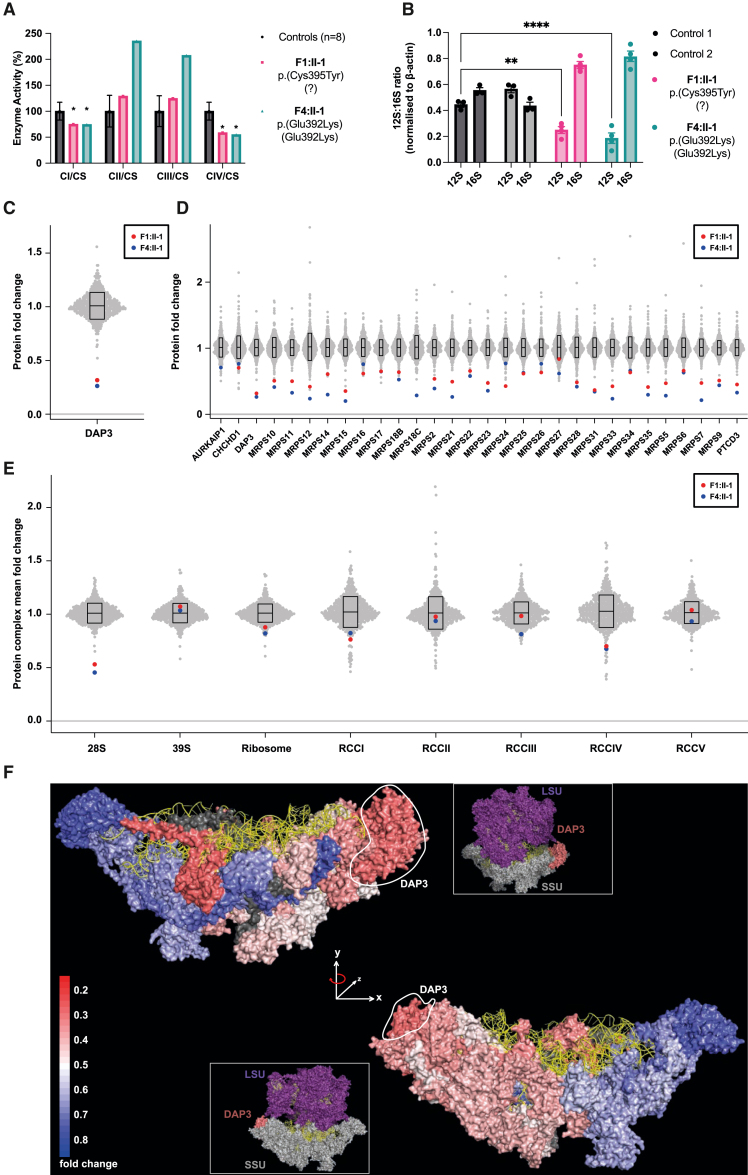
Functional and proteomic analyses of F1 and F4 proband fibroblasts reveal DAP3 variants induce mitochondrial respiratory chain defects and decreased expression levels of small mitoribosomal subunit and OXPHOS components (A) Mitochondrial respiratory chain enzyme activities in control (black), F1:II-1 (pink), and F4:II-1 (blue) fibroblast samples. Mean enzyme activities of three protein concentrations in patient fibroblasts are compared to mean activity of three protein concentrations in control fibroblasts (n = 8), which are set at 100%. Error bars represent standard deviation between the controls. indicates enzyme activity is beyond control standard deviation values. CS, citrate synthase. (B) MT-RNR1 (12S) and MT-RNR2 (16S) expression levels in fibroblast cDNA. Data are expressed as a ratio using relative quantification (RQ) values. Error bars represent the SEM. n = 3–4, ∗∗p < 0.01 and ∗∗∗∗p < 0.0001 by two-way ANOVA with Tukey’s multiple-comparisons test; 12S RQ values of controls are compared to those of affected individuals. (C) DAP3 protein levels in affected individual fibroblasts expressed as relative n-fold change compared to the mean of 512 fibroblast samples. (D) Relative n-fold change of levels of all components of the mitoribosomal SSU in affected individual fibroblasts compared to 512 controls. (E) Grouped mean n-fold changes in the amount of all proteins comprising mitoribosome subunits, whole mitoribosome, and OXPHOS components are compared to the mean n-fold changes calculated on the basis of 512 quantitative proteome fibroblast studies. On average, we detected most of the subunits of the mitochondrial ribosome (98% of 28S and 95% of 39S) and the respiratory-chain complexes (86% of complex I, 50% of complex II, 80% of complex III, 57% of complex IV, and 81% of complex V). (F) Cryo-EM structure (PDB: 6VLZ) of mitoribosomal SSU with individual subunits colored according to their mean n-fold changes in abundance (of individuals F1:II-1 and F4:II-1) compared to the mean of 512 controls. Colors range from weakly reduced (blue) to strongly reduced (red), and two subunits (MRPS18C and MRPS38) are shown in dark gray because no mean n-fold changes could be calculated. 12S ribosomal RNA is colored in yellow, DAP3 is marked by a circle, and the small inset shows the relative position within the 55S ribosome.
Figure 4
Figure 4
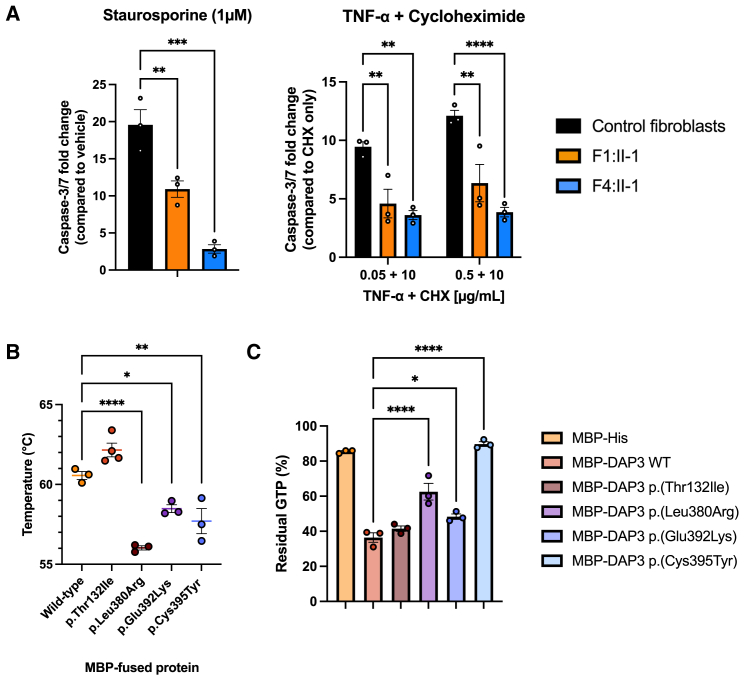
Functional analyses of fibroblasts from affected individuals and recombinant DAP3 protein establish that DAP3 variants can diminish apoptotic sensitivity and destabilize DAP3 protein structure, impacting GTPase activity (A) Assessment of caspase-3/7 release after stimulation of intrinsic and extrinsic apoptotic pathways. Fibroblasts from affected indivudals were challenged in duplicate with staurosporine for 4.5 h or TNF-α + cycloheximide (CHX) for 24 h before the addition of assay reagent. Data are expressed as the n-fold change in luminescence signal in comparison to that in DMSO-treated or CHX-treated fibroblasts. Error bars represent SEM. N = 3, ∗∗p < 0.01, ∗∗∗p < 0.001, and ∗∗∗∗p < 0.0001 according to a one-way ANOVA with Dunnett’s multiple-comparisons test (staurosporine) or two-way ANOVA with Dunnett’s multiple-comparisons test (TNF-α); fibroblasts from affected individuals are compared to control fibroblasts. (B) Thermal stability of recombinant wild-type and variant MBP-DAP3 protein. Data points represent average Tm of triplicate reactions. Error bars represent SEM. N = 3–4, p < 0.05, ∗∗p < 0.01, and ∗∗∗∗p < 0.0001, according to a one-way ANOVA with Dunnett’s multiple-comparisons test comparing wild type to variants. (C) GTPase activity of recombinant wild-type and variant MBP-DAP3 protein. Data are presented as mean luminescence produced by residual GTP, and error bars represent SEM. N = 3, p < 0.05, ∗∗∗∗p < 0.0001 according to a one-way ANOVA with Dunnett’s multiple-comparisons test comparing wild-type protein activity to that of variants.
Figure 5
Figure 5
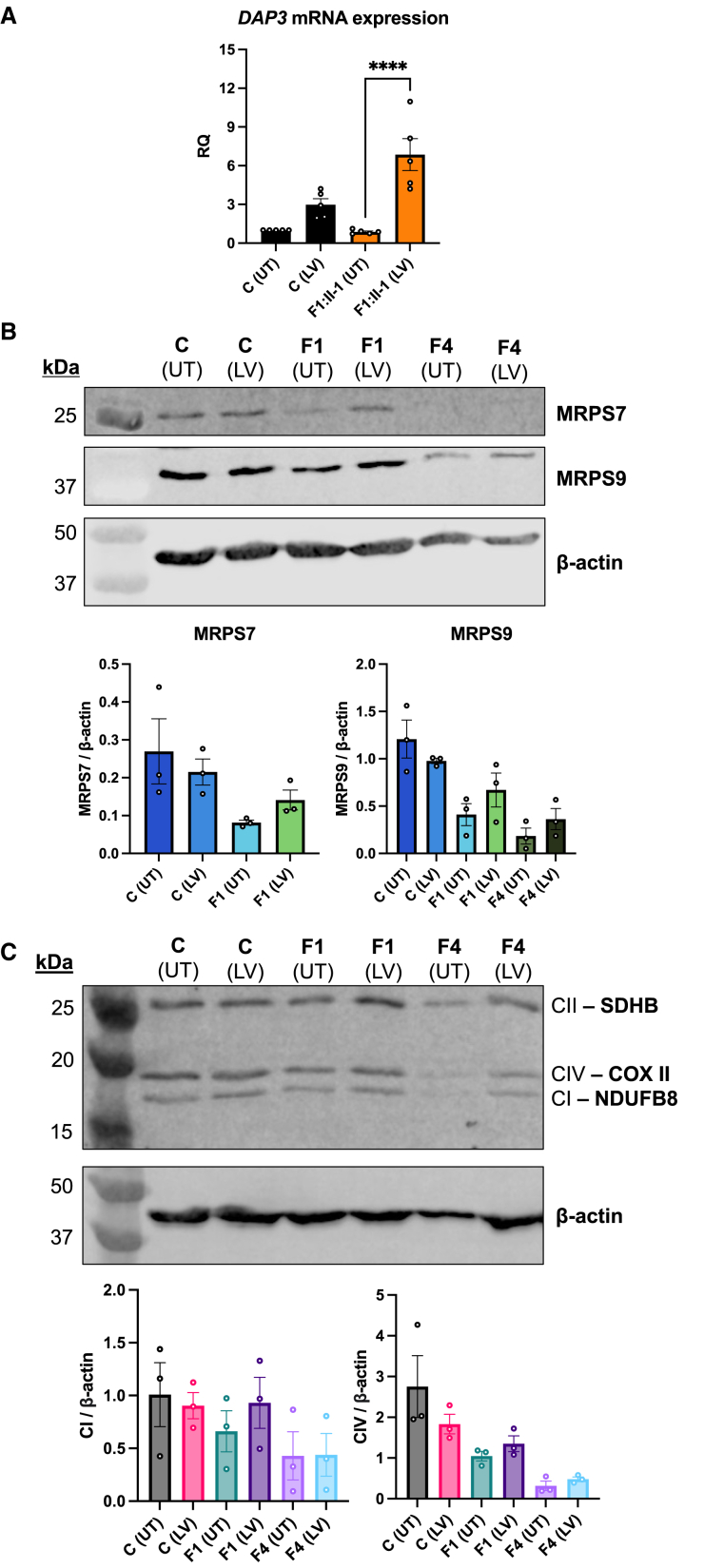
Lentiviral transduction of wild-type DAP3 increases protein levels of MRPS7, MRPS9, and OXPHOS components in F1:II-1 and F4:II-1 fibroblasts (A) Expression of DAP3 mRNA in control fibroblasts and fibroblasts from F1:II-1 after lentiviral transduction (LV) of DAP3 cDNA for 72 h or untransduced (UT). Each data point represents an averaged RQ value from triplicate reactions using cDNA from independent transductions. Error bars represent SEM. N = 5, ∗∗∗∗p < 0.0001, one-way ANOVA with Tukey’s multiple-comparisons test. (B) Protein levels of MRPS7 and MRPS9 in control fibroblasts and fibroblasts from F1:II-1 and F4:II-1 after LV of DAP3 cDNA for 72 h. β-actin was used as a loading control and for densitometric analysis. Blots are representative of results from three independent biological repeats. MRPS7 levels were unable to be quantified in fibroblasts from F4:II-1. (C) Protein levels of SDHB, COX II, and NDUFB8 in control fibroblasts and fibroblasts from F1:II-1 and F4:II-1 after LV of DAP3 cDNA for 72 h. Blots are representative of results from three independent biological repeats.

Update of

References

    1. Amunts A., Brown A., Toots J., Scheres S.H.W., Ramakrishnan V. The structure of the human mitochondrial ribosome. Science. 2015;348:95–98. doi: 10.1126/science.aaa1193. - DOI - PMC - PubMed
    1. Greber B.J., Bieri P., Leibundgut M., Leitner A., Aebersold R., Boehringer D., Ban N. Ribosome. The complete structure of the 55S mammalian mitochondrial ribosome. Science. 2015;348:303–308. doi: 10.1126/science.aaa3872. - DOI - PubMed
    1. Itoh Y., Andréll J., Choi A., Richter U., Maiti P., Best R.B., Barrientos A., Battersby B.J., Amunts A. Mechanism of membrane-tethered mitochondrial protein synthesis. Science. 2021;371:846–849. doi: 10.1126/science.abe0763. - DOI - PMC - PubMed
    1. Kummer E., Leibundgut M., Rackham O., Lee R.G., Boehringer D., Filipovska A., Ban N. Unique features of mammalian mitochondrial translation initiation revealed by cryo-EM. Nature. 2018;560:263–267. doi: 10.1038/s41586-018-0373-y. - DOI - PubMed
    1. Bogenhagen D.F., Ostermeyer-Fay A.G., Haley J.D., Garcia-Diaz M. Kinetics and Mechanism of Mammalian Mitochondrial Ribosome Assembly. Cell Rep. 2018;22:1935–1944. doi: 10.1016/j.celrep.2018.01.066. - DOI - PMC - PubMed

MeSH terms

LinkOut - more resources