


Optimizing post-surgical outcomes: unveiling the importance of patient-reported outcomes with insights from the schulthess local shoulder arthroplasty registry
- PMID: 39702180
- PMCID: PMC11660693
- DOI: 10.1186/s12891-024-08117-2
Optimizing post-surgical outcomes: unveiling the importance of patient-reported outcomes with insights from the schulthess local shoulder arthroplasty registry
Erratum in
-
Correction: Optimizing post-surgical outcomes: unveiling the importance of patient-reported outcomes with insights from the schulthess local shoulder arthroplasty registry.BMC Musculoskelet Disord. 2025 Jul 2;26(1):587. doi: 10.1186/s12891-025-08894-4. BMC Musculoskelet Disord. 2025. PMID: 40604624 Free PMC article. No abstract available.
Abstract
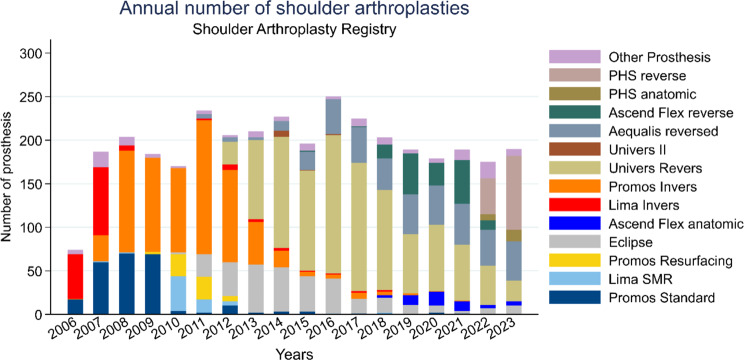
Objective: The establishment of clinical registries is essential for the comprehensive evaluation of surgical outcomes. In 2006, the Schulthess Shoulder Arthroplasty Registry (SAR) was launched to systematically assess safety, implant longevity, functional outcomes, pain levels, quality of life, and patient satisfaction in individuals undergoing shoulder arthroplasty. This paper aims to outline the registry data and demonstrate how it is leveraged to improve clinical outcomes. Additionally, we provide guidance for organizations currently collecting or planning to collect similar data.
Participants: Our SAR systematically records adult patients' data undergoing either anatomic or reverse shoulder joint replacement at the Schulthess Clinic. Both primary and revision surgeries are comprehensively documented within the registry.
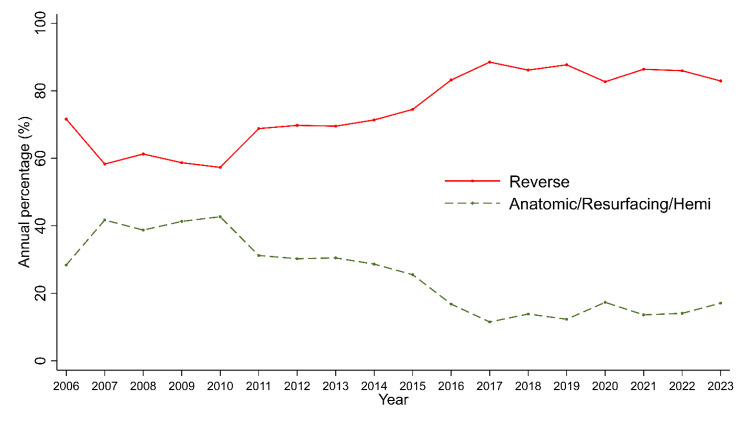
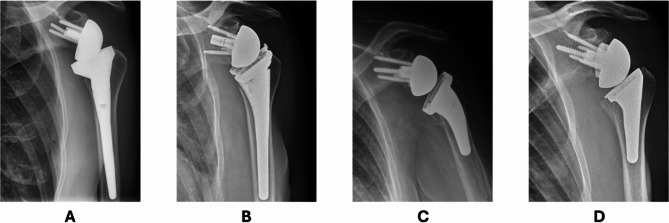
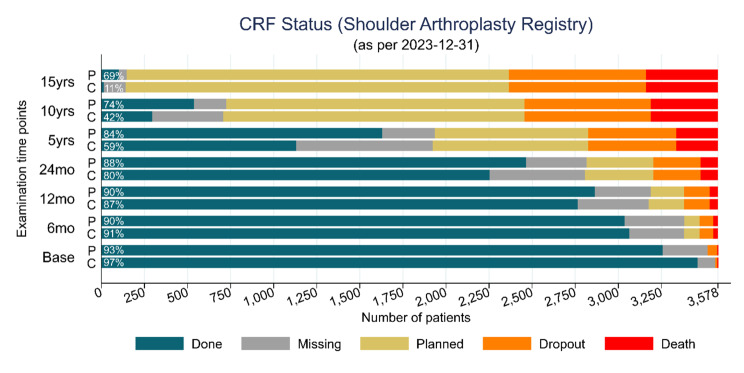
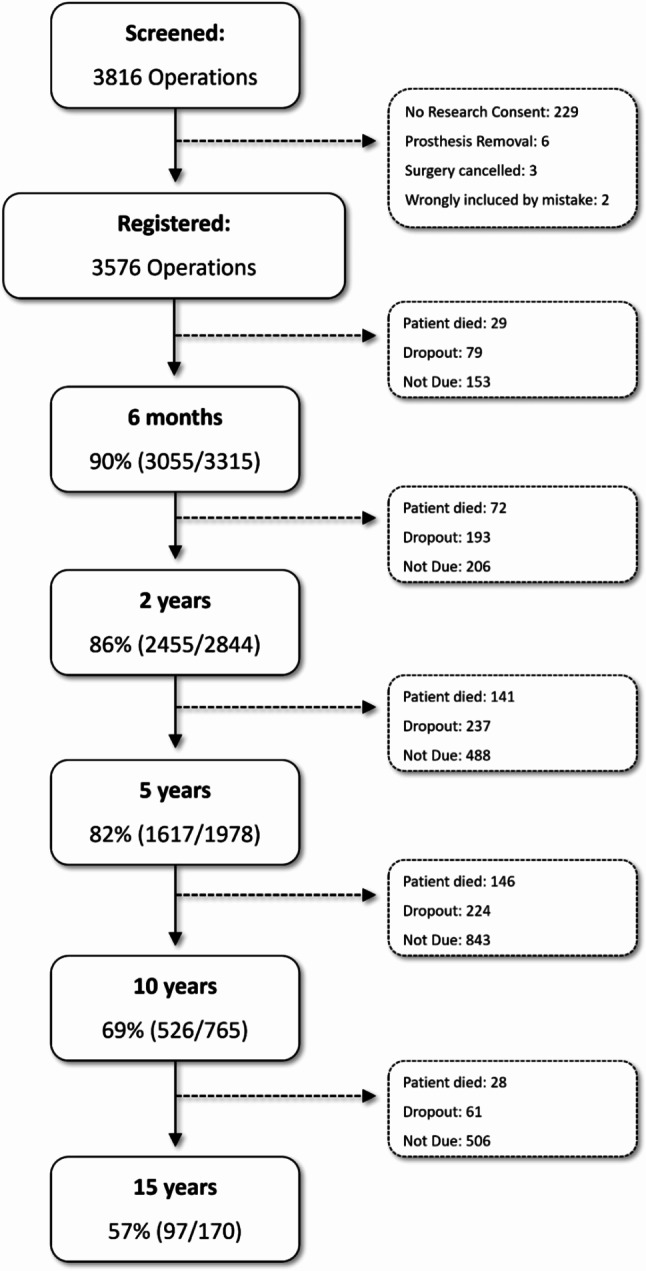
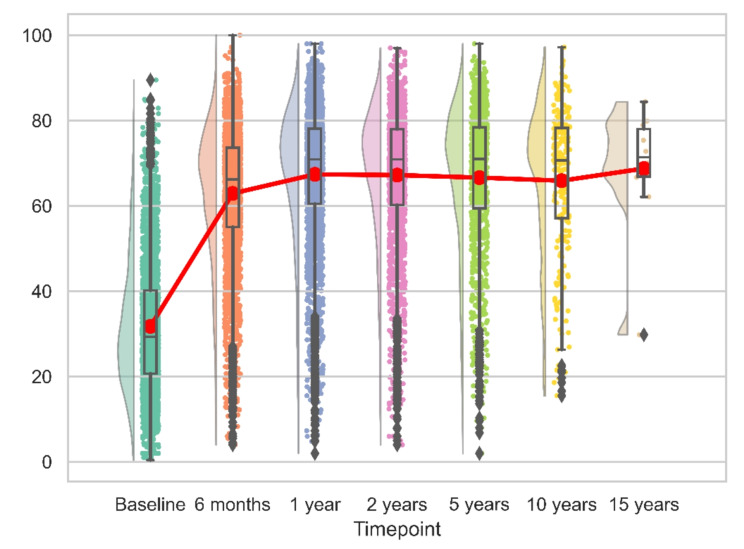
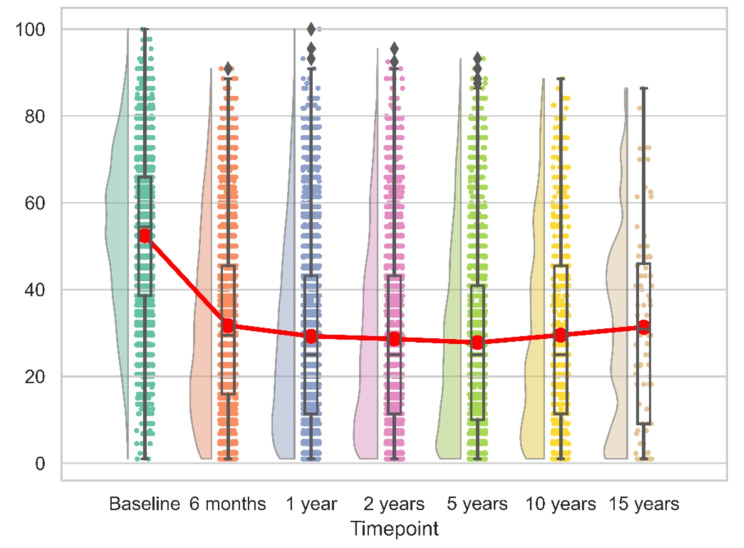
Current outcomes: From March 2006 to December 2023, the SAR included 98% of eligible operations. A total of 2301 patients were recruited, accounting for 3576 operations and 14,487 person-years of follow-up. At baseline, the mean age was 71 (range: 20-95), with 65% being female patients. The most prevalent indication was cuff tear arthropathy (46%), and the mean preoperative Constant Score was (31 ± 15). Notably, functional recovery peaked at 12 months postoperatively, displaying no clinically significant deterioration during the initial ten follow-up years in the overall cohort (including both primary arthroplasty and revisions). The registry has been instrumental in addressing various clinical and methodological inquiries, focusing particularly on comparing different implant configurations and surgical techniques to optimize functional recovery. Additionally, SAR data played a pivotal role in substantiating the clinical significance and reliability of radiological monitoring for cortical bone resorption, scapular notching, and glenoid component loosening.
Keywords: Clinical registry; Functional outcomes; Implant longevity; Patient-reported outcomes; Schulthess Shoulder Arthroplasty Registry (SAR); Shoulder arthroplasty; Shoulder joint replacement.
© 2024. The Author(s).
Conflict of interest statement
Declarations. Ethics approval and consent to participate: The study received approval by the Ethics Committee of Zurich (Kantonale Ethikkommission [KEK], Stampfenbachstrasse 121, CH-8090 Zurich, Switzerland; KEK-ZH-Nr. 2014–0483) and is performed in accordance with the 1964 Helsinki declaration and its later amendments or comparable ethical standards. All patients provided written informed consent prior to patient enrolment / data collection and use of their data for research purposes. Consent for publication: Not applicable. Competing interests: We declare the following financial interests/personal relationships, which may be considered as potential competing interests: M.S. and F.F. report personal fees from Stryker, outside the submitted work. P.M. reports personal fees from Arthrex, outside the submitted work. A.L. and T.S., their immediate family, or any research foundation with which they are affiliated did not receive any financial payments or other benefits from any commercial entity related to the subject of this article.
Figures
References
-
- Constant CR, Murley AH. A clinical method of functional assessment of the shoulder. Clin Orthop Relat Res. 1987(214):160–4. - PubMed
MeSH terms
LinkOut - more resources
Full Text Sources
Miscellaneous
