


Association Between Neutrophil Percentage-to-Albumin Ratio and Periodontitis: A Cross-Sectional Study
- PMID: 39710554
- PMCID: PMC11976586
- DOI: 10.1016/j.identj.2024.10.022
Association Between Neutrophil Percentage-to-Albumin Ratio and Periodontitis: A Cross-Sectional Study
Abstract
Introduction and aims: Neutrophil percentage-to-albumin ratio (NPAR) is a novel biomarker of systemic inflammation. The aim of this study was to explore the relationship between NPAR and periodontitis.
Methods: Data from the National Health and Nutritional Examination Survey (NHANES) between 2009 and 2014 (N = 10,128) were utilized in this cross-sectional study. Periodontitis categories were defined according to the Centres for Disease Control and Prevention and American Academy of Periodontology (CDC/AAP) classification. The NPAR was calculated by dividing the neutrophil percentage by serum albumin. Covariates included age, sex, race, education level, annual household income, marital status, smoking status, BMI, recreational activity, work activity, diabetes mellitus, hypertension, and cardiovascular disease. Weighted logistic regression analysis was conducted to investigate the linkage between NPAR and moderate/severe periodontitis, and weighted linear regression analysis was performed to explore the relationship of NPAR with mean attachment loss (AL) and mean probing pocket depth (PPD).
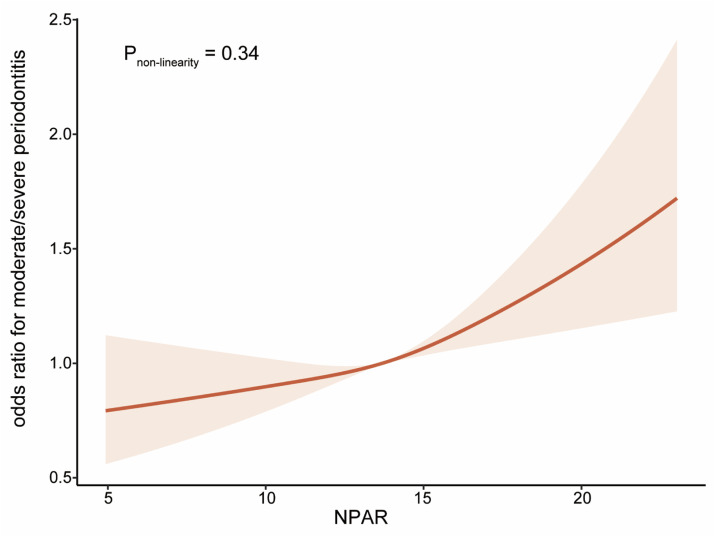
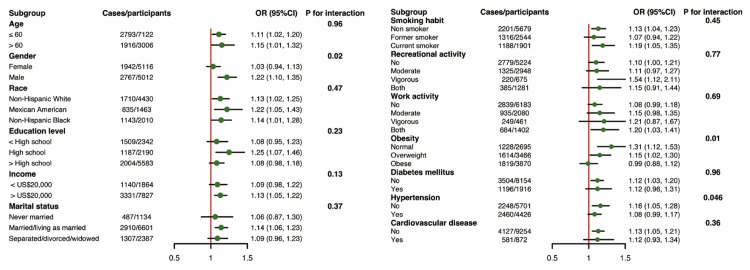
Results: Our analysis revealed a positive linear relationship between NPAR and periodontitis. Specifically, we found that the risk of moderate/severe periodontitis increased by 12% for each standard deviation increase in NPAR. Individuals in the highest tertile of NPAR were 28% more likely to have periodontitis compared to those in the lowest tertile (ORtertile3vs1 = 1.28, 95% CI: 1.10-1.49). These findings were consistent across different subgroups analysed. Furthermore, our study demonstrated that NPAR was also positively correlated with mean AL and PPD, which are key indicators of periodontal health.
Conclusions: Our results suggest that NPAR is significantly linked to poor periodontal health. However, owing to the cross-section design of this study, additional longitudinal studies are necessary to further enhance our comprehension of the impact of NPAR on periodontal status.
Clinical relevance: Elevated neutrophil counts and low albumin levels correlate with moderate/severe periodontitis. Monitoring these markers may aid in assessing periodontitis risk.
Keywords: Epidemiology; Neutrophil percentage-to-albumin ratio; Periodontitis; Risk factor(s).
Copyright © 2024 The Authors. Published by Elsevier Inc. All rights reserved.
Conflict of interest statement
Conflict of interest The authors declare no conflict of interest.
Figures

References
-
- Chen MX, Zhong YJ, Dong QQ, Wong HM, Wen YF. Global, regional, and national burden of severe periodontitis, 1990-2019: an analysis of the Global Burden of Disease Study 2019. J Clin Periodontol. 2021;48:1165–1188. - PubMed
-
- Cao R, Li C, Geng F, Pan Y. J-shaped association between systemic immune-inflammation index and periodontitis: Results from NHANES 2009-2014. J Periodontol. 2024;95:397–406. - PubMed
MeSH terms
Substances
LinkOut - more resources
Full Text Sources
Miscellaneous
