


Enteral nutrition support in patients with cancer: association of short-term prognosis and medical costs with inflammation
- PMID: 39710757
- PMCID: PMC11663818
- DOI: 10.1007/s00520-024-09085-y
Enteral nutrition support in patients with cancer: association of short-term prognosis and medical costs with inflammation
Abstract
Background: Enteral nutrition (EN) is commonly used for nutritional support in patients with cancer. Whether inflammation, one of the driving factors of malnutrition and cancer, affects the association between EN and short-term prognosis and medical costs in patients with cancer remains unclear. We aimed to investigate the association between EN and short-term prognosis of patients with cancer and the effect of inflammation on EN-associated medical costs.
Methods: This multicentre prospective cohort study evaluated patients with pathologically confirmed solid tumours. After admission, all patients who received EN, including oral or tube feeding, were assigned to the EN group. The log-rank test was used to identify the optimal cutoff values for inflammatory markers. Cox regression analysis was used to analyse the associations among EN, inflammation, and prognosis. Propensity score matching was used to balance biases between the EN and non-EN groups and validate the stability of the results.
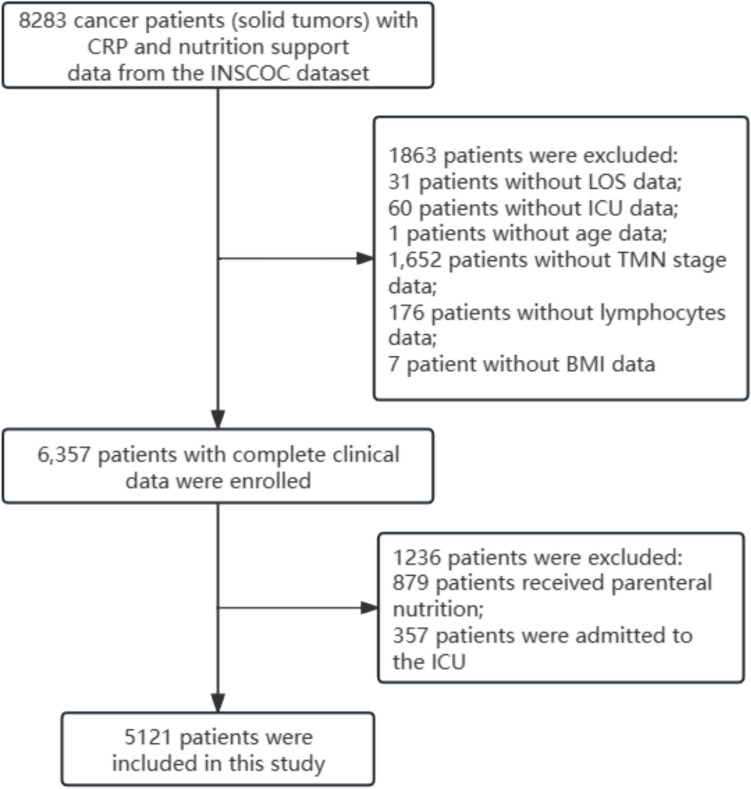
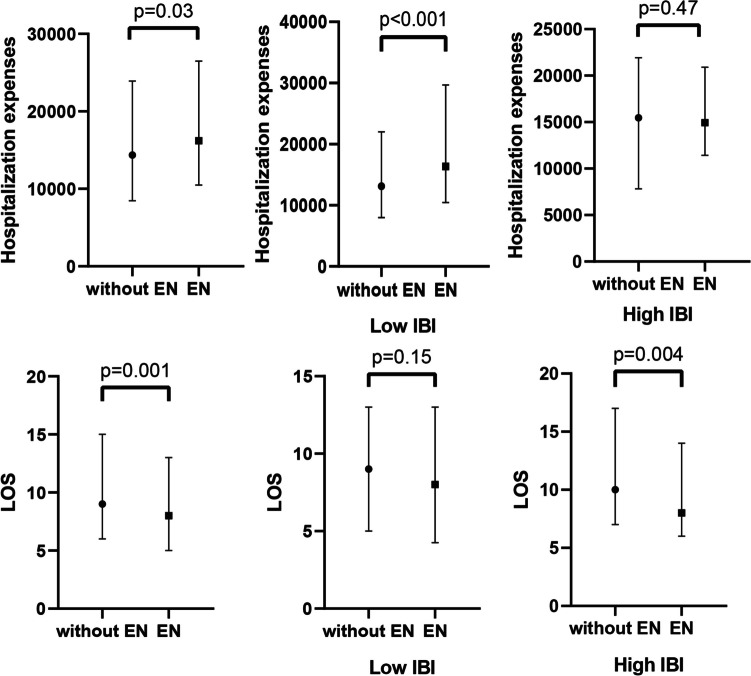
Results: A total of 5121 patients were included, with 2965 (57.90%) men and an average age of 59.06 (11.30) years. A total of 462 patients received EN, with 390 (84.4%) receiving oral nutritional supplementation. During the 90-day follow-up, 304 patients died. In the low inflammation group, there was no association between EN and short-term prognosis (hazard ratio [HR] = 0.92, 95% confidence interval [CI] = 0.39-2.18). In the high inflammation group, EN significantly improved the short-term prognosis (HR = 0.48, 95% CI = 0.30-0.76). In patients with low inflammation (p < 0.001), EN increased hospitalisation costs (p < 0.001) without reducing length of stay (LOS) (p = 0.15). In patients with high inflammation, EN did not increase hospitalisation expenses (p = 0.47) but reduced the LOS (p = 0.004).
Conclusion: EN can improve the short-term prognosis of patients with high inflammation and reduce LOS without increasing the hospitalisation expenses. Baseline inflammation levels may serve as effective indicators for personalised and precise EN treatment.
Clinical trial registration: ChiCTR1800020329 (chictr.org.cn).
Keywords: Cancer; Enteral nutrition; Inflammation; Medical costs; Short-term prognosis.
© 2024. The Author(s).
Conflict of interest statement
Declarations. Ethics approval: This study was approved by the ethics committee of Beijing Shijitan Hospital and adhered to the principles of the Declaration of Helsinki. Consent to participate: Participants or their legal representatives provided written informed consent. Conflict of interest: The authors declare no competing interests.
Figures
Comment in
-
The role of enteral nutrition in cancer patients - methodological adjustments and recommendations.Support Care Cancer. 2025 Feb 28;33(3):234. doi: 10.1007/s00520-025-09301-3. Support Care Cancer. 2025. PMID: 40016472 No abstract available.
-
Nutritional support is beneficial in cancer patients with malnutrition and inflammation.Support Care Cancer. 2025 Mar 11;33(4):267. doi: 10.1007/s00520-025-09332-w. Support Care Cancer. 2025. PMID: 40069392 No abstract available.
References
-
- Chow R, Bruera E, Chiu L et al (2016) Enteral and parenteral nutrition in cancer patients: a systematic review and meta-analysis. Ann Palliat Med 5:30–41 - PubMed
Publication types
MeSH terms
Grants and funding
LinkOut - more resources
Full Text Sources
Medical
Research Materials
