This is a preprint.
Five Social Dynamics Influencing Cholera risks in the City of Goma, Democratic Republic of Congo: A qualitative Study
- PMID: 39711550
- PMCID: PMC11661292
- DOI: 10.21203/rs.3.rs-5275711/v1
Five Social Dynamics Influencing Cholera risks in the City of Goma, Democratic Republic of Congo: A qualitative Study
Update in
-
Social dynamics influencing cholera risk in the City of Goma, Democratic Republic of Congo: a qualitative study.BMC Public Health. 2025 May 15;25(1):1782. doi: 10.1186/s12889-025-22981-0. BMC Public Health. 2025. PMID: 40375160 Free PMC article.
Abstract
Background: Cholera remains a major (and increasing) global public health problem. Goma, in the eastern Democratic Republic of Congo (DRC), has been a major cholera hotspot in Africa since 1994 and is currently experiencing one of the largest outbreaks in the world. This article contributes to the existing scholarship on cholera risk by utilizing a variety of qualitative research methods.
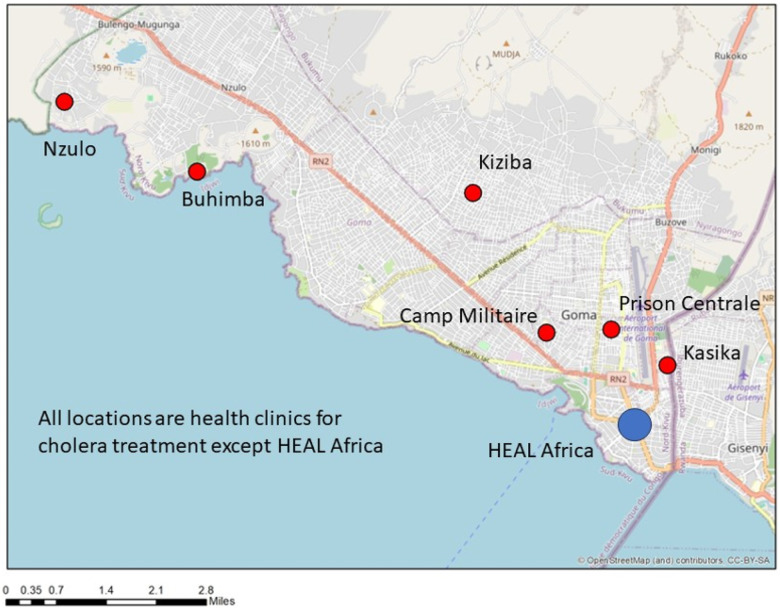
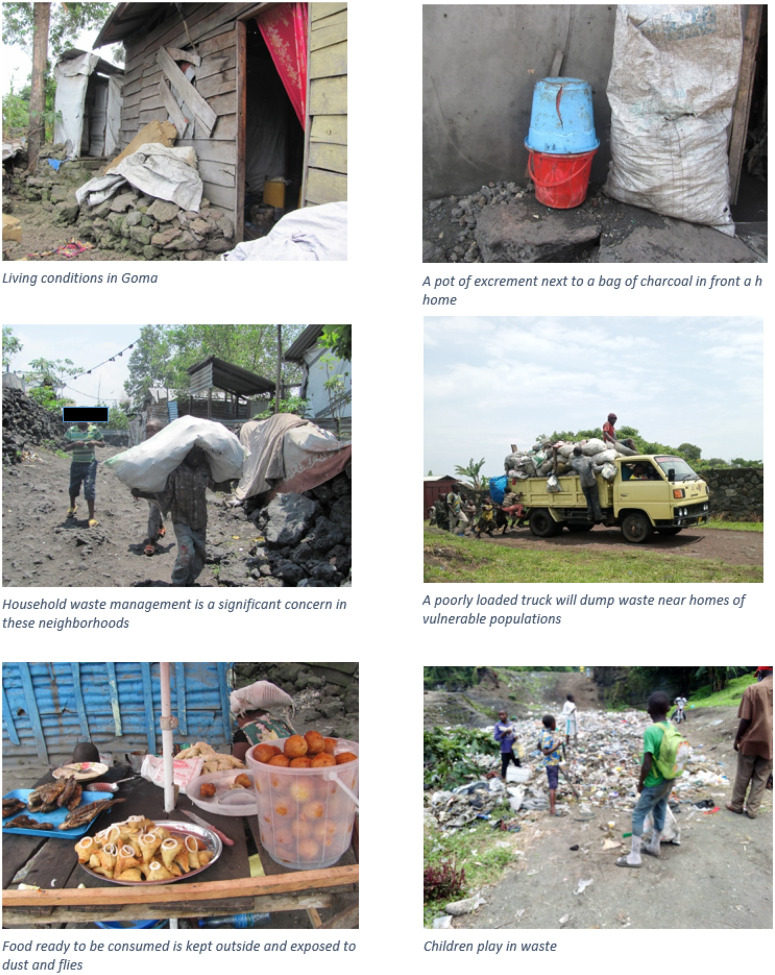
Methods: Data were collected between 2021 and 2022 using in-depth interviews, narrative interviews, key informant interviews, transect walks and a participatory mapping workshop, in six areas of Goma. Local understanding of cholera risk stretched across five categories.
Results: First, specific social groups were at increased risk based on age and gender (children, women, elderly), health status (chronic diseases, exposure to cholera treatment centers [CTC]), occupational risks (fishermen, markets) and socio-economic status (impoverished households, refugees, prisoners). Second, cholera risks were framed in relation to broader events such as conflict, population growth, climate change, and volcanic eruptions. Third, the lack of water infrastructure prompted use of unsafe drinking water from Lake Kivu and surrounding lakes. Accessibility of chlorinated water sources was impacted by social connection and cost. Fourth, cholera risk was ascribed to challenges with care seeking and treatment, such as homecare practices, transportation, and substandard practices at CTCs; and issues with implementation of prevention strategies, including vaccination campaigns. Finally, public health outreach practices were viewed as sources of risk by an overemphasis of emergency response teams and insufficient empowerment of communities.
Conclusion: We offer new empirical perspectives on the range of factors that contribute to cholera risk in Goma. These factors should be addressed by implementing diverse strategies, rather than focusing on rapid response interventions. Specifically, development of a safe and reliable water system to treat the chronic nature of cholera infection in the DRC should be prioritized.
Keywords: Democratic Republic of Congo; Goma; cholera risks; dynamic; public health; safe water; social.
Conflict of interest statement
Additional Declarations: No competing interests reported.
Figures
References
-
- WHO. Cholera in the WHO African Region, Weekly Regional Cholera Bulletin. 2023.
-
- Taty N, de Vos D, Pirnay JP, Bompangue D. The cholera endemic in the Democratique republic of Congo: The last decades. Int J Infect Dis. 2020;101:122–3.
-
- WHO. Ending cholera a global roadmap to 2030. In: Ending cholera a global roadmap to 2030. 2017. p. 32–32.
Publication types
Grants and funding
LinkOut - more resources
Full Text Sources